Introduction
Bringing home a baby bearded dragon is exciting, but it also comes with one of the most common beginner questions: how big should the enclosure be? Many new keepers search what size tank for baby bearded dragon because they want to avoid buying the wrong setup, wasting money, or creating a home that feels cramped and stressful.
The good news is that choosing the right enclosure size is simpler once you understand how fast baby beardies grow and what their habitat needs to do. A tank is not just a box to keep your dragon in. It has to provide enough room for a proper heat gradient, safe movement, climbing, basking, hiding, and healthy development from hatchling to juvenile stage.
In this guide, I’ll walk you through the best tank sizes for baby bearded dragons from 0 to 12 months, explain why bigger is often better, and show you how to set up that space so your dragon feels secure instead of overwhelmed. If you are brand new to reptile care, this article pairs well with our full baby bearded dragon care guide.
Key Takeaways
- A 40-gallon breeder tank is the practical minimum for most baby bearded dragons.
- A 4x2x2-foot enclosure (120 gallons) is the best long-term option and can work even for a baby if it is set up correctly.
- Small tanks make it harder to create a safe basking side and cool side, which is essential for digestion and growth.
- Babies grow quickly, so many dragons outgrow a starter tank within a few months.
- Tank size alone is not enough; lighting, UVB, substrate, hides, climbing space, and temperatures matter just as much.
- A larger enclosure should still feel secure with multiple hides, basking decor, and visual cover.
What Size Tank for Baby Bearded Dragon?
If you want the short answer, here it is: a 40-gallon breeder is the minimum size I recommend for a baby bearded dragon, while a 120-gallon enclosure is the ideal choice if your budget and space allow.
A baby bearded dragon may physically fit in a smaller tank, but “fitting” is not the same as thriving. Babies need room to thermoregulate, chase insects, climb, and explore. They also grow very fast during the first year, so a tiny starter tank often becomes too small before you know it.
When people ask what size tank for baby bearded dragon setups really need, I usually break it down like this:
Minimum recommended size
- 40-gallon breeder
- Typical dimensions: 36 x 18 x 18 inches
This is a solid beginner-friendly choice because it gives you enough floor space to create a basking zone on one end and a cooler area on the other.
Best long-term size
- 120-gallon enclosure
- Typical dimensions: 48 x 24 x 24 inches
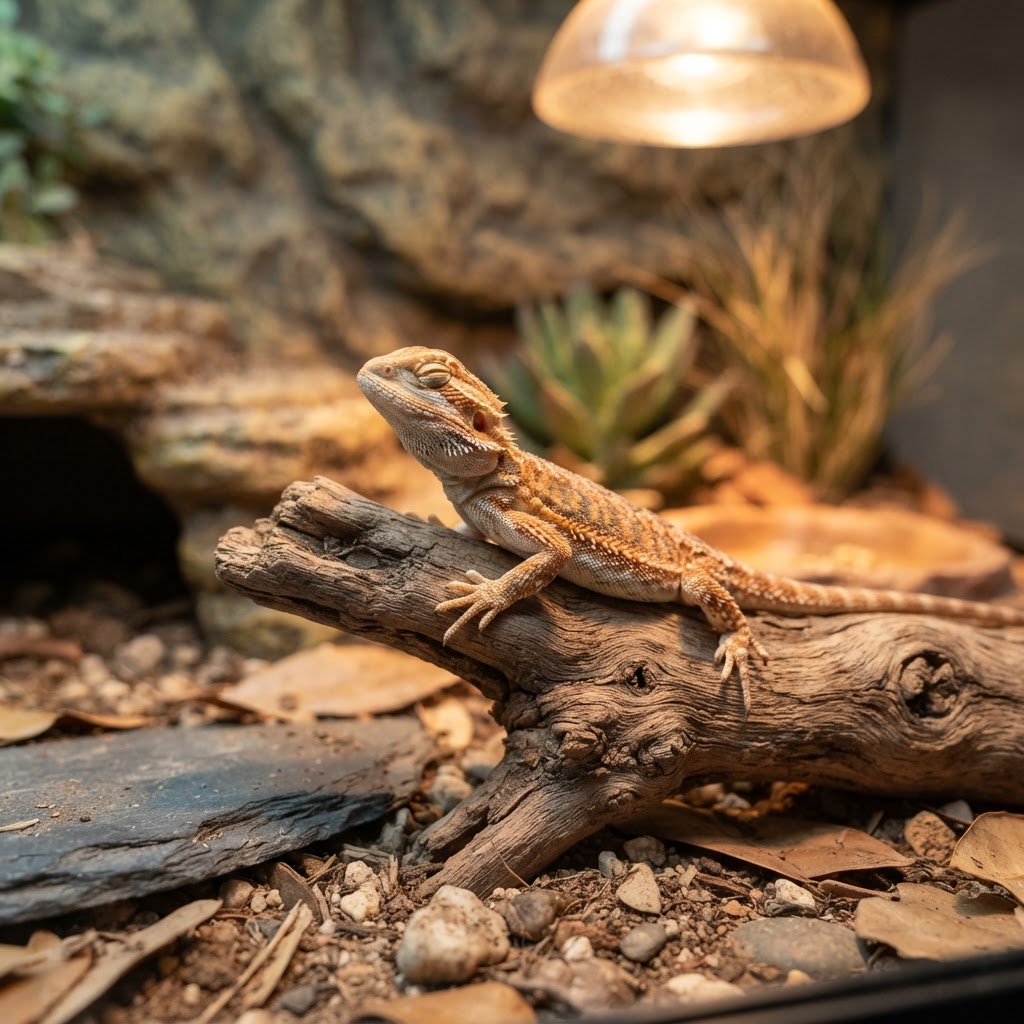
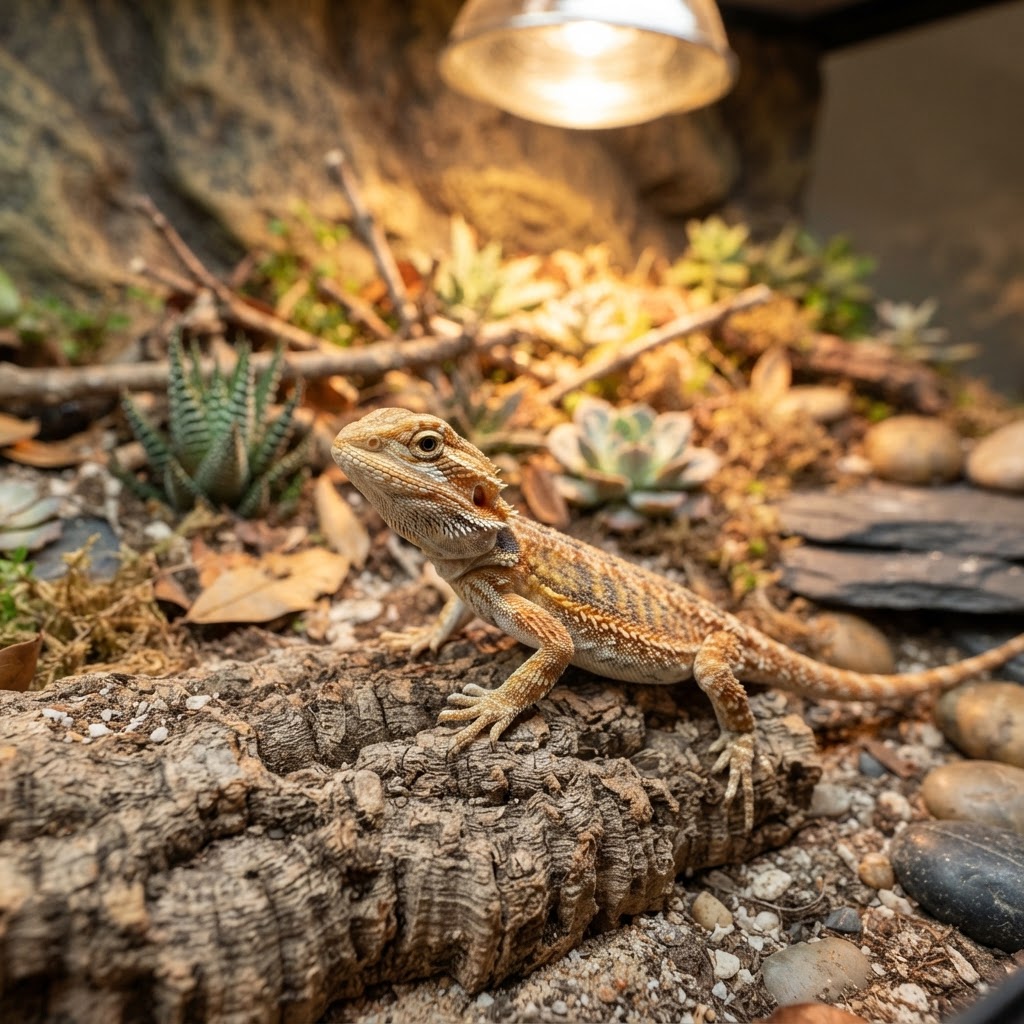
This is the gold standard for juvenile and adult bearded dragons, and many keepers start with it right away. A baby can do very well in a 4x2x2 as long as the enclosure is furnished properly with hides, branches, basking surfaces, and visual barriers.
Sizes I would avoid for most beginners
- 10-gallon tanks: far too small
- 20-gallon tanks: usable only very temporarily, and not ideal
- Tall narrow tanks: poor floor space and harder to heat correctly
For bearded dragons, floor space matters more than height. They do like to climb, but they are still primarily terrestrial lizards that benefit most from a wide enclosure.
Why Tank Size Matters So Much
A bigger tank is not about “spoiling” your dragon. It directly affects health, stress level, and daily behavior.
Proper heat gradient
Bearded dragons need a basking area and a cooler retreat. In a tank that is too small, the whole enclosure can become too hot, or the cool side may not actually be cool enough. That leads to poor thermoregulation, which can affect appetite and digestion.
If you need help dialing in temperatures, read our guide to best temperature baby bearded dragon enclosures.
Healthy movement and muscle development
Baby beardies are active. They sprint after insects, climb low branches, bask, then move off to cool down. A cramped tank limits exercise and natural behavior. More space allows stronger muscles, better coordination, and a more enriched life.
Easier feeding and better appetite
Many babies eat best when they feel secure but still have room to hunt. In overly small enclosures, food dishes, hides, basking decor, and water bowls can crowd the floor space. This creates a messy layout that can make feeding less efficient.
Reduced stress
Small tanks can increase stress because the dragon has fewer choices. A secure reptile benefits from options: where to bask, where to hide, where to cool off, and where to watch the room from a safe perch. Stress can show up as dark stress marks, glass surfing, poor appetite, or constant hiding.
Recommended Tank Sizes by Age
A baby bearded dragon changes quickly during the first year, so it helps to think in stages.
| Age | Recommended Tank Size | Notes | |---|---|---| | 0-3 months | 40-gallon breeder minimum | Good starter size for most babies | | 4-6 months | 40-75 gallons minimum | Many dragons start to feel crowded in a 40 by this stage | | 7-12 months | 75-120 gallons | A 120-gallon enclosure is strongly recommended | | 12+ months | 120 gallons or larger | Best standard adult size |
0 to 3 months
At this stage, your beardie is small, quick, and growing rapidly. A 40-gallon breeder offers enough room without making heating and feeding too difficult. If you start with a 120-gallon enclosure, make sure the setup feels secure with multiple hides and clearly defined zones.
4 to 6 months
Growth can be dramatic during this period. Your dragon may become more active, eat heavily, and use more space than you expected. If you started smaller, this is often when you begin planning an upgrade.
7 to 12 months
By late babyhood and juvenile stage, most dragons need significantly more room. If you have not upgraded yet, now is the time. A 4x2x2 enclosure supports stronger lighting layouts, better enrichment, and more stable temperature zones.
You can also compare your dragon’s progress with our article on baby bearded dragon growth rate.
Is It Better to Start Small or Buy the Adult Tank Right Away?
This is one of the biggest points of confusion for new owners.
Option 1: Start with a 40-gallon breeder
This option works well if:
- your baby is very young or tiny
- you have limited space right now
- your budget is tighter
- you want a simple enclosure that is easy to monitor
The downside is that you will probably need to upgrade within months, which can cost more in the long run.
Option 2: Start with a 120-gallon enclosure
This option is often the smartest long-term choice if:
- you want to buy once instead of twice
- you have room for a full-size enclosure
- you can properly furnish the habitat
- you can provide strong, correctly mounted heat and UVB
A large enclosure does not automatically stress a baby bearded dragon. What stresses them is an empty, exposed enclosure with nowhere to hide. If the tank is set up well, many babies settle in beautifully.
How to Make a Larger Tank Feel Safe for a Baby
If you choose the adult-size enclosure from day one, focus on security and layout.
Add multiple hides
Provide at least two hides:
- one on the warm side
- one on the cool side
This lets your baby feel covered without sacrificing temperature choice.
Use climbing and basking decor
Add sturdy branches, rocks, hammocks, or low platforms so your dragon can bask at the correct distance from the heat and UVB source.
Break up open space
A huge empty floor can feel intimidating. Use safe decor to create pathways and sight breaks so the enclosure feels usable instead of exposed.
Keep feeders manageable
In a larger setup, release only a few insects at a time or use a feeding bin for certain meals if needed. That prevents crickets or roaches from hiding everywhere.
For a full layout walkthrough, see our baby bearded dragon tank setup guide.
Tank Dimensions Matter More Than Gallons Alone
Gallons are useful, but dimensions tell the real story.
A long, low enclosure is usually better than a tall one. Bearded dragons need:
- enough floor space to move
- enough length for a heat gradient
- enough height to safely mount lighting and allow climbing
Here are ideal dimensions to aim for:
Good starter dimensions
- 36 x 18 x 18 inches
Best long-term dimensions
- 48 x 24 x 24 inches
When comparing tanks, do not just look at the gallon number. A poorly shaped tank can still be inconvenient for a bearded dragon.
What Else Your Baby Bearded Dragon Needs Besides Tank Size
Even the perfect enclosure size will not help much if the habitat is set up incorrectly.
BabyBeardedDragon.net is a participant in affiliate programs including Amazon Associates. We may earn a commission on qualifying purchases at no extra cost to you.
Proper UVB lighting
Strong UVB is essential for calcium metabolism, bone development, and overall health. A long tube-style UVB fixture is typically better than a compact bulb for a bearded dragon enclosure.
If you are unsure how to position and replace UVB lighting, read baby bearded dragon lighting and UVB.
Correct basking temperatures
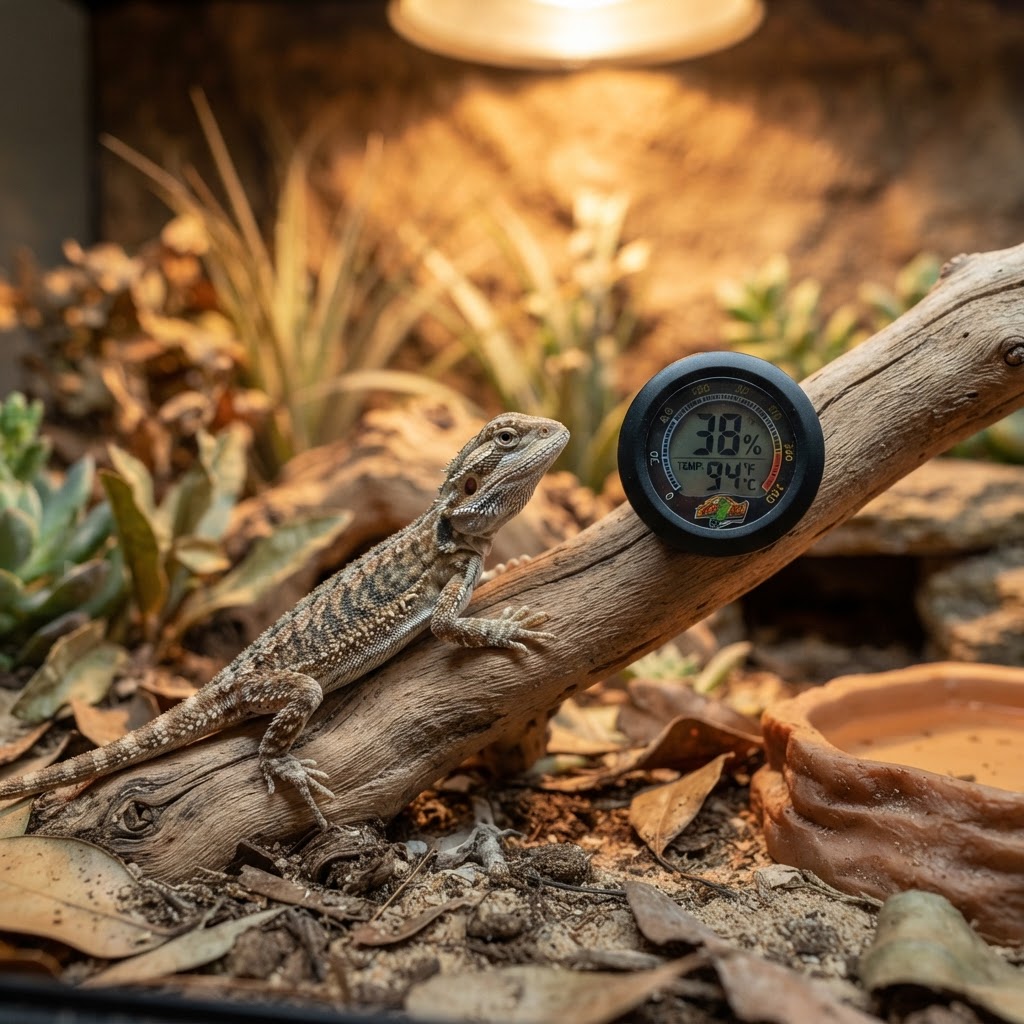
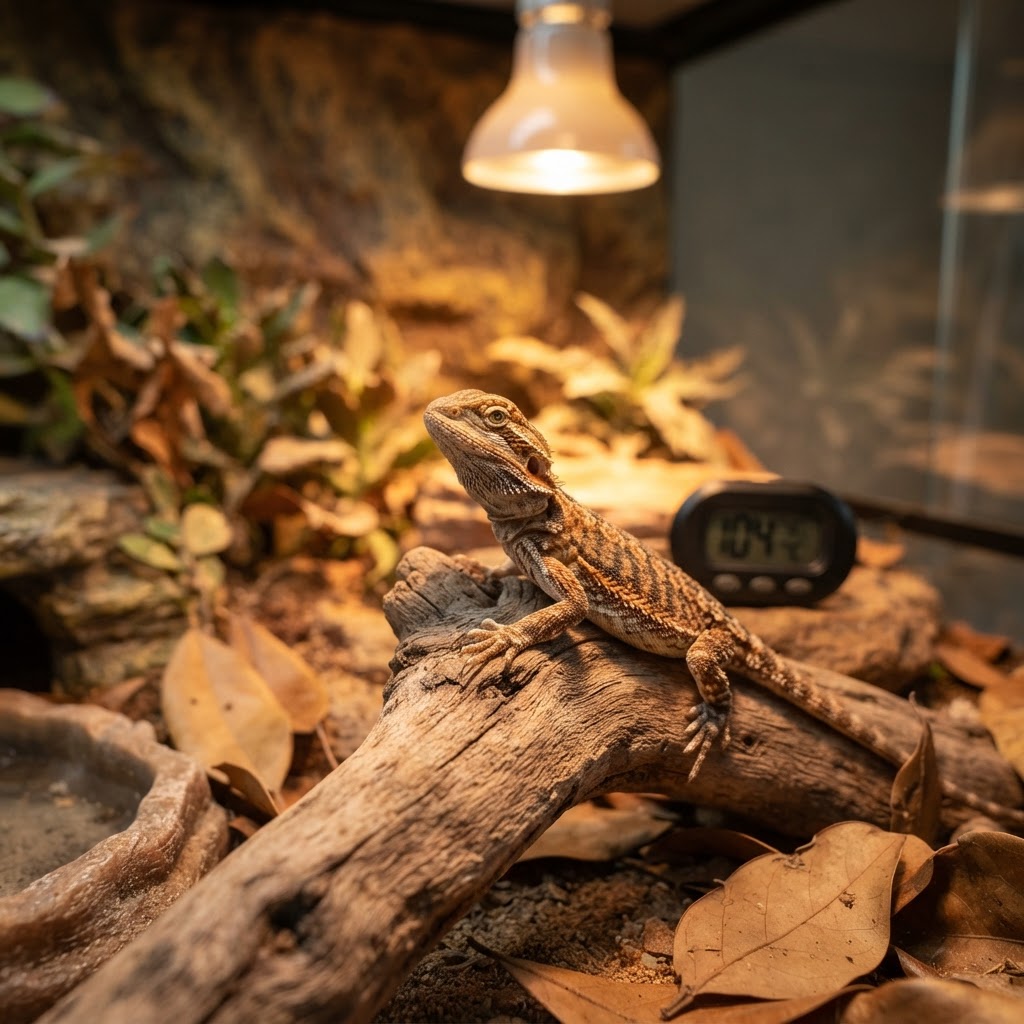
Baby beardies need a warm basking area to digest food and stay active. Measure with accurate digital probes or an infrared temp gun, not guesswork.
Safe substrate
For babies, many keepers prefer easy-to-clean options such as paper towels, reptile carpet alternatives designed for safety, non-adhesive shelf liner, or tile. Loose substrate is a more debated topic, especially for very young dragons.
We cover the pros and cons in our guide to best substrate for baby bearded dragons.
Clean, simple enrichment
A baby enclosure should not be bare, but it should be easy to clean. Add:
- a basking platform
- one or two hides
- a sturdy branch
- a food dish for greens
- a shallow water dish if you use one
Daily observation
Watch how your dragon uses the enclosure. If it never leaves one end, constantly glass surfs, or avoids the basking spot, something about the setup may need adjustment.
Common Tank Size Mistakes Beginners Make
Choosing the right enclosure becomes easier when you know what to avoid.
Buying a tank that is too small because the baby is small
A hatchling may only be a few inches long, but growth is fast. Thinking too short-term is one of the most common new-owner mistakes.
Prioritizing height over floor space
Tall tanks look impressive, but long horizontal space is more useful for bearded dragons.
Leaving a large tank too empty
A big enclosure without hides or visual cover can make a baby feel vulnerable. More space should also mean more thoughtful furnishing.
Underestimating equipment placement
A larger tank gives you better lighting and temperature options, but only if you position heat and UVB correctly.
Delaying upgrades too long
If your dragon is growing fast, eating well, and becoming more active, the enclosure may become restrictive sooner than expected.
For more pitfalls to avoid, check out common baby bearded dragon mistakes.
Signs It Is Time to Upgrade the Tank
If you started with a smaller enclosure, look for these signs that your dragon needs more space:
- the basking and cool sides are too close together
- decor leaves little open floor space
- your dragon looks cramped when turning around or stretching out
- glass surfing increases
- activity level drops despite good temperatures and diet
- your dragon is approaching juvenile size
As a general rule, if the enclosure is making it hard to provide the correct environment, it is time to move up.
Final Thoughts
So, what size tank for baby bearded dragon care is truly best? For most beginners, a 40-gallon breeder is the minimum practical starting point, while a 120-gallon 4x2x2 enclosure is the ideal long-term choice and can work from the beginning if set up thoughtfully.
If you remember just one thing, let it be this: your bearded dragon’s enclosure should support healthy growth, proper temperatures, strong UVB exposure, and natural behavior. Bigger is often better, but only when the space is arranged to feel safe and usable for a young dragon.
A good tank size gives your baby beardie the foundation for everything else: feeding, basking, activity, and confidence. Set that foundation well, and the rest of care becomes much easier.
Frequently Asked Questions
What size tank for baby bearded dragon owners should buy first?
A 40-gallon breeder is the best minimum starting size for most new owners. If you can afford it and have enough room, a 120-gallon 4x2x2 enclosure is an even better long-term choice and can be used from the start when properly furnished.
Is a 20-gallon tank too small for a baby bearded dragon?
For most keepers, yes. A 20-gallon tank may work only as a very short-term temporary enclosure, but it does not provide much room for a proper heat gradient or enrichment. Most babies will outgrow it quickly.
Can a baby bearded dragon live in a 120-gallon tank?
Yes. A baby can live in a 120-gallon enclosure as long as the habitat is set up correctly. Use multiple hides, basking surfaces, climbing decor, and visual barriers so the tank feels secure rather than empty.
How long can a baby bearded dragon stay in a 40-gallon tank?
That depends on growth rate, activity level, and setup quality, but many dragons outgrow a 40-gallon breeder during the first year. Some need an upgrade by 5 to 8 months, while others can use it a bit longer. A 120-gallon enclosure is the better goal.
Do glass tanks or PVC enclosures work better?
Both can work. Glass tanks are common and easy to find, while PVC enclosures usually hold heat better and are often lighter. The best choice depends on your budget, climate, and whether you want a short-term starter or a permanent home.
What is more important: tank size or lighting?
They are both essential. A larger tank without proper UVB and heat is not enough, and excellent lighting in a cramped enclosure is still limiting. The healthiest setup combines adequate space, correct temperatures, quality UVB, and safe furnishings.
Should I buy the adult tank now or upgrade later?
If possible, buying the adult-size enclosure now often saves money and effort in the long run. If you do start smaller, choose at least a 40-gallon breeder and plan your upgrade early so your dragon does not outgrow the space before you are ready.