Introduction
Baby bearded dragons look tough, but they are surprisingly sensitive to enclosure temperatures during their first year. At this age, they are growing fast, eating often, and relying on the heat in their tank to digest food, absorb nutrients, stay active, and build a strong immune system. If the enclosure runs too cool or too hot, even a healthy baby can quickly become stressed, sluggish, dehydrated, or unwilling to eat.
That is why finding the best temperature for baby bearded dragon enclosures is one of the most important parts of setup. Good temperatures do not just keep your dragon comfortable—they directly affect growth, feeding response, and day-to-day behavior. If you are still working through your full baby bearded dragon tank setup, think of temperature as the foundation that makes lighting, feeding, and habitat design actually work.
New owners often assume any heat lamp is good enough, but baby beardies need a proper temperature gradient, not just a hot tank. In this guide, you will learn the exact temperature ranges to aim for, how to measure them correctly, what heating equipment works best, and how to troubleshoot common problems before they affect your dragon.
Affiliate Disclosure: BabyBeardedDragon.net is a participant in affiliate programs including Amazon Associates. We may earn a commission on qualifying purchases at no extra cost to you.
Key Takeaways
- The best temperature for baby bearded dragon enclosures includes a hot basking area, a warm middle zone, and a cooler retreat area.
- Aim for a basking surface temperature of 105-110°F for most babies, especially younger, faster-growing dragons.
- Keep the warm side ambient temperature around 88-95°F and the cool side around 75-82°F during the day.
- Nighttime temperatures can safely drop to 65-75°F. Add non-light-emitting heat only if the enclosure falls below 65°F.
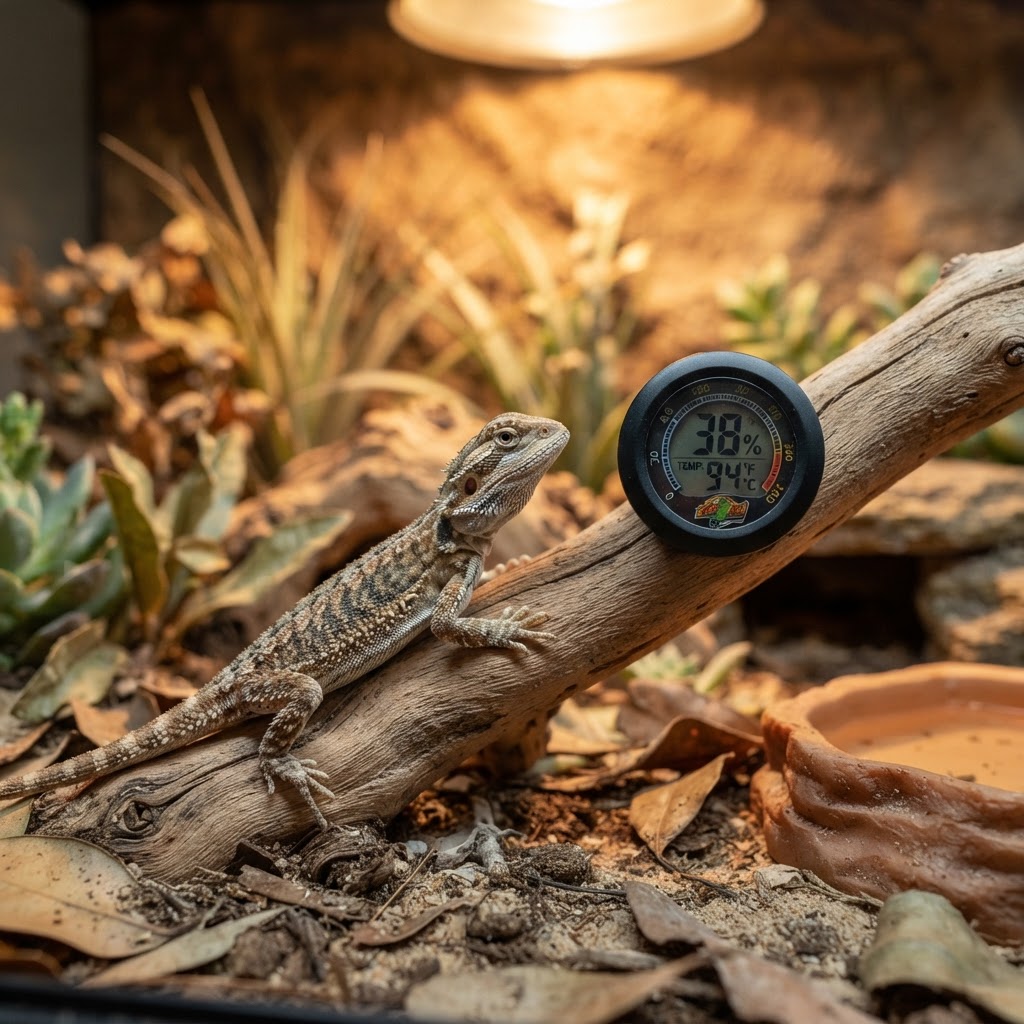
- Use an infrared thermometer gun and digital probe thermometers for accurate readings. Avoid stick-on dial thermometers.
- Babies often show temperature problems through poor appetite, lethargy, glass surfing, dark stress coloring, or constant hiding.
- Heat and UVB work together, so make sure your basking zone also lines up with proper UVB coverage from your UVB lighting guide.
Why Temperature Matters More for Babies Than Adults
A baby bearded dragon is not just a smaller version of an adult. Babies have faster metabolisms, eat more protein-rich meals, and need more frequent basking to process food efficiently. They are also less tolerant of setup mistakes. An adult may cope with a slightly cool enclosure for a while; a baby may stop eating, become weak, or fall behind on growth.
Heat supports nearly every important body function in a young dragon:
- Digestion: Without enough basking heat, food sits longer in the stomach and intestines.
- Appetite: Dragons that cannot warm up properly often show little interest in insects or greens.
- Immune function: Chronic low temperatures can weaken natural defenses.
- Activity level: Proper heat encourages normal basking, exploring, and hunting behavior.
- Growth: Babies use enormous amounts of energy, and temperature helps them convert food into healthy development.
If your dragon seems inactive, hides too much, or shows reduced appetite, temperature should be one of the first things you check—right alongside lighting and hydration. Many owners worry something is seriously wrong when the real issue is that the basking spot is only 95°F instead of 108°F.
Ideal Temperature Range for Baby Bearded Dragons
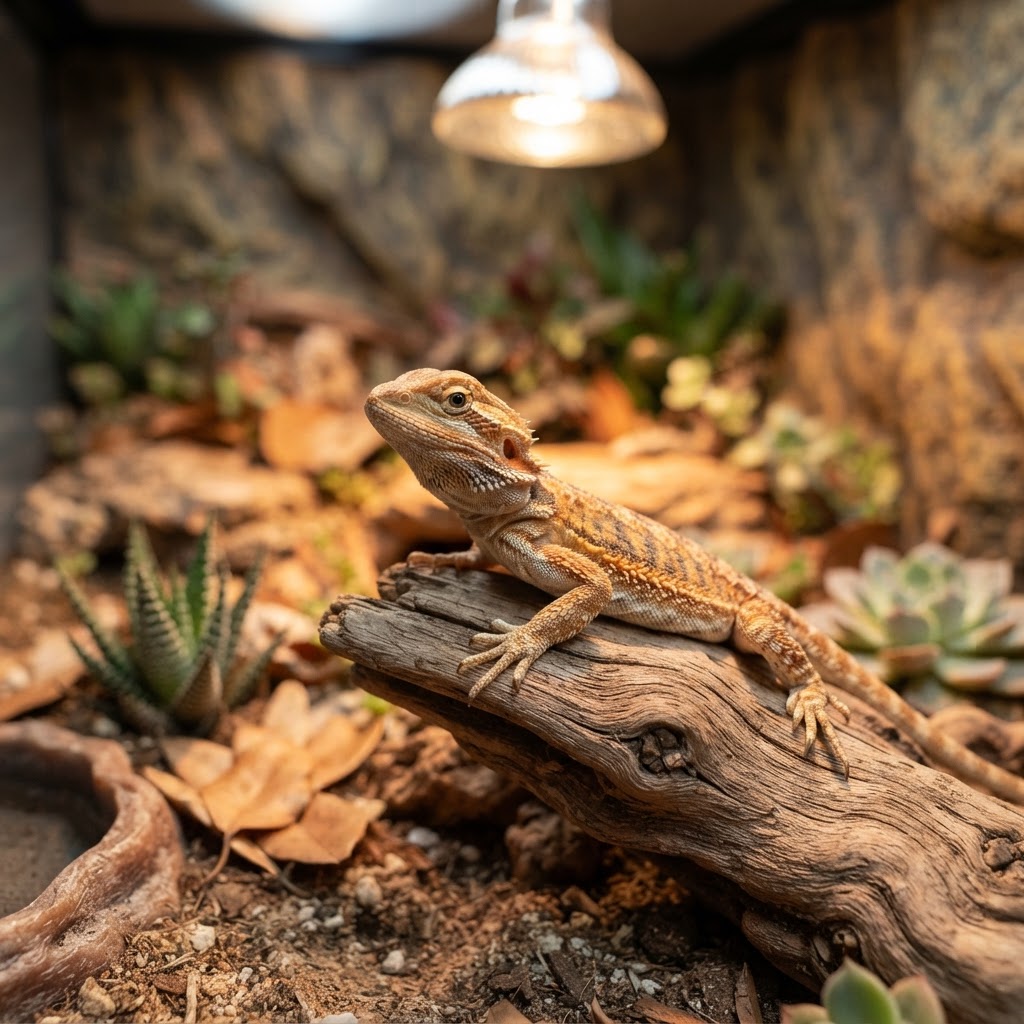
The goal is not to make the entire enclosure one temperature. You want a gradient so your dragon can move between warmer and cooler areas as needed.
Basking spot: 105-110°F surface temperature
For most baby bearded dragons, the basking surface should read 105-110°F. This is the most important number in the enclosure.
A few notes:
- Measure the surface your dragon sits on, not just the air below the bulb.
- Younger babies often do best closer to 108-110°F.
- Older juveniles approaching 10-12 months may be comfortable around 100-105°F, depending on behavior and appetite.
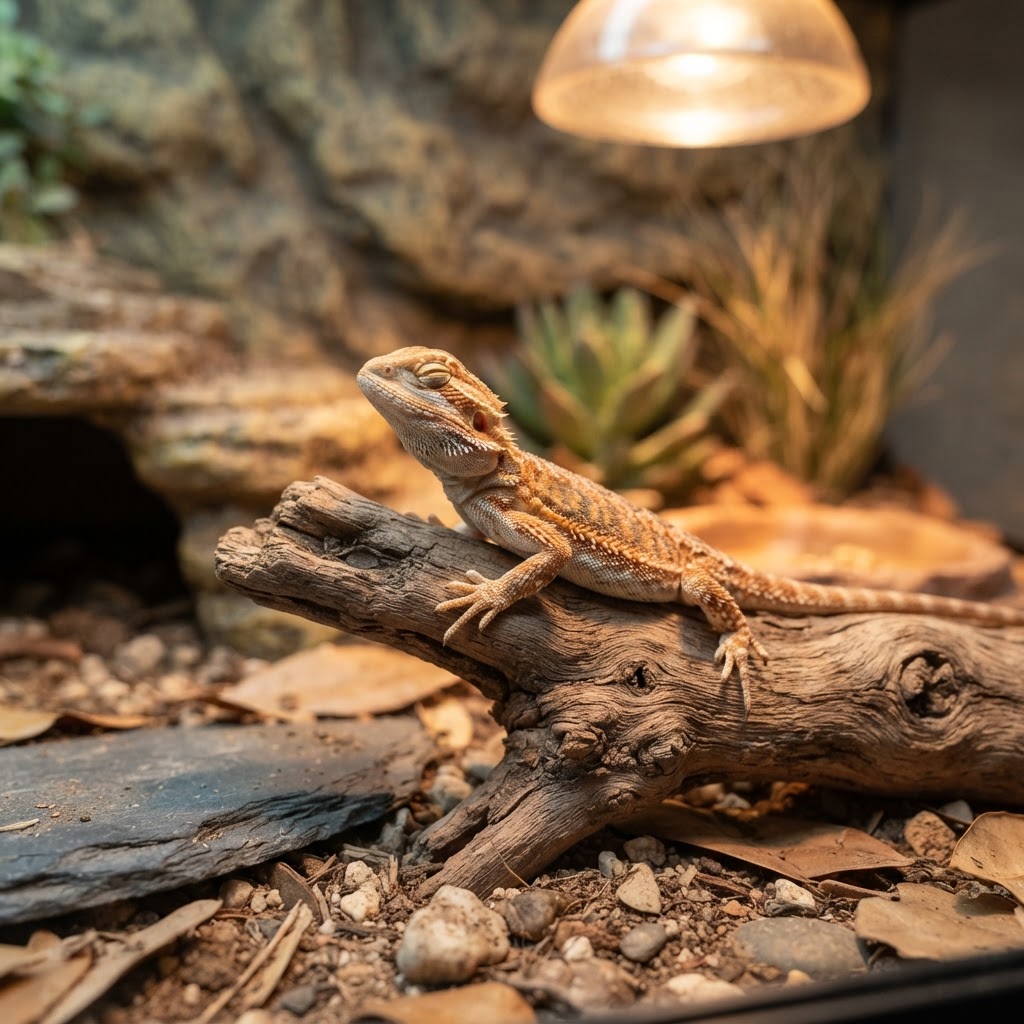
A proper basking platform can be a rock, slate tile, sturdy branch, or hammock positioned so your baby can warm up safely without getting too close to the bulb.
Warm side: 88-95°F ambient
The warm side is the area surrounding the basking zone. Aim for an ambient air temperature of 88-95°F here during the day.
This helps your baby stay active between basking sessions and prevents a sharp drop in body temperature the moment it steps off the basking platform.
Cool side: 75-82°F ambient
The cool side should stay around 75-82°F during the day. This gives your dragon a place to thermoregulate and avoid overheating.
If the cool side is too warm, your beardie has no relief and may become stressed or dehydrated. If it is too cold, the entire enclosure may be under-heated.
Nighttime: 65-75°F
At night, lights should go off and temperatures can drop naturally to 65-75°F. This is healthy and more natural than keeping the tank hot 24/7.
Only add nighttime heat if your home drops below 65°F. If you need extra overnight warmth, use a ceramic heat emitter or another heat source that does not produce visible light.
Surface temperature vs. ambient temperature
This is where many beginners get confused.
- Surface temperature = the temperature of the basking rock, branch, or platform your dragon touches.
- Ambient temperature = the air temperature in different parts of the tank.
Both matter. A tank can have decent air temperatures while the actual basking surface is too cool. That is why accurate tools are essential.
How to Measure Temperature Accurately
If you want the best temperature for baby bearded dragon enclosures, you need better tools than a guess and better data than one thermometer stuck on the glass.
Use an infrared thermometer gun
An infrared temperature gun is the easiest way to check basking surfaces. Point it directly at the basking rock, branch, or platform and read the temperature instantly.
This is the best way to confirm whether your baby is actually getting the heat it needs where it sits.
Use digital probe thermometers on both sides
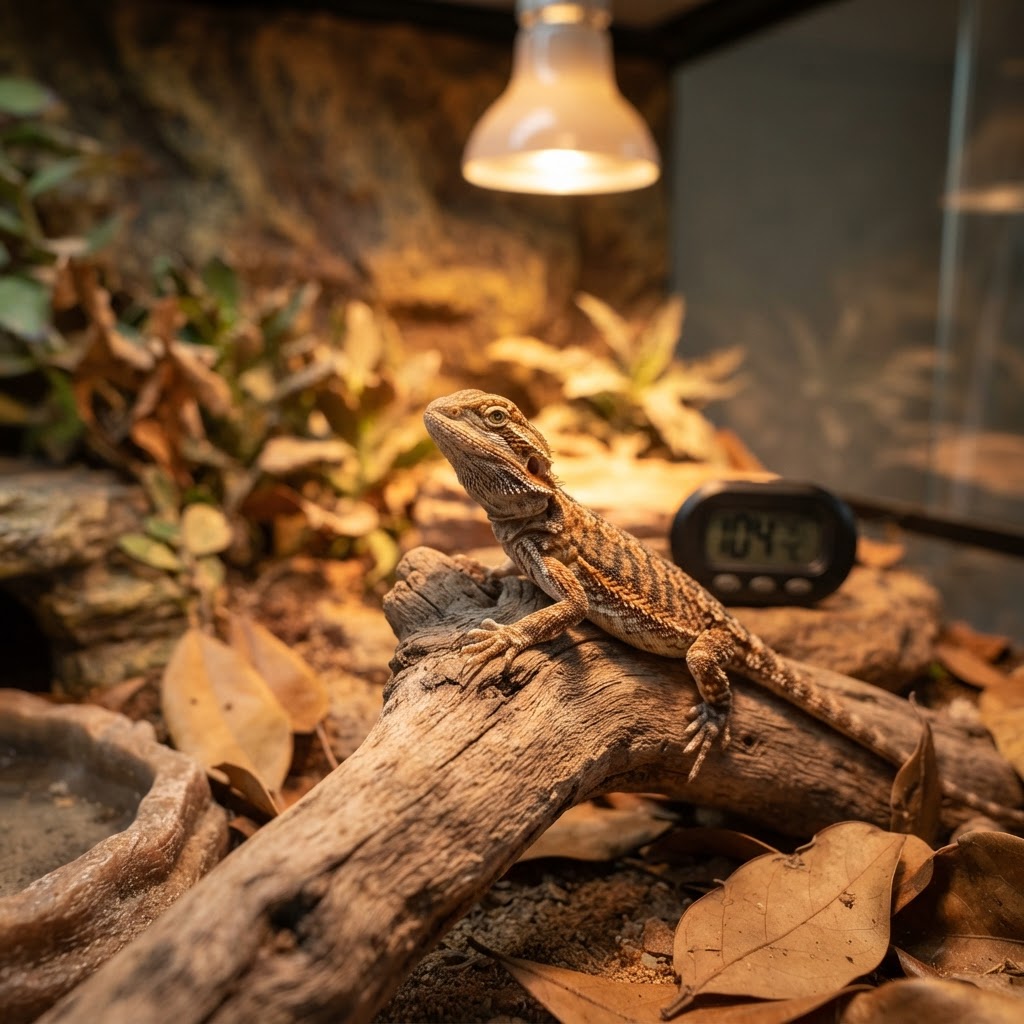
Add at least two digital thermometers with probes:
- one on the warm side
- one on the cool side
Position the probes where your dragon actually spends time, not directly under the lamp or pressed against the floor.
Avoid stick-on analog thermometers
Stick-on dial thermometers are often inaccurate and usually measure the glass wall more than the enclosure conditions. They can be off by enough degrees to cause real setup problems.
Check temperatures at the right times
Take readings:
- 30-60 minutes after lights turn on
- in the middle of the day
- after any bulb change or fixture adjustment
- when room temperatures shift seasonally
It is normal to make small tweaks during the first week. Just avoid making several major changes at once.
Best Heating Equipment for Baby Enclosures
Heating gear does not need to be complicated, but it does need to be reliable.
Basking bulb or halogen flood bulb
For most baby enclosures, a white basking bulb or halogen flood bulb works best. These provide focused daytime heat and help create a natural basking zone.
Choose wattage based on:
- tank size
- distance from bulb to basking spot
- room temperature
- screen top or solid top design
A 50W bulb might be enough in one setup and far too weak in another. Always adjust based on thermometer readings, not package claims.
Dome fixture rated for the bulb
Use a safe dome fixture rated for the bulb wattage you choose. Make sure it is securely placed and cannot fall into the enclosure.
Dimming thermostat or lamp dimmer
A dimming thermostat or manual lamp dimmer makes fine-tuning much easier. Instead of constantly swapping bulbs, you can slightly reduce or increase heat output while keeping the same overall setup.
Ceramic heat emitter for cold nights
If your house gets chilly after dark, a ceramic heat emitter can provide warmth without disturbing your dragon's sleep cycle. Avoid red, blue, or purple “night heat” bulbs. Bearded dragons need darkness at night.
Avoid heat rocks and under-tank heaters
Heat rocks are unnecessary and can create dangerous hot spots. Under-tank heaters are not a natural heat source for bearded dragons, which instinctively bask from above.
How to Set Up the Temperature Gradient Step by Step
Here is a simple beginner-friendly way to build the right thermal layout.
1. Put the basking area on one side
Choose one end of the enclosure as the hot end. Place a stable basking platform there so your baby can sit under the heat and UVB.
2. Mount the heat lamp above that area
Position the basking bulb overhead so it warms the platform directly. Do not center it in the tank if you want a proper gradient.
3. Measure the basking surface first
Before worrying about the rest of the tank, get the basking surface into the 105-110°F range. Raise or lower the fixture, change bulb wattage, or use a dimmer as needed.
4. Check the warm and cool side air temperatures
Once the basking spot is correct, verify that the warm side is 88-95°F and the cool side is 75-82°F.
5. Add shade and a hide on the cool side
Your dragon should be able to get out of the heat completely when needed. A hide or shaded retreat helps reduce stress and supports normal thermoregulation.
6. Test for several days before finalizing
The best temperature for baby bearded dragon enclosures comes from testing, observing, and making small adjustments. Run the enclosure for a few days and recheck temperatures at different times before assuming everything is perfect.
Common Temperature Mistakes New Owners Make
Even caring owners can miss something important in the beginning.
Heating the whole tank evenly
A uniformly warm enclosure sounds nice, but it removes your dragon's ability to self-regulate. Babies need choices.
Relying on one thermometer
One reading never tells the full story. You need basking surface, warm side ambient, and cool side ambient temperatures.
Using a bulb that is too weak
If your baby always looks dull, barely basks, or digests slowly, the basking spot may simply not be hot enough.
Overheating small tanks
In small enclosures, a strong bulb can push the entire tank into stressful temperatures. This is especially common in warm homes or with poor ventilation.
Using colored bulbs at night
Night bulbs marketed for reptiles are a common beginner trap. Visible light can disrupt sleep and add unnecessary stress.
Ignoring behavior changes
Your dragon's behavior is useful feedback. If you notice unusual pacing, constant hiding, or dark stress marks, review your temperatures along with other husbandry basics. Our article on signs of stress in baby bearded dragons can help you tell the difference between normal adjustment and a real problem.
Signs the Enclosure Is Too Cold or Too Hot
A baby bearded dragon cannot tell you the numbers, but it can show you what is wrong.
Signs of a too-cool enclosure
Watch for:
- poor appetite
- slow hunting response
- frequent hiding
- lethargy
- dark body coloring
- spending all day flattened under the lamp
- difficulty digesting larger meals
If your baby is acting cold and also refusing food, double-check the basking surface before assuming illness. Many cases of a baby bearded dragon not eating are at least partly related to low basking temperatures, poor UVB, or both.
Signs of an overheated enclosure
Watch for:
- constant glass surfing
- staying on the cool side all day
- trying to escape the basking area completely
- persistent gaping even when not basking
- frantic pacing
- flattened body posture in cooler corners
- signs of dehydration
A little gaping while basking can be normal. Constant gaping combined with avoidance behavior is more concerning.
Watch patterns, not one moment
One lazy afternoon does not always mean a temperature problem. Look for repeated patterns across several days and compare them to your readings.
Seasonal and Age-Based Adjustments
Temperature needs are similar throughout the first year, but small adjustments may help as your dragon grows.
Younger babies may prefer the hotter end of the range
A tiny 2-4 month-old baby often does best with a basking surface close to 108-110°F, especially if appetite and growth are strong.
Older juveniles may prefer slightly less heat
As your dragon approaches subadult size, it may settle better with a basking surface around 100-105°F. Behavior matters more than chasing one fixed number forever.
Winter changes matter
Room temperatures can shift dramatically with the seasons. In winter, you may need a stronger bulb or reduced lamp height. In summer, you may need the opposite.
Babies should not be encouraged to brumate
Very young dragons should remain active, eating, and growing. If a baby becomes unusually sleepy or inactive, review temperatures, UVB, feeding, and health rather than assuming it is natural brumation.
Final Thoughts
When you dial in the best temperature for baby bearded dragon enclosures, you make nearly everything else easier: feeding, activity, digestion, and healthy growth. Focus on a hot basking surface, a clear warm-to-cool gradient, and accurate measuring tools. A baby beardie that can choose the right temperature throughout the day is far more likely to thrive.
Frequently Asked Questions
What is the ideal basking temperature for a baby bearded dragon?
For most babies, the ideal basking surface temperature is 105-110°F. Younger, fast-growing dragons often do especially well near the upper end of that range, while older juveniles may prefer slightly less.
How warm should a baby bearded dragon enclosure be at night?
Nighttime temperatures can safely drop to 65-75°F. If your home stays in that range, no extra nighttime heat is needed. Only add non-light-emitting heat if the tank drops below 65°F.
Do baby bearded dragons need warmer temperatures than adults?
Yes, in most cases. Babies usually need a hotter basking spot because they are eating more frequently and growing quickly. Adults often do well with slightly lower basking temperatures than young dragons.
Can I use a heat mat for a baby bearded dragon?
It is not recommended as the main heat source. Bearded dragons are overhead baskers, and heat mats do not create a natural basking area or proper temperature gradient. They can also encourage unsafe belly heating if used incorrectly.
How long should the heat lamp stay on each day?
Most babies do well with 12-14 hours of daytime light and heat, depending on the season and your household routine. Keep the schedule consistent so your dragon develops a stable daily rhythm.
Why is my baby bearded dragon not eating even though the tank feels warm?
“Feels warm” is not enough to judge by. The basking surface may still be too cool, the UVB may be inadequate, or the dragon may be stressed, shedding, or dehydrated. Always verify the actual basking surface with an infrared thermometer and review the full setup before assuming a medical issue.
Should the basking spot and UVB overlap?
Yes. Your baby should be able to sit in the basking zone and receive both heat and UVB at the same time. This encourages natural basking behavior and supports digestion, calcium metabolism, and healthy development.