## Introduction

Bringing home a baby bearded dragon is exciting, but it also comes with a long list of setup decisions that can feel surprisingly stressful. One of the biggest questions new owners ask is what to put on the bottom of the enclosure. It may seem like a small detail, but substrate affects safety, hygiene, feeding, and even how easily you can monitor your dragon's health.

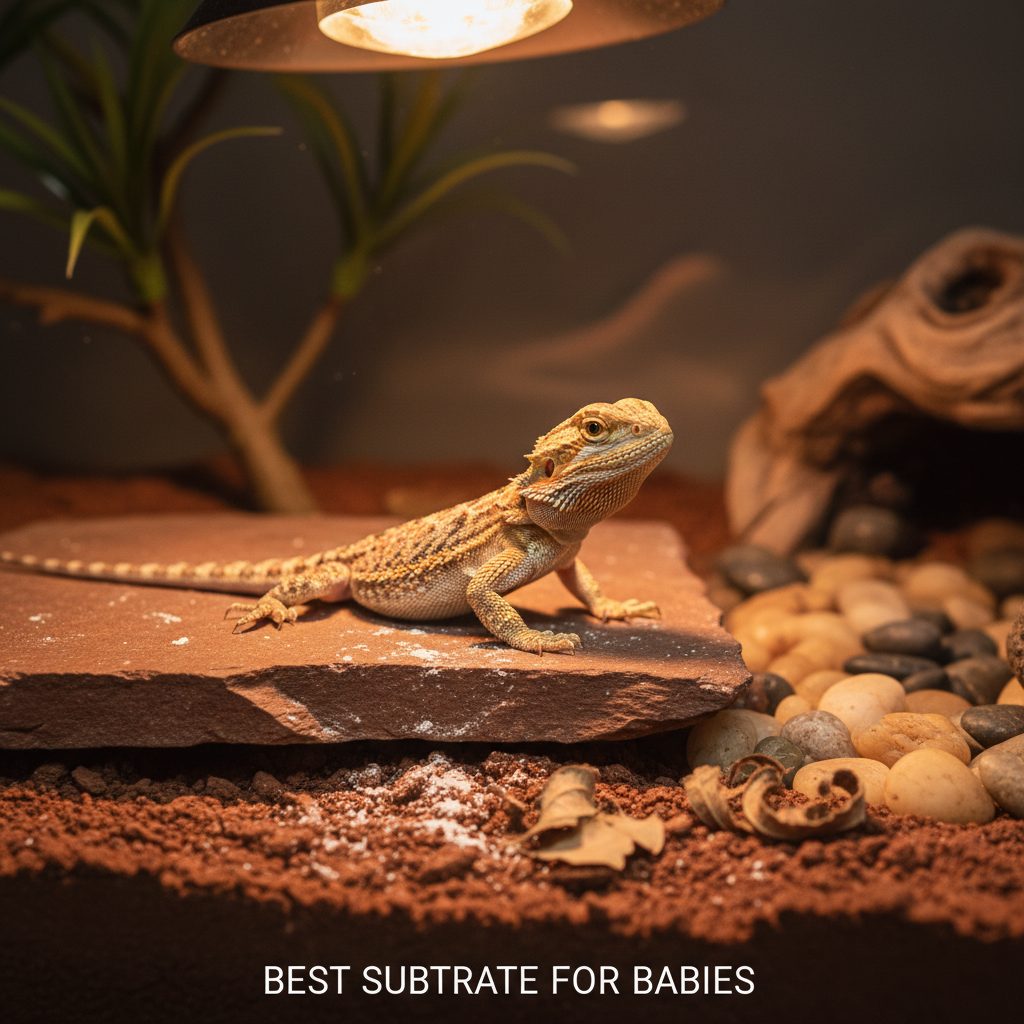
If you're wondering **what is the best substrate for baby bearded dragons**, the safest answer for most beginners is simple: use a solid, non-loose substrate that is easy to clean and impossible to swallow. Baby beardies are fast-growing, messy eaters, and far more vulnerable than adults, so the flooring you choose matters more than many people realize. In this guide, I'll compare the most common options, explain which substrates to avoid, and help you choose the best fit for your baby beardie's age and stage.

If you are still building your enclosure, it also helps to review a full [baby bearded dragon tank setup](/blog/how-to-set-up-a-bearded-dragon-tank) and a complete [baby bearded dragon care guide](/blog/how-to-care-for-baby-bearded-dragons) so your flooring choice works with the rest of the habitat.

*BabyBeardedDragon.net is a participant in affiliate programs including Amazon Associates. We may earn a commission on qualifying purchases at no extra cost to you.*

## Key Takeaways

- For most baby bearded dragons, **paper towels** or **butcher paper** are the safest and easiest substrates.
- Avoid **loose substrates** like sand, calcium sand, crushed walnut, wood chips, and soil mixes for babies.
- A good baby substrate should be **easy to clean, non-toxic, non-slip, and impossible to ingest** during feeding.
- **Non-adhesive shelf liner** and **tile** can work for older juveniles, but they are usually better after the earliest baby stage.
- The best substrate is the one that lets you quickly spot poop, monitor appetite, and keep the enclosure dry and sanitary.
- If your dragon is new, sick, not eating well, or under 6 months old, use the simplest option possible.

## Why Substrate Matters for Baby Bearded Dragons

### Babies are more vulnerable than adults

A baby bearded dragon from 0-12 months is still developing rapidly. Compared with adults, babies eat more often, chase food more aggressively, and explore the enclosure with very little caution. That means they are more likely to accidentally lick, bite, or swallow bits of substrate while hunting insects.

Their bodies are also smaller and less forgiving. Something that might not bother a healthy adult can create a real problem for a tiny juvenile. Loose particles can stick to feeders, get swallowed, irritate the eyes, or make cleanup much harder than it needs to be.

### Cleanliness and monitoring are critical

During the baby stage, you want to notice changes quickly. A safe substrate makes it easy to see:

- whether your dragon is passing normal stools
- whether uneaten insects are being removed
- whether there is excess moisture in the enclosure
- whether your dragon is shedding normally
- whether appetite or behavior has changed

This is especially important if you are tracking growth, feeding, and health during the first year. Poor enclosure hygiene is one of the most common beginner issues, and it often goes hand in hand with flooring that is hard to keep clean. That is why simple, practical choices usually beat natural-looking ones for young dragons.

## What Is the Best Substrate for Baby Bearded Dragons?

For the vast majority of keepers, the best substrate for a baby bearded dragon is **paper towels** or **butcher paper**. These options are inexpensive, easy to replace, safe during feeding, and ideal for monitoring droppings, hydration, and overall health.

If your baby is brand new, under 6 months old, recovering from stress, or having any feeding issues, paper towels are my first choice every time. They remove almost all ingestion risk and make spot-cleaning incredibly easy.

Butcher paper is another strong option, especially if you want something neater-looking than paper towels while keeping the same safety benefits. For older juveniles approaching the later part of the first year, non-adhesive shelf liner or textured tile can also work well if installed properly.

In other words, when owners ask **what is the best substrate for baby bearded dragons**, the answer is usually not the most natural-looking option. It is the safest, cleanest, easiest-to-manage one.

## Comparing Common Substrate Options

### Paper towels

Paper towels are the gold standard for baby beardies.

**Why they work so well:**

- impossible to ingest in normal use
- cheap and available everywhere
- easy to replace daily if needed
- great for quarantine or new arrivals
- helps you monitor stool consistency and hydration

**Downsides:**

- not the prettiest look
- can bunch up if not laid flat
- needs frequent replacement

**Best for:**

- hatchlings and young babies
- dragons under 6 months
- sick or stressed dragons
- owners who want the simplest safe choice

**Verdict:** If you want the safest beginner-friendly option, choose paper towels.

### Butcher paper or plain packing paper

Butcher paper is one of my favorite upgrades from paper towels. It gives you a cleaner look, covers more floor space at once, and is still easy to swap out.

**Pros:**

- safe and non-loose
- affordable in larger rolls
- easy to cut to size
- better appearance than paper towels
- simple to remove during deep cleaning

**Cons:**

- can tear if it gets very wet
- needs replacing regularly
- slick versions are less ideal than plain, grippy paper

**Best for:**

- babies and juveniles
- owners who want easy cleanup with a tidier look

**Verdict:** Excellent choice for daily use through much of the first year.

### Non-adhesive shelf liner

Shelf liner can work well if it is **solid, non-textured enough to clean easily, and used without exposed adhesive**. It is reusable, looks tidy, and gives more traction than many people expect.

**Pros:**

- easy to wipe down
- reusable
- neat appearance
- available in different textures

**Cons:**

- some types curl at the edges
- adhesive-backed versions can be unsafe
- textured grooves may trap waste
- must be cut carefully to fit

**Best for:**

- older babies and juveniles
- owners comfortable removing and sanitizing it regularly

**Verdict:** A good option, but choose carefully. Non-adhesive only.

### Slate or ceramic tile

Tile is popular because it looks clean, lasts a long time, and is easy to sanitize. Textured slate or ceramic tile can also help wear down nails naturally.

**Pros:**

- durable and reusable
- easy to disinfect
- attractive, professional look
- good traction if textured

**Cons:**

- heavy
- can be slippery if too smooth
- hard surfaces are less forgiving for very tiny babies
- must be fitted securely so it does not shift

**Best for:**

- larger juveniles
- keepers who want a long-term enclosure floor

**Verdict:** Better for older babies and juveniles than tiny hatchlings. If you use tile, make sure it has grip and does not create a slick surface.

### Reptile carpet

Reptile carpet used to be recommended often, but many experienced keepers now avoid it for baby beardies.

**Problems with reptile carpet:**

- claws can snag in loose fibers
- waste can get trapped deep in the material
- bacteria and odor build up quickly
- repeated washing often does not fully solve hygiene issues

Some carpets also start out acceptable and become problematic as they wear down.

**Verdict:** Not my first recommendation for babies. There are safer, cleaner options.

### Loose substrates to avoid for babies

For baby bearded dragons, I strongly recommend avoiding:

- calcium sand
- play sand
- crushed walnut shell
- coconut fiber
- wood chips
- bark
- pellet bedding
- soil and sand mixes

Why? Babies strike quickly at moving food. During feeding, they can swallow substrate along with insects or greens. Loose substrate can also irritate eyes, hold moisture unevenly, and make it harder to tell whether your dragon is pooping normally.

There is ongoing debate in the reptile community about naturalistic loose substrates for adult dragons. That is a more advanced discussion. For babies, the risk-to-benefit ratio is much less favorable. A baby does not need a fancy desert floor to thrive. It needs warmth, UVB, proper food, hydration, and a safe surface.

If you are dialing in the rest of your setup, make sure your flooring choice is paired with correct [baby bearded dragon lighting and UVB](/blog/baby-bearded-dragon-lighting-uvb). Good heat and lighting matter even more than appearance.

## How to Choose the Right Substrate by Age and Situation

Not every baby beardie needs the exact same setup on day one.

### For a brand-new baby dragon

Use paper towels. New dragons are often stressed from transport and adjustment. The simpler the enclosure, the easier it is to monitor appetite, stool, and behavior.

### For a messy eater

Choose paper towels or butcher paper. Babies that chase insects aggressively do best on a substrate that can be replaced quickly after meals.

### For a dragon being monitored for health issues

Again, paper towels are best. If you are watching for parasites, diarrhea, dehydration, or appetite problems, simple flooring helps you catch changes early.

### For an older juvenile with stable habits

Once your beardie is growing well and feeding confidently, butcher paper, non-adhesive shelf liner, or textured tile may all be reasonable options.

## How to Set Up the Floor Safely

A good substrate is only helpful if it is installed and maintained correctly.

1. **Cover the entire floor area.** Avoid gaps where insects can hide underneath.
2. **Keep the surface flat.** Wrinkles and raised edges can trap waste or make feeding messy.
3. **Do not use adhesive surfaces inside the tank.** Sticky backing can become a hazard.
4. **Feed carefully.** Offer insects in a feeder dish when possible, especially if your baby lunges wildly at food.
5. **Spot-clean right away.** Babies poop often, and fast cleanup keeps bacteria and odor down.
6. **Replace or sanitize on schedule.** Do not wait until the enclosure smells dirty.
7. **Check traction.** Your dragon should be able to walk, turn, and bask without slipping.

If you are unsure whether the rest of your setup is working well, compare your enclosure with a proper [baby bearded dragon tank setup](/blog/how-to-set-up-a-bearded-dragon-tank). Many new-owner problems come from a combination of issues rather than substrate alone.

And if you want to avoid other beginner errors, review these [common baby bearded dragon mistakes](/blog/common-baby-bearded-dragon-mistakes). Small setup details can have a big impact during the first year.

## Cleaning and Replacement Schedule

For baby dragons, consistency matters.

**Paper towels:**
- spot-clean immediately
- replace fully whenever soiled
- usually change at least daily or every few days

**Butcher paper:**
- spot-clean same day
- replace when stained, torn, or damp
- full swap every few days or sooner if needed

**Shelf liner or tile:**
- wipe messes immediately
- remove and sanitize regularly
- keep a backup piece so you can swap quickly during cleaning

A clean enclosure helps prevent odor, bacteria buildup, and stress. It also makes it much easier to tell if your dragon is eating and digesting normally.

## Signs Your Current Substrate Is Not Working

Change the substrate if you notice any of these issues:

- your baby is accidentally swallowing bedding while eating
- droppings are hard to find or monitor
- the enclosure stays damp or smells dirty quickly
- claws snag on fibers or rough edges
- your dragon slips when walking or basking
- insects hide underneath or inside the substrate
- you find yourself avoiding cleanup because it is too difficult

If a substrate makes daily care harder, it is probably the wrong choice for a baby. The best setups are simple, safe, and easy to maintain.

## Final Verdict

So, **what is the best substrate for baby bearded dragons**? For most beginners and most babies, it is **paper towels first, butcher paper second**. Both are safe, low-cost, hygienic, and perfect for the high-monitoring stage of the first year. Once your beardie is older and well established, you can consider longer-term options like shelf liner or textured tile. Until then, simple beats stylish almost every time.

## Frequently Asked Questions

### Can baby bearded dragons live on sand?

It is best not to keep babies on sand. They are more likely to swallow it while hunting insects, and loose particles also make cleanup and health monitoring harder. If you are still asking **what is the best substrate for baby bearded dragons**, sand is not the answer for the baby stage.

### How often should I change paper towels?

Spot-clean as soon as they are dirty, and replace them fully whenever they become soiled, wet, or smelly. Many baby owners change them daily, especially with very young dragons.

### Is reptile carpet safe for baby bearded dragons?

Usually, it is not my top choice. It can trap bacteria, hold odor, and snag tiny claws. Paper towels and butcher paper are safer and easier to keep sanitary.

### When can I switch from paper towels to tile or shelf liner?

You can consider switching once your dragon is older, eating reliably, and no longer in the fragile early baby stage. Many keepers wait until the dragon is a sturdy juvenile and the enclosure routine is well established.

### What substrate is best for a baby bearded dragon that is not eating well?

Use paper towels. When appetite is off, you want the cleanest, easiest surface for monitoring behavior, poop, and leftover food. If your beardie is acting unusual, this guide on [baby bearded dragon not eating](/blog/baby-bearded-dragon-not-eating) may also help.

### Does substrate affect shedding?

Yes, indirectly. A clean, dry, safe surface reduces stress and helps prevent waste from sticking to shedding skin. Substrate will not cause perfect sheds by itself, but poor hygiene can definitely make shedding time messier.

### Can I use a bioactive or naturalistic substrate for a baby beardie?

For most beginners, no. Naturalistic setups are more advanced and harder to manage well for tiny dragons. During the first year, focus on safety, cleanliness, and easy observation before experimenting with complex substrates.
⭐
🏥 Medical Disclaimer: This article is for educational purposes only and is not a substitute for professional veterinary advice. Always consult a qualified reptile veterinarian for health concerns about your bearded dragon.
Related Articles
Setup10 min read
Basking Temperature For Baby Bearded Dragons: Guidelines
Getting your baby bearded dragon’s basking area right is one of the most important parts of setup. This guide explains ideal temperatures, how to measure them, and how to fix common heating mistakes.
Read Guide
Setup11 min read
How To Check Baby Bearded Dragon Humidity Levels Safely
Not sure if your baby bearded dragon's tank is too dry or too damp? This guide shows you how to measure humidity accurately and keep the enclosure in a healthy range.
Read Guide
Setup12 min read
Best Basking Lights for Baby Bearded Dragons Reviewed
Choosing the right basking bulb helps your baby bearded dragon digest food, grow properly, and stay active. This guide reviews top options and shows you how to set them up safely.
Read Guide