Introduction
Getting humidity right is one of those small setup details that can make a big difference for a baby bearded dragon. New owners usually focus on heat, UVB, food, and tank size first, which makes sense. But humidity affects comfort, breathing, shedding, and even how stable your enclosure feels from day to day.
If you are wondering how to check baby bearded dragon humidity levels, you are already asking the right question. Baby beardies from 0 to 12 months are growing fast, eating often, and usually living in smaller enclosures than adults. That means moisture levels can swing more quickly than many beginners expect. The good news is that humidity is easy to monitor once you know what tool to use, where to place it, and how to respond to the numbers.
This guide will walk you through the exact routine I recommend for beginner keepers. You will learn what humidity range to aim for, how to measure it accurately, what causes readings to rise or fall, and how to make safe corrections without turning your dragon's setup into a tropical tank.
Why Humidity Matters for Baby Bearded Dragons
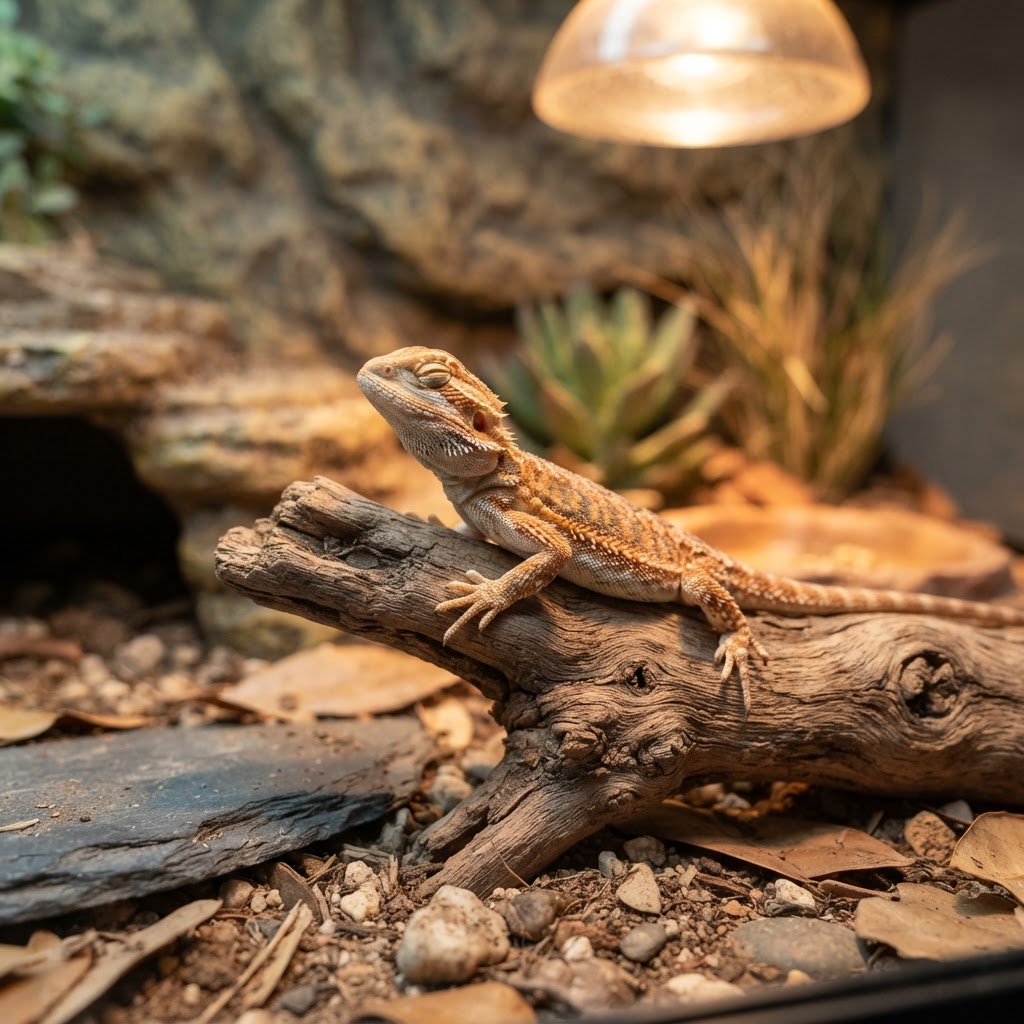
Bearded dragons come from dry, open regions, so they do best in relatively low humidity compared with tropical reptiles. Babies are not a separate species, but they can be more sensitive to poor enclosure conditions because their bodies are smaller and their daily care needs are more intense.
The ideal humidity range for babies
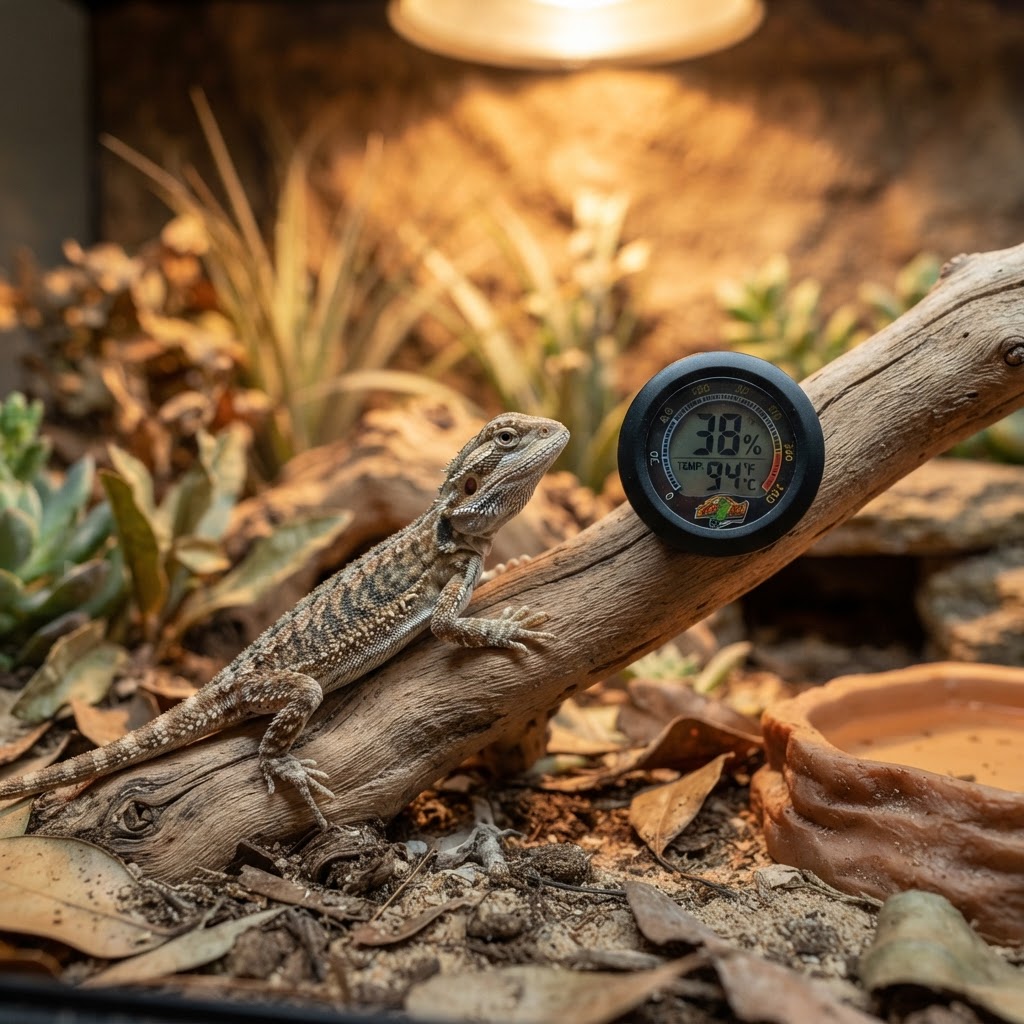
A good target for a baby bearded dragon enclosure is usually around 30% to 40% relative humidity during the day. Short fluctuations a little above or below that are not automatically dangerous, especially if your ventilation is strong and your temperatures are correct. What matters most is the overall pattern, not chasing one perfect number every hour.
In many homes, the cool side may read slightly higher than the basking side. That is normal. Nighttime humidity may also rise a bit when the air cools down. A modest nighttime increase is expected, but consistently damp conditions are not.
Signs the enclosure is too humid or too dry
When humidity stays too high, you may notice:
- condensation on glass
- a musty smell
- damp substrate or décor
- foggy enclosure walls in the morning
- your baby spending more time gaping or looking uncomfortable
When humidity is too low for too long, you might see:
- stubborn sheds
- dry-looking skin between sheds
- dehydration concerns
- faster water loss in very warm enclosures
Humidity should never be judged by guesswork alone, but your dragon's body can still give helpful clues. Review the signs of healthy baby bearded dragons and learn how to spot dehydration in baby bearded dragons so you can connect your humidity readings with what your pet is showing you.
Best Tools for Accurate Humidity Readings
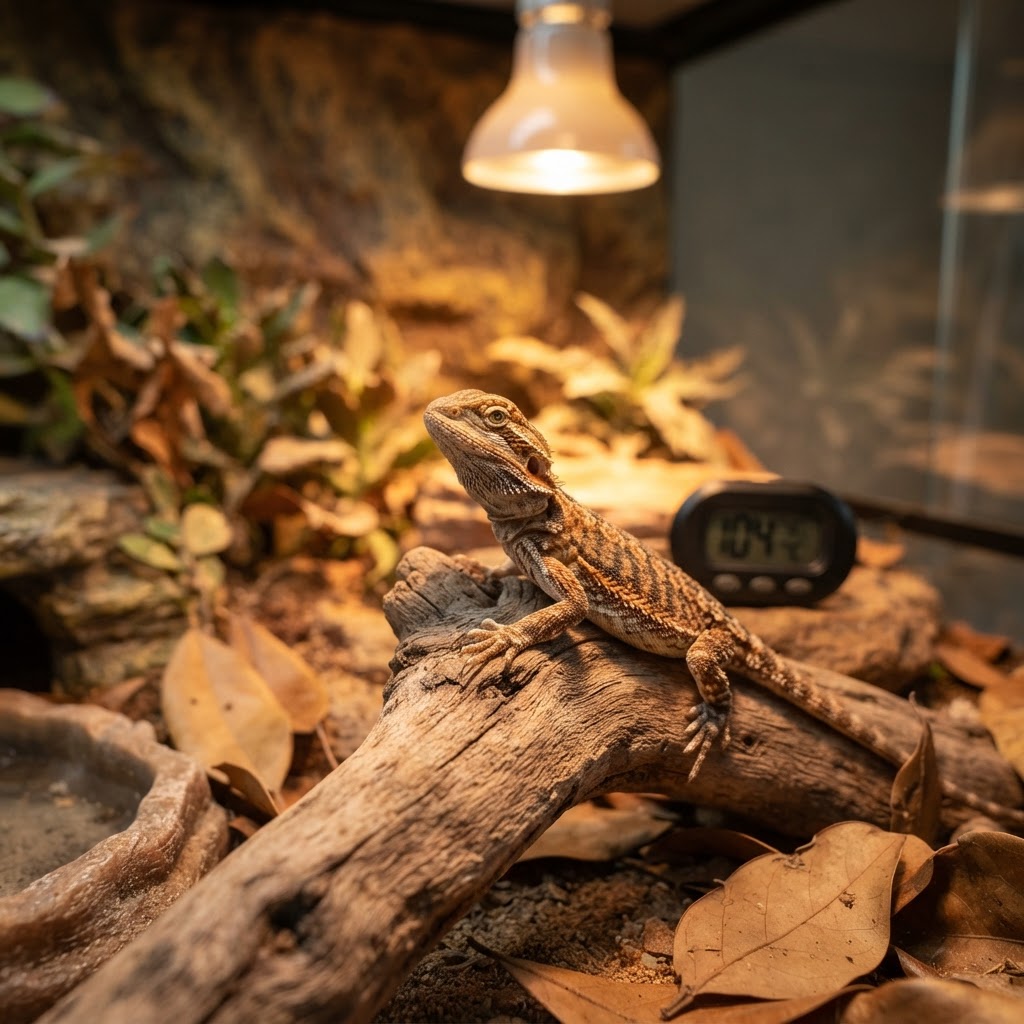
Learning how to check baby bearded dragon humidity levels starts with using the right tool. The best choice for most keepers is a digital hygrometer or a digital thermometer-hygrometer combo with a probe. These are usually more accurate and easier to read than stick-on analog dials.
As an Amazon Associate I earn from qualifying purchases. BabyBeardedDragon.net is a participant in affiliate programs including Amazon Associates. We may earn a commission on qualifying purchases at no extra cost to you.
Digital vs analog hygrometers
Digital hygrometers are better for beginners because they:
- give a clear percentage reading
- respond faster to changes
- are usually more accurate
- often include a temperature reading too
Analog dial hygrometers are common in pet stores, but they can be off by a wide margin. That may not sound serious until you realize an enclosure reading of 35% could actually be closer to 50% or 20% if the device is inaccurate.
If possible, use two measuring points in the enclosure. One can be near the warm side and one near the cool side, or you can move a single probe and compare readings over time.
Where to place the sensor
Placement matters almost as much as the device itself. Put your hygrometer probe or sensor:
- a little above the substrate, not directly on it
- away from the water bowl
- out of direct mist, if you use any
- away from direct basking lamp heat
- in an area your baby regularly occupies
For the most useful results, measure the cool side air and compare it with the warm side air. The center of the tank can hide differences that matter. This is especially true in smaller enclosures, where one corner may stay much more humid than the rest.
A Simple Daily Humidity-Check Routine
When people ask how to check baby bearded dragon humidity levels, this is the routine I suggest: check at the same times each day, compare sides of the tank, and look for trends instead of reacting to every tiny change.
Morning check
Check humidity about 30 to 60 minutes after the lights and heat have been on. This tells you what the enclosure settles into once the day begins.
Ask yourself:
- What is the reading on the cool side?
- Is the warm side lower, as expected?
- Is there any condensation or damp décor?
- Has anything changed since yesterday, such as weather or room airflow?
A morning check is useful because humidity can climb overnight. If your tank is still reading high after the lights come on, you may need better ventilation or a drier setup.
Midday check
Do a second check later in the day, especially if you are still dialing in a new setup. Midday is when basking heat has had time to dry the enclosure and show you the true daytime range.
This is the best time to catch issues such as:
- a water dish placed too close to heat
- a substrate that holds moisture
- poor airflow around the enclosure
- room humidity creeping up during warm weather
If your baby is in a temporary smaller tank, midday checks are even more important because the air volume is lower and changes happen faster.
Evening check
A quick evening glance helps you learn your enclosure's normal daily rhythm. You do not need to obsess over numbers, but this final check can show whether humidity rises sharply once the room cools.
If evenings are consistently too damp, the cause is often outside the tank, such as your home's natural humidity, a nearby humidifier, or a closed room with poor air movement.
Keep a simple weekly log
For the first few weeks, write down:
- date
- morning humidity
- midday humidity
- evening humidity
- room weather or AC use
- any changes you made
You can use a notebook or phone note. This makes pattern spotting much easier. A log also helps if you later troubleshoot appetite, shedding, or stress with your vet.
What Changes Humidity in a Baby Bearded Dragon Tank?
Humidity is influenced by more than just the weather. The enclosure itself can create wet or dry pockets.
Ventilation, substrate, and tank size
Screen tops, side vents, and overall airflow strongly affect readings. Better ventilation usually lowers humidity and helps prevent stale air. Enclosure setup choices matter too. Some substrates or loose bedding hold moisture longer than others, while paper towels or tile tend to stay drier and are easier to monitor in baby tanks.
If you are still refining your setup, review a full baby bearded dragon tank setup and compare your materials, layout, and airflow.
Water dishes, plants, and room climate
A large water bowl can raise humidity more than many beginners expect, especially in a small tank. Live plants, damp hides, or frequent misting can do the same. Even the room matters: basements, bathrooms, laundry areas, and naturally humid climates can all push tank humidity upward.
On the other hand, strong indoor heating or winter air can make the enclosure very dry. That is why checking the room's humidity can be useful when your tank numbers seem confusing.
Heat lamps and enclosure zones
Heat reduces relative humidity on the basking side, which is why your warm zone should usually read lower than the cool side. Proper heating and lighting help create this natural gradient. If your basking area is underpowered or the enclosure never fully warms up, humidity may linger higher than expected.
Make sure your temperatures and lighting are already correct by reviewing baby bearded dragon lighting and UVB. Humidity and temperature always work together.
How to Fix High or Low Humidity Safely
The goal is not to make constant dramatic changes. Small, steady adjustments work best.
If humidity is too high
Try these steps first:
- move the water bowl farther from the warm side
- use a smaller bowl if your baby still has access to drinking water
- improve airflow in the room
- open up the enclosure top if it is partially covered
- remove damp décor or wet substrate immediately
- avoid unnecessary misting
If your tank stays humid day after day, look closely at the substrate and ventilation. Babies often do well with simple, easy-to-clean surfaces because they make moisture control easier.
If humidity is too low
A slightly dry reading is not always an emergency, since bearded dragons are desert reptiles. But if the enclosure is consistently extremely dry and your baby shows dehydration or difficult sheds, you can make gentle adjustments:
- keep a fresh water dish on the cool side
- offer water-rich greens as age-appropriate diet support
- avoid placing the tank near heating vents
- reduce excessive room drafts
- check that your basking area is not overheating the entire enclosure
What you should not do is turn the whole enclosure humid for shedding. Babies do not need tropical conditions to shed well. In most cases, good hydration, correct temperatures, and proper surfaces to rub against are more important.
If your baby is shedding and seems uncomfortable, see our guide to common baby bearded dragon mistakes to avoid well-meaning fixes that create new problems.
Common Beginner Mistakes to Avoid
A lot of humidity problems come from a few simple errors:
- Trusting one cheap analog dial. If the reading is wrong, every decision after that may be wrong too.
- Placing the sensor in the wrong spot. Readings taken beside the water bowl or directly under a lamp are misleading.
- Panicking over minor swings. A short rise or drop is normal. Focus on the daily pattern.
- Using misting as a routine. Regularly wetting the enclosure often creates more humidity trouble than it solves.
- Ignoring the room itself. Sometimes the enclosure is fine and the entire room is the real issue.
- Trying to fix humidity before checking heat and airflow. Improper heating often changes humidity readings.
For baby dragons, simple setups usually work best. Clean surfaces, solid ventilation, stable heat, and accurate instruments beat overly complicated enclosures every time.
Key Takeaways
- Aim for about 30% to 40% daytime humidity for most baby bearded dragons.
- Use a digital hygrometer instead of a basic analog dial whenever possible.
- Measure both the cool side and warm side of the enclosure.
- Check humidity at consistent times, especially in the morning and midday.
- Watch for trends, not just one number.
- High humidity is usually caused by poor ventilation, damp substrate, large water bowls, or humid room conditions.
- Do not raise enclosure humidity dramatically just because your baby is shedding.
- Always interpret humidity together with heat, lighting, hydration, and your dragon's overall behavior.
Frequently Asked Questions
What humidity should a baby bearded dragon have?
Most baby bearded dragons do well around 30% to 40% relative humidity during the day. Short fluctuations are normal, but consistently damp conditions are not ideal.
Do I need two hygrometers in the tank?
You do not absolutely need two, but using two measuring points makes your readings much more useful. A warm-side and cool-side comparison helps you see the enclosure's real humidity gradient.
Should I mist my baby bearded dragon's tank?
Usually, no. Routine misting often raises humidity too much. Focus on proper hydration, fresh drinking water, correct temperatures, and a well-balanced diet instead.
Why does humidity rise at night?
As air cools, relative humidity often rises naturally. A small nighttime increase is normal. If the enclosure becomes very damp by morning, improve airflow and recheck water bowl placement.
Can low humidity cause shedding problems?
It can contribute, but shedding problems are not usually fixed by turning the tank humid. Poor hydration, incorrect heat, and general husbandry problems are more common causes in baby beardies.
What if my hygrometer reading keeps changing?
Some fluctuation is expected throughout the day. Check the sensor location, compare warm and cool sides, and log readings for several days before making major changes.
Is humidity related to stress or appetite?
Yes, it can be. If humidity is far outside the normal range, your baby may seem uncomfortable. Still, appetite and stress are influenced by many factors, so consider lighting, heat, handling, and health too.