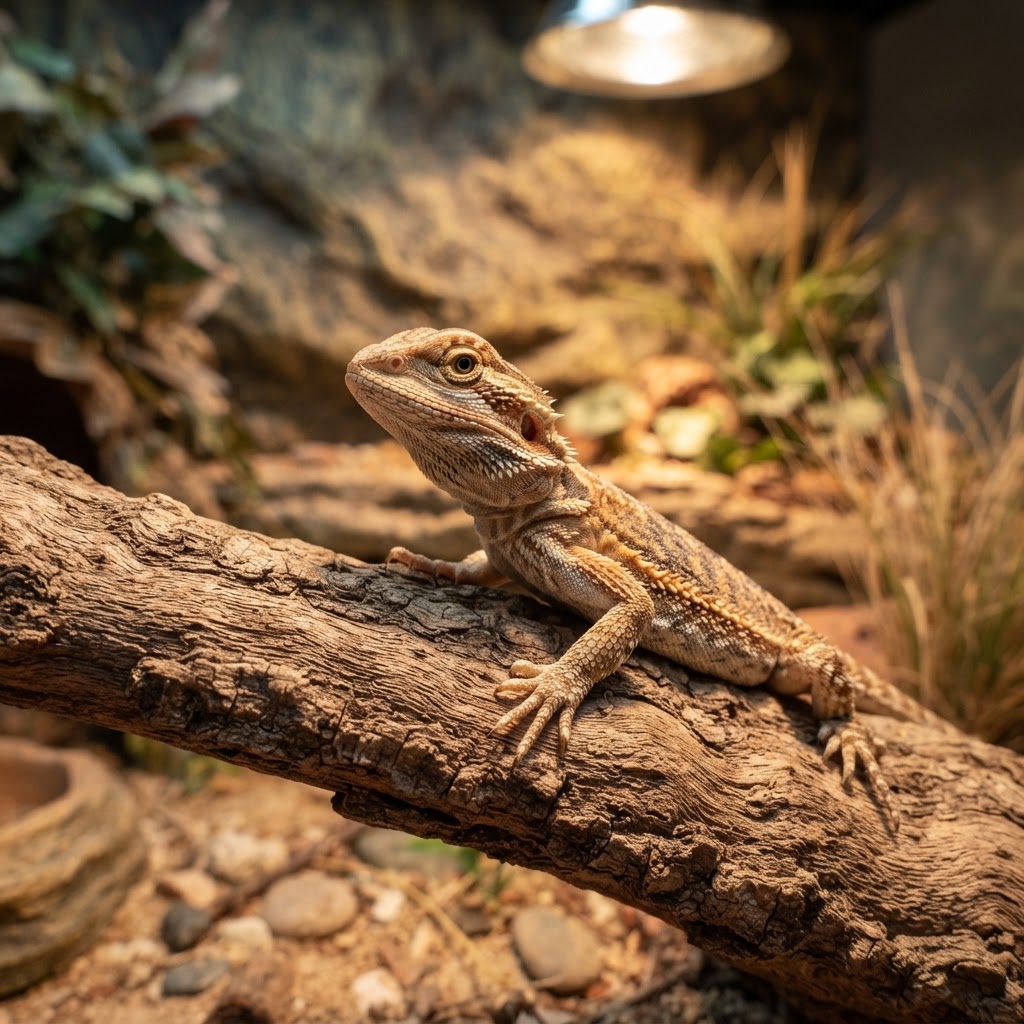
Introduction
Bringing home a baby bearded dragon is exciting — and a little overwhelming. These small lizards have big care requirements, and getting things right in the first few months is critical for their long-term health. This guide covers everything you need to know.
What Makes Baby Bearded Dragons Different
Baby bearded dragons (0–3 months) are fragile, fast-growing, and have very specific needs that differ from adult dragons. They need:
- More frequent feeding — up to 3 times per day
- Higher protein diet — 70–80% live insects
- Precise temperatures — basking spot of 105–110°F
- More attentive monitoring — growth issues show up fast
Setting Up the Enclosure
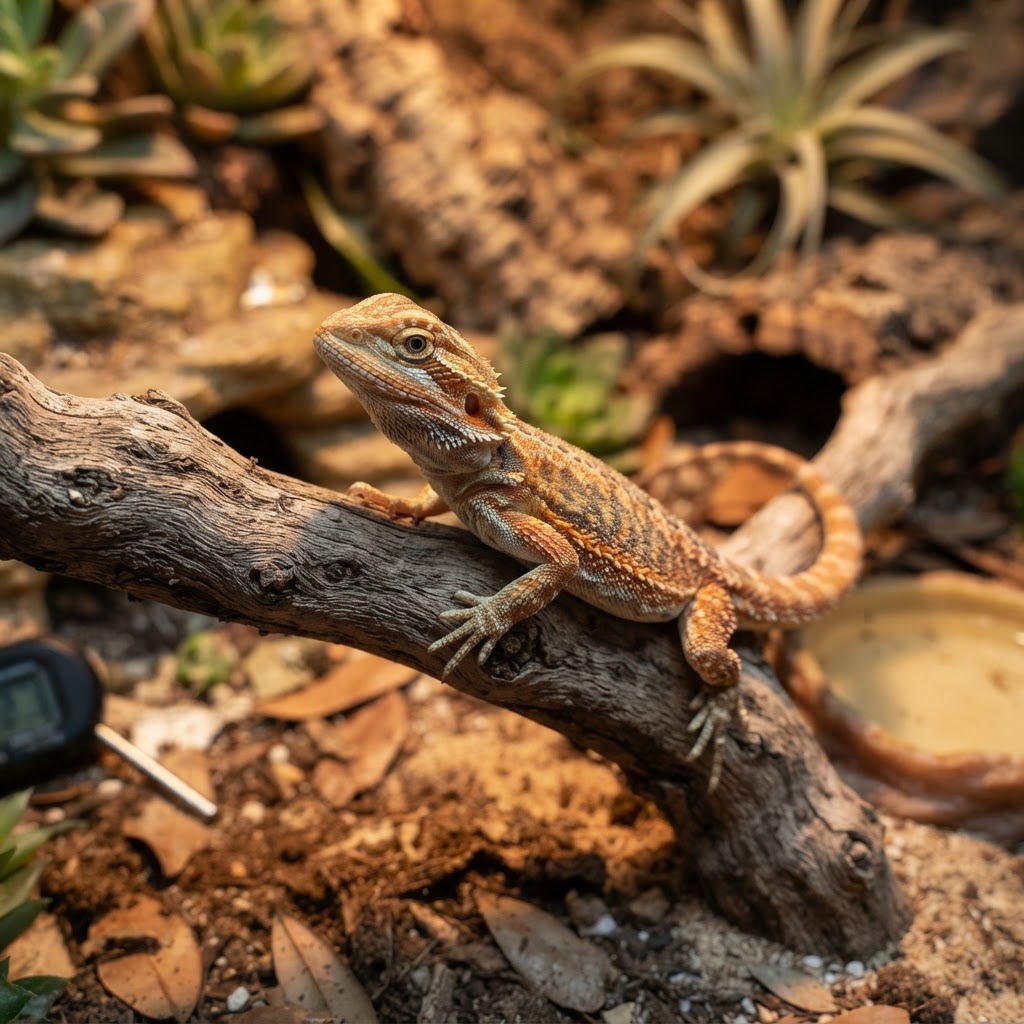
A 40-gallon tank is the minimum for a baby beardie, though many keepers start with a 20-gallon for hatchlings and upgrade quickly. Key elements:
| Item | Requirement | |------|-------------| | Tank size | 40+ gallon (juveniles) | | Basking temp | 105–110°F | | Cool side | 80–85°F | | Night temp | No lower than 65°F | | UVB bulb | 10.0 or T5 HO tube |
Lighting Requirements
UVB lighting is non-negotiable. Without it, baby bearded dragons cannot metabolize calcium, leading to metabolic bone disease (MBD) — one of the most common and preventable causes of death in captive beardies.
- Use a Arcadia 6% or 12% T5 HO or Reptisun 10.0 T5 HO
- Replace bulbs every 6 months even if they still produce visible light
- Provide 12–14 hours of light per day
Feeding Your Baby Dragon
Baby beardies should eat 2–3 times daily. Offer insects first, then greens. A good staple insect is dubia roaches or black soldier fly larvae. Crickets work too but can be stressful.
Important: Never feed insects larger than the space between your dragon's eyes. Oversized prey can cause impaction or neurological issues.
Handling and Socialization
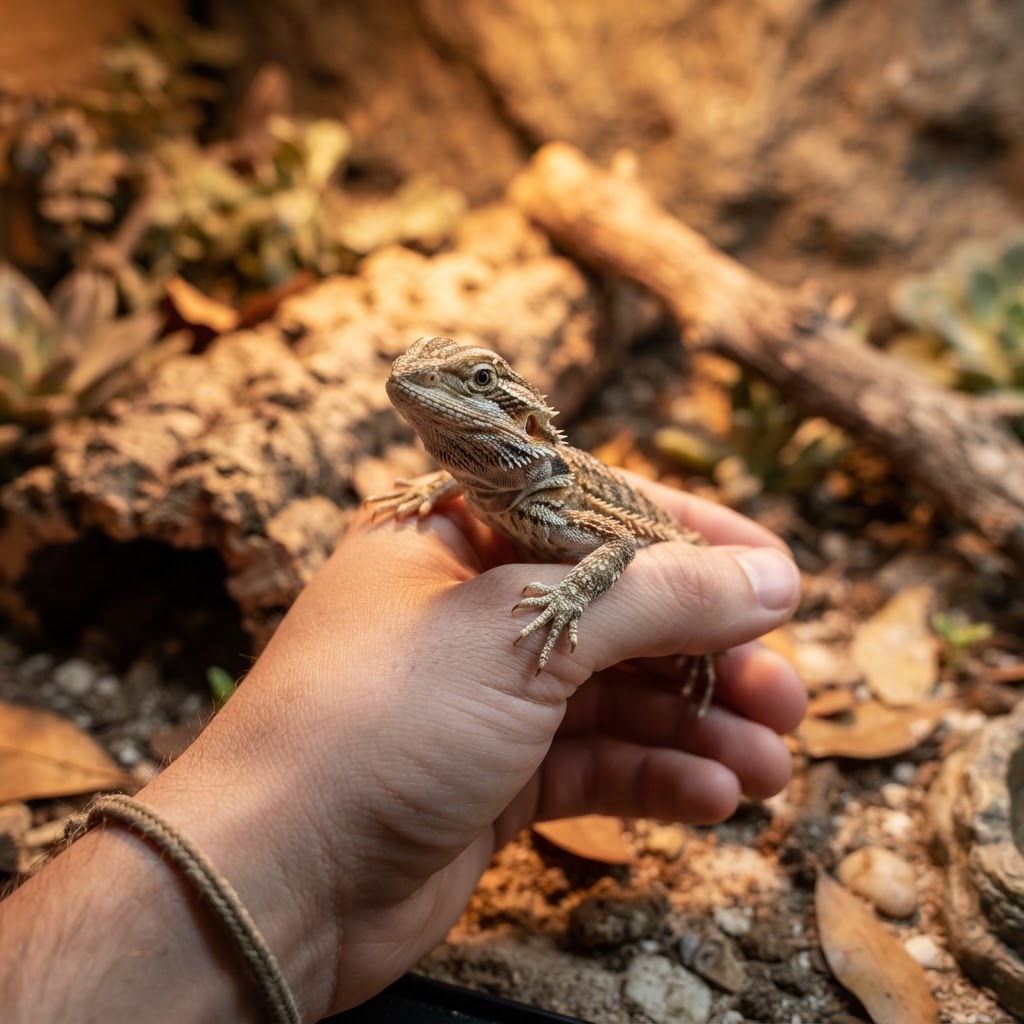
Start handling sessions at 5–10 minutes per day and gradually increase. Always support the belly and limbs. Avoid handling within an hour of feeding.
Watch for signs of stress:
- Dark beard or body
- Glass surfing
- Trying to escape constantly
Common Health Issues in Babies
- Metabolic Bone Disease — caused by insufficient UVB or calcium
- Impaction — from loose substrate or oversized feeders
- Parasites — common in wild-caught or pet store dragons
- Respiratory infections — from temperatures being too cold
Summary
The first 12 months of a bearded dragon's life set the foundation for everything. Get the lighting right, feed consistently, and monitor growth closely. When in doubt, consult a reptile-experienced vet.