Introduction
If you are bringing home a baby bearded dragon, few setup details matter more than heat. These little reptiles depend on external warmth to digest food, stay active, absorb nutrients properly, and grow the way they should. A tank that looks nice but runs too cool or too hot can quickly lead to stress, poor appetite, and health problems.
Getting the basking temperature for baby bearded dragons right is especially important during the first year of life. Babies eat more often than adults, grow rapidly, and need a carefully balanced heat gradient so they can warm up after meals and cool down when needed. For new owners, the numbers can feel confusing at first, but once you understand what to measure and where to measure it, it becomes much easier to manage.
In this guide, you will learn the ideal basking range for baby beardies, how to measure temperatures accurately, warning signs that your setup needs adjusting, and simple fixes you can make today. If you are still building your enclosure, our baby bearded dragon tank setup guide and baby bearded dragon lighting and UVB guide are great companion reads.
Key Takeaways
- Baby bearded dragons need a surface basking spot that is hotter than the rest of the enclosure.
- Aim for a basking surface temperature of about 105-110°F for most babies and juveniles.
- Measure the basking area at the exact spot where your dragon sits, not just the general air temperature.
- Use a temperature gun and a digital probe thermometer for the most accurate readings.
- The warm side should taper down from the basking zone, while the cool side should stay much lower so your dragon can thermoregulate.
- Nighttime temperatures can safely drop as long as they do not become dangerously cold.
- Signs like gaping constantly, hiding all day, poor appetite, or sluggishness often point to heating problems.
Why Basking Heat Matters So Much for Babies
Bearded dragons are ectothermic, which means they rely on outside heat to control body temperature. In the wild, they move between sunny and shaded areas throughout the day. In captivity, your enclosure has to provide that same choice.
For a baby dragon, proper heat affects almost everything:
- Digestion: After eating insects or greens, babies need enough warmth to process food efficiently.
- Appetite: A dragon that is too cool often eats less or refuses food.
- Activity level: Healthy babies are alert, curious, and eager to bask after waking up.
- Immune function: Long-term temperature issues can weaken the body and increase stress.
- Calcium use and growth: Heat works together with UVB lighting to support bone development.
Because babies grow quickly from 0 to 12 months, small setup mistakes can have a bigger effect than many beginners realize. If your dragon seems off, temperature is one of the first things to check before assuming something more serious is wrong. You can also compare your pet’s progress with normal milestones in our article on baby bearded dragon growth rate.
The Ideal Basking Range for Babies
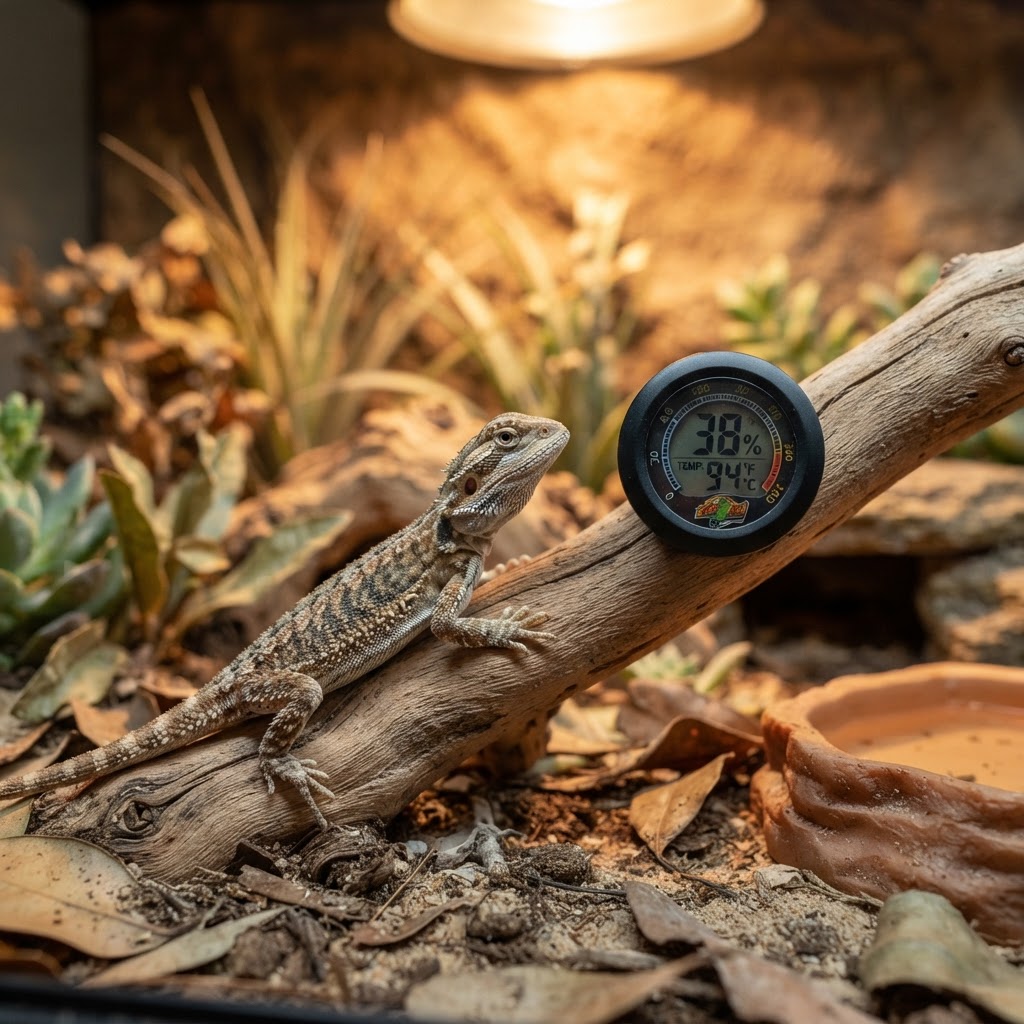
The ideal basking temperature for baby bearded dragons is usually a surface temperature of 105-110°F at the main basking spot. Many keepers aim for the middle of that range and then watch the dragon’s behavior to fine-tune the setup.
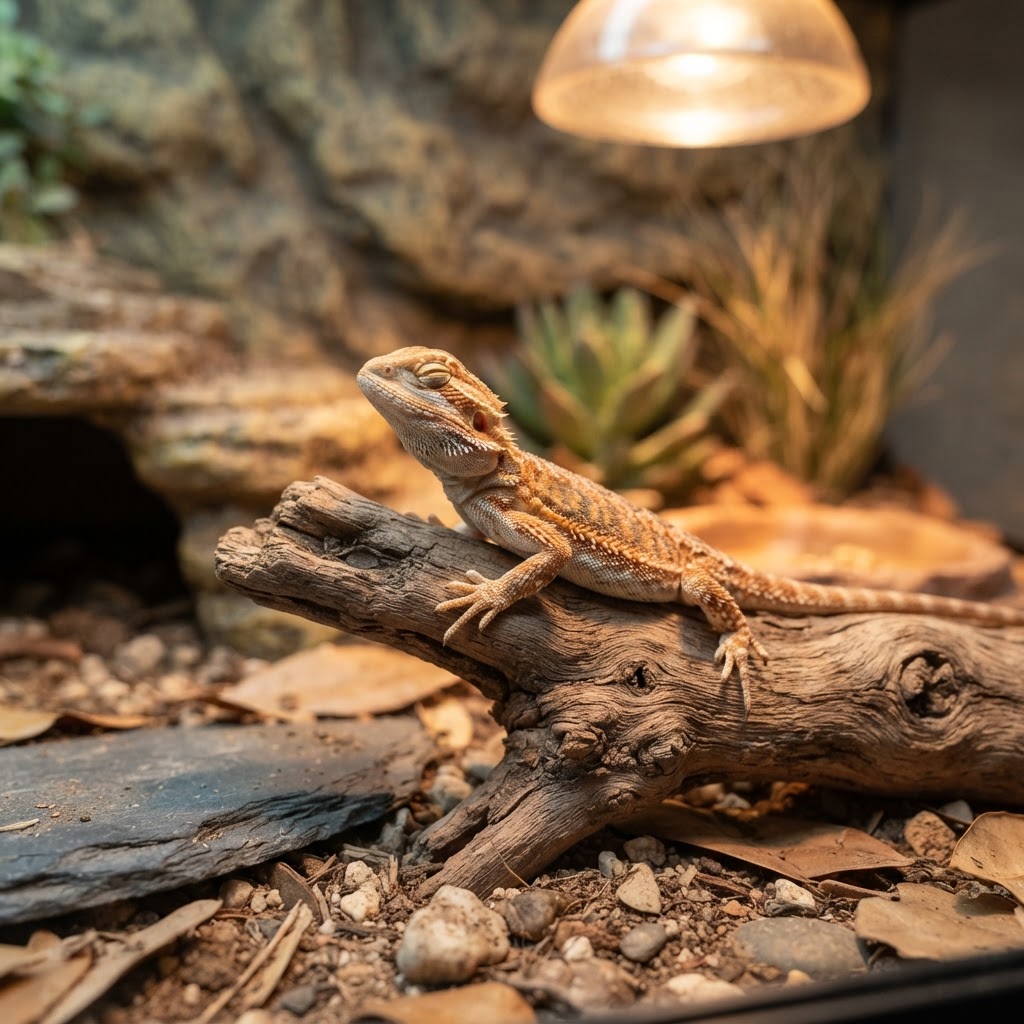
That number refers to the surface where your dragon’s body rests, such as a rock, branch, or raised basking platform directly under the heat lamp. It does not mean the entire warm side air temperature should be 110°F.
Surface Temperature vs. Air Temperature
This is where many new owners get tripped up.
A stick-on dial thermometer on the glass might tell you the tank is 90°F, but that does not reveal whether the basking surface is warm enough. A baby bearded dragon warms itself by sitting under the light and absorbing heat through its body. The surface temperature at that exact point is what matters most.
A good setup often looks something like this:
- Basking surface: 105-110°F
- Warm side ambient air: around 88-95°F
- Cool side ambient air: around 75-85°F
These numbers do not need to be identical in every home, because tank size, room temperature, ventilation, and fixture height all affect heat. The goal is to create a usable gradient rather than making the whole tank one temperature.
Do Babies Need It Hotter Than Adults?
In many cases, yes—at least slightly. Babies and younger juveniles generally do best with a hotter basking spot than large adults because they eat more frequently and need dependable heat for digestion and growth. As your dragon gets older and larger, some keepers lower the basking surface a bit, but babies usually benefit from that 105-110°F zone.
If your dragon is under about 12 months old, focus on stable heat and consistent daily monitoring rather than constantly changing the bulb or fixture position.
How to Measure Temperatures Correctly
To set the right basking temperature for baby bearded dragons, you need to measure it accurately. Guessing based on how warm the tank feels or relying only on cheap stick-on gauges can lead to real problems.
Best Tools to Use
The most helpful tools are:
- Infrared temperature gun: Great for checking the basking surface quickly.
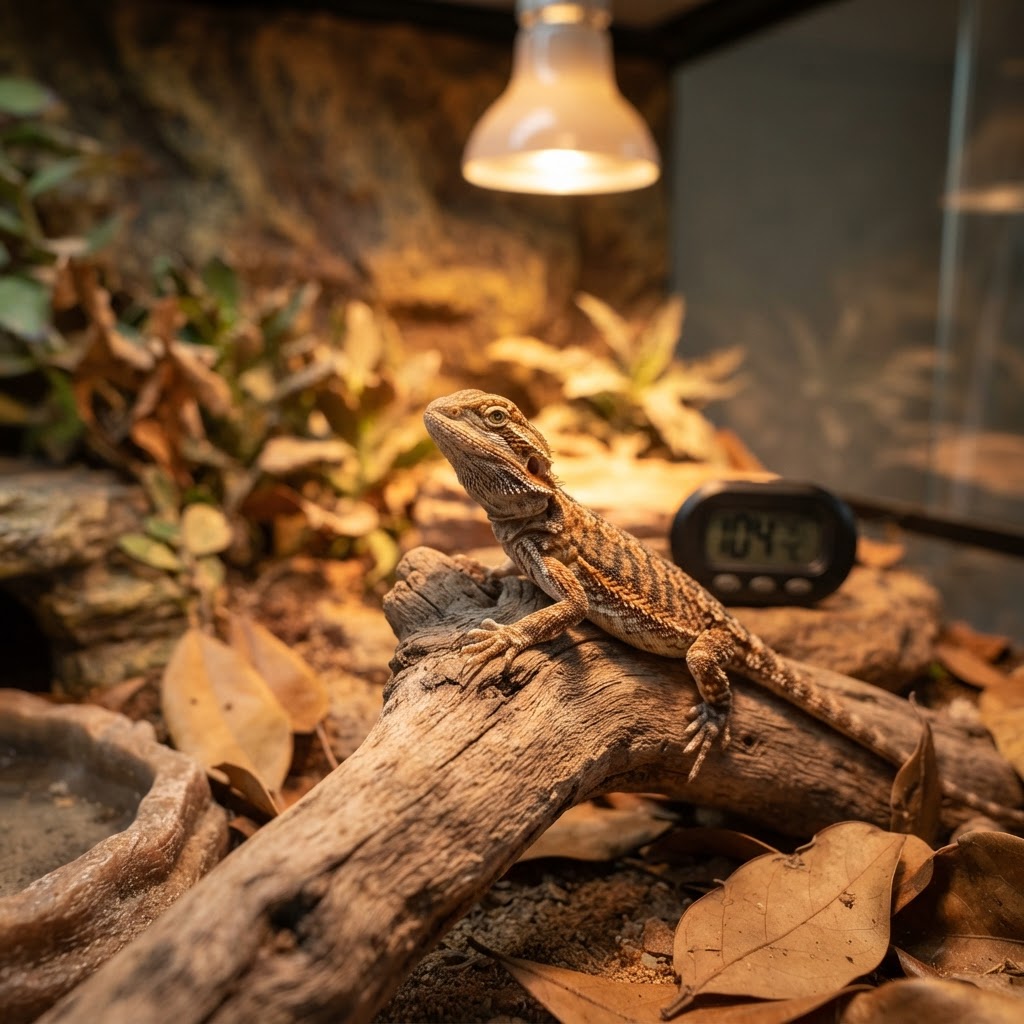
- Digital probe thermometer: Useful for monitoring warm-side and cool-side ambient temperatures.
- Timer for lights: Helps maintain a steady day/night routine.
As an Amazon Associate I earn from qualifying purchases. BabyBeardedDragon.net is a participant in affiliate programs including Amazon Associates. We may earn a commission on qualifying purchases at no extra cost to you.
A temperature gun lets you point directly at the basking rock, branch, or platform where your baby sits. A probe thermometer helps you track the surrounding air on each side of the tank. Using both gives you a much clearer picture than using one tool alone.
Where to Place the Probe
Put the probe:
- On the warm side but not directly touching the bulb
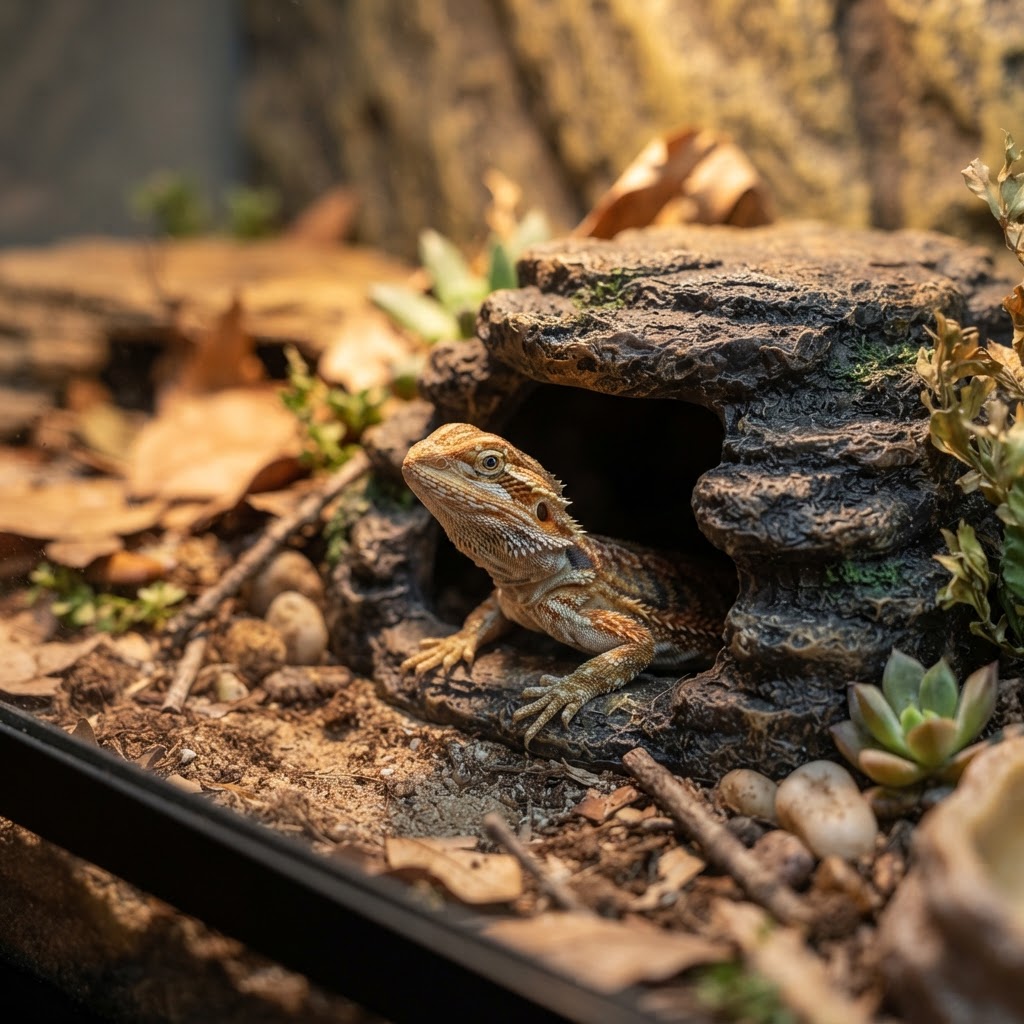
- On the cool side near your dragon’s lower-temperature resting area
- At about the level where your dragon actually spends time
If you want to measure the basking platform with a probe, place it directly on the surface and leave it there long enough to get a stable reading. Then compare it with your infrared gun.
When to Check Temperatures
Always check readings after the lights have been on for at least 30-45 minutes. Tanks need time to warm up. A reading taken immediately after lights turn on is not useful.
It is also smart to check:
- In the morning after warm-up
- Midday when the tank is fully heated
- During seasonal changes
- After changing bulbs, tank decor, or fixture height
Daytime and Nighttime Temperature Basics
During the day, your baby dragon needs access to a clear heat gradient from hot basking zone to cooler retreat area. That lets your pet regulate body temperature naturally.
At night, all visible basking lights should be off so your dragon can rest. A nighttime drop is normal and healthy. In many homes, nighttime temperatures in the 65-75°F range are fine.
If your house gets colder than about 65°F, you may need a non-light-emitting heat source approved for reptile use. Avoid bright night bulbs, since they can disrupt your dragon’s sleep cycle.
If you want a broader overview of enclosure ranges, see our guide to the best temperature for baby bearded dragon enclosures.
Signs the Basking Area Is Too Cool or Too Hot
Your dragon’s behavior often tells you whether the setup is working.
Signs the Tank Is Too Cool
A baby dragon that is not getting enough warmth may:
- Bask constantly but still seem dark or lethargic
- Eat less than usual
- Struggle with digestion or have infrequent stools
- Spend too much time flattened under the lamp
- Be less active and less alert
If a baby stops eating, always review husbandry first. Heating and UVB are common causes. You may also find our article on baby bearded dragon not eating helpful.
Signs the Tank Is Too Hot
A setup that runs too hot can cause just as many issues. Watch for:
- Constant gaping while basking for long periods
- Avoiding the basking area completely
- Staying at the cool end all day
- Glass surfing or restless pacing
- Excessive hiding
- Signs of dehydration
Occasional gaping under the lamp can be normal thermoregulation. Constant escape behavior, frantic movement, or a dragon that refuses to use the warm side usually means you should recheck your readings.
How to Adjust a Basking Setup Safely
If your numbers are off, do not panic. Small changes usually make a big difference.
If the Basking Spot Is Too Cool
Try one change at a time:
- Lower the fixture slightly if safe to do so.
- Raise the basking platform closer to the bulb.
- Use a slightly higher wattage bulb if your current bulb is too weak.
- Reduce heat loss from drafts, open tops, or cold room placement.
After any change, let the enclosure stabilize and recheck the surface temperature.
If the Basking Spot Is Too Hot
To bring temperatures down:
- Raise the lamp higher above the basking platform.
- Lower the basking decor a bit.
- Use a lower wattage bulb if needed.
- Increase ventilation if the tank is trapping too much heat.
Avoid making large, repeated changes in one day. Overshooting in the other direction can stress your baby even more.
Tank Size and Decor Matter
A small enclosure heats up faster than a larger one. Dark rocks, slate, and dense basking surfaces may hold heat more strongly than lightweight decor. Screen tops can reduce heat intensity, while enclosed tops may trap more heat.
This is why copying another owner’s bulb wattage does not guarantee success in your home. The same bulb can produce different results depending on:
- Tank dimensions
- Distance from bulb to basking spot
- Room temperature
- Season
- Type of fixture
- Ventilation
Seasonal Changes Are Normal
Many beginners get their tank dialed in once and assume it will stay that way year-round. But winter rooms are often cooler, and summer rooms can raise enclosure temperatures dramatically.
Check your setup more often when:
- Outdoor temperatures change
- Air conditioning or heating use increases
- You move the tank near a window
- You switch bulbs or change decor height
If your home tends to run chilly, our guide on how to keep baby bearded dragons warm can help.
Common Heating Mistakes New Owners Make
Temperature issues are often caused by simple setup errors.
Using Only Stick-On Thermometers
These are usually not accurate enough for a baby dragon enclosure. They may tell you the glass temperature rather than the actual basking surface.
Measuring the Wrong Spot
You need the temperature where your dragon’s body sits, not the tank floor on the other side of the enclosure.
Making the Whole Tank Too Hot
A dragon needs choices. If there is no cooler retreat area, your baby cannot regulate body temperature properly.
Forgetting the UVB Connection
Heat and UVB work together. Even a perfect basking spot cannot fully make up for poor UVB exposure. For a full overview, read our complete baby bearded dragon care guide.
Using Heat Rocks or Under-Tank Heaters as Main Heat
Bearded dragons bask from above. Belly heat is not a replacement for overhead basking lamps and can sometimes create unsafe hot spots.
A Simple Temperature Routine for Baby Beardie Owners
If you are brand new to reptile care, follow this routine each day:
- Turn lights on with a timer at the same time every morning.
- Wait at least 30-45 minutes for the tank to warm up.
- Check the basking surface with an infrared temp gun.
- Confirm warm-side and cool-side ambient temperatures with probes.
- Watch your dragon’s behavior after breakfast and basking.
- Recheck readings if your dragon suddenly acts unusually sleepy, restless, or uninterested in food.
This only takes a few minutes, but it helps you catch problems early.
A healthy baby usually wakes up, warms under the lamp, and becomes active before or after eating. If yours is consistently avoiding the basking spot, double-check both your temperatures and lighting setup.
Frequently Asked Questions
What is the best basking temperature for baby bearded dragons?
For most babies and young juveniles, a basking surface temperature of 105-110°F is a solid target. Measure the exact spot where your dragon sits under the heat lamp, not just the surrounding air.
Is 110°F too hot for a baby bearded dragon?
Not necessarily. For many babies, 110°F at the basking surface is still within a safe and useful range. The key is that your dragon must also have access to a cooler side of the enclosure so it can move away when fully warmed.
Can I use a heat mat instead of a basking light?
No, not as the main heat source. Bearded dragons need overhead heat that mimics the sun. Heat mats do not create a proper basking zone and are not a substitute for a basking bulb and appropriate UVB lighting.
Do baby bearded dragons need different temperatures than adults?
Yes, babies often do best with a slightly hotter basking spot than adults because they are growing fast and eating more frequently. A strong basking zone supports digestion, energy, and development during the first year.
How long should basking lights stay on each day?
Most keepers provide about 12-14 hours of daytime light for babies, depending on season and household schedule. Use a timer so your dragon gets a consistent routine every day.
Why is my baby bearded dragon not basking?
If your baby avoids the basking spot, the area may be too hot, too bright, poorly positioned, or uncomfortable to sit on. Recheck surface temperatures, fixture height, UVB placement, and the stability of the basking platform. Illness and stress can also affect behavior.
What if my temperatures seem correct but my baby still acts sluggish?
Recheck everything carefully: basking surface temperature, warm-side and cool-side ambient temperatures, UVB quality, hydration, feeding, and stool output. If your dragon remains lethargic, refuses food, or shows other warning signs, contact a qualified reptile vet. Husbandry problems are common, but persistent symptoms should never be ignored.