Introduction
Bringing home a baby bearded dragon is exciting, but lighting is one of the first places new owners get stuck. Heat and light are not just comfort items for a baby dragon. They directly affect digestion, appetite, activity level, calcium use, and healthy growth during that important 0-12 month stage. If the basking setup is too cool, your dragon may become sluggish and refuse food. If it is too hot, your baby can hide constantly, gape, or become stressed.
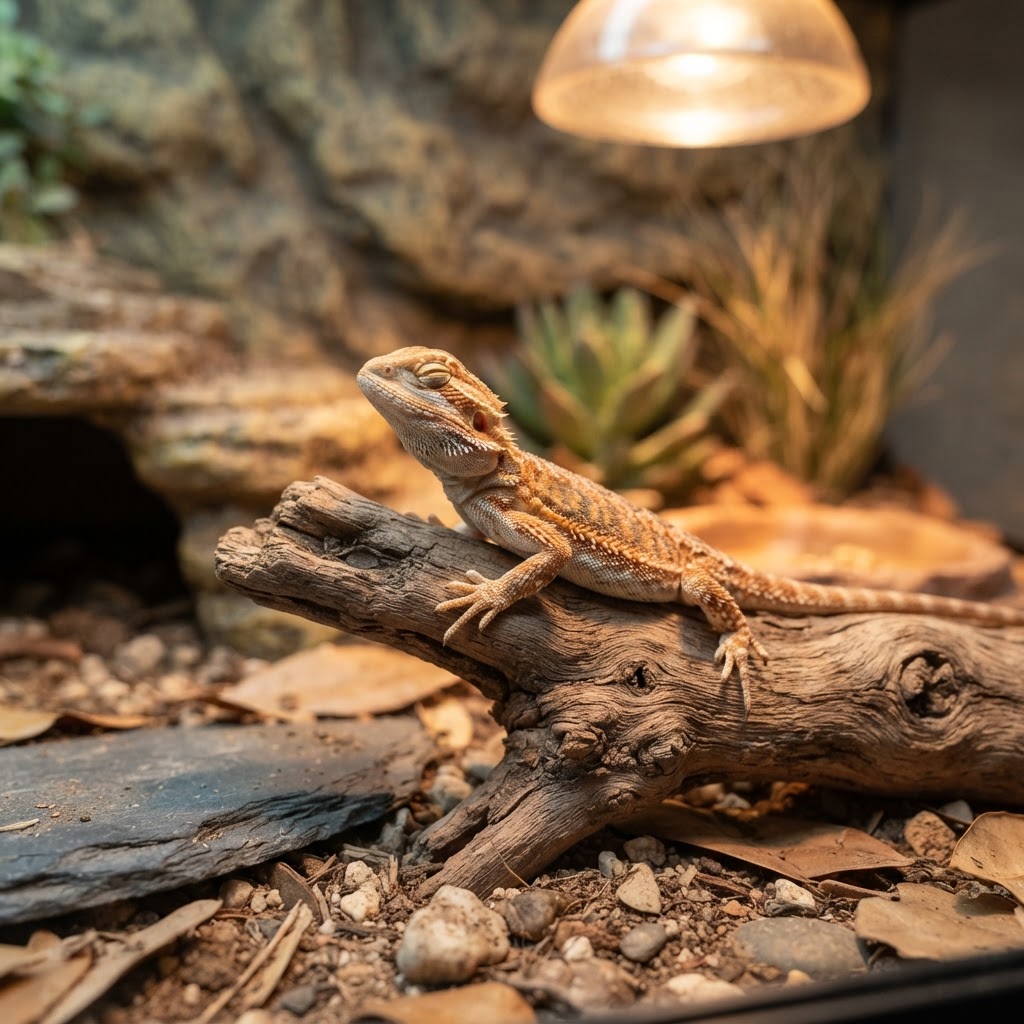
Choosing the best basking lights for baby bearded dragons is really about creating a safe, bright, natural-looking hotspot that mimics the Australian sun. The goal is not simply to make the tank warm. You want a focused basking area with the right surface temperature, a cooler side for thermoregulation, and a bulb that works well alongside a proper UVB tube.
In this guide, I will walk you through what makes a good basking bulb, which products are worth considering, and how to set them up for a baby dragon specifically. If you are still building your enclosure, it also helps to review a full baby bearded dragon tank setup and a separate UVB lighting guide so the whole system works together.
Affiliate Disclosure: As an Amazon Associate I earn from qualifying purchases. BabyBeardedDragon.net is a participant in affiliate programs including Amazon Associates. We may earn a commission on qualifying purchases at no extra cost to you.
Key Takeaways
- Baby bearded dragons need a bright white basking bulb that creates a warm basking surface and clear day-night cycle.
- For most babies, the basking surface should usually be around 105-110°F, while the cool side should stay much lower so they can self-regulate.
- The best bulb is not always the highest wattage. Tank size, room temperature, fixture height, and basking platform all matter.
- Avoid red, blue, or black night bulbs for daytime basking. Babies do best under bright white light.
- A separate linear UVB tube is usually better than relying on one combo bulb, especially in smaller baby enclosures.
- Always measure temperatures with an infrared temp gun or a digital probe thermometer, not by guesswork.
- If a bulb runs too hot, use a dimming dome or raise the fixture rather than waiting for your dragon to 'adjust.'
Why Basking Lights Matter So Much for Baby Dragons
Baby bearded dragons grow fast. In their first year, they eat more frequently than adults, shed more often, and rely heavily on proper heat to digest protein-rich meals. A weak basking bulb can lead to low appetite, slow digestion, and a dragon that spends too much time inactive. On the other hand, a harsh or poorly placed bulb can make the basking zone unusable.
A good basking setup should create three things:
- A bright, inviting basking spot
- The correct surface temperature on the basking platform
- A heat gradient from hot side to cool side
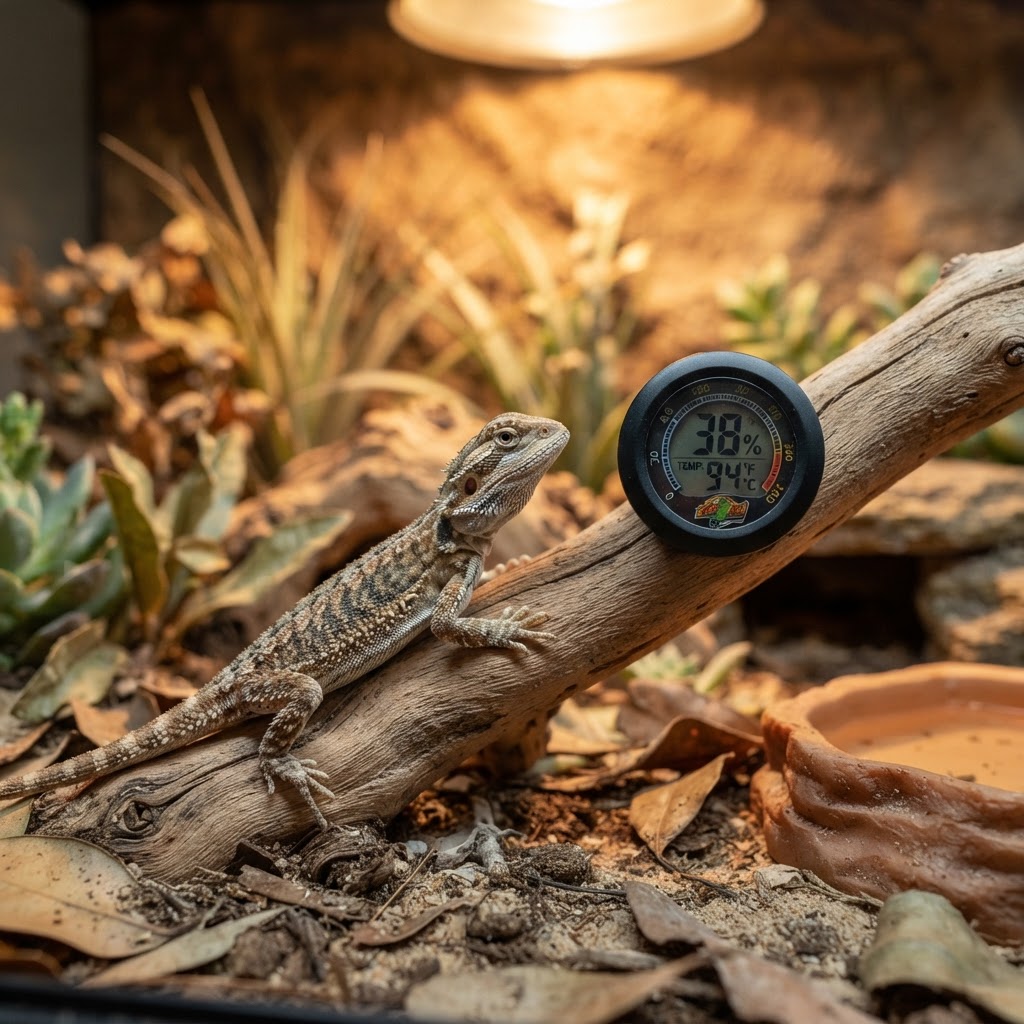
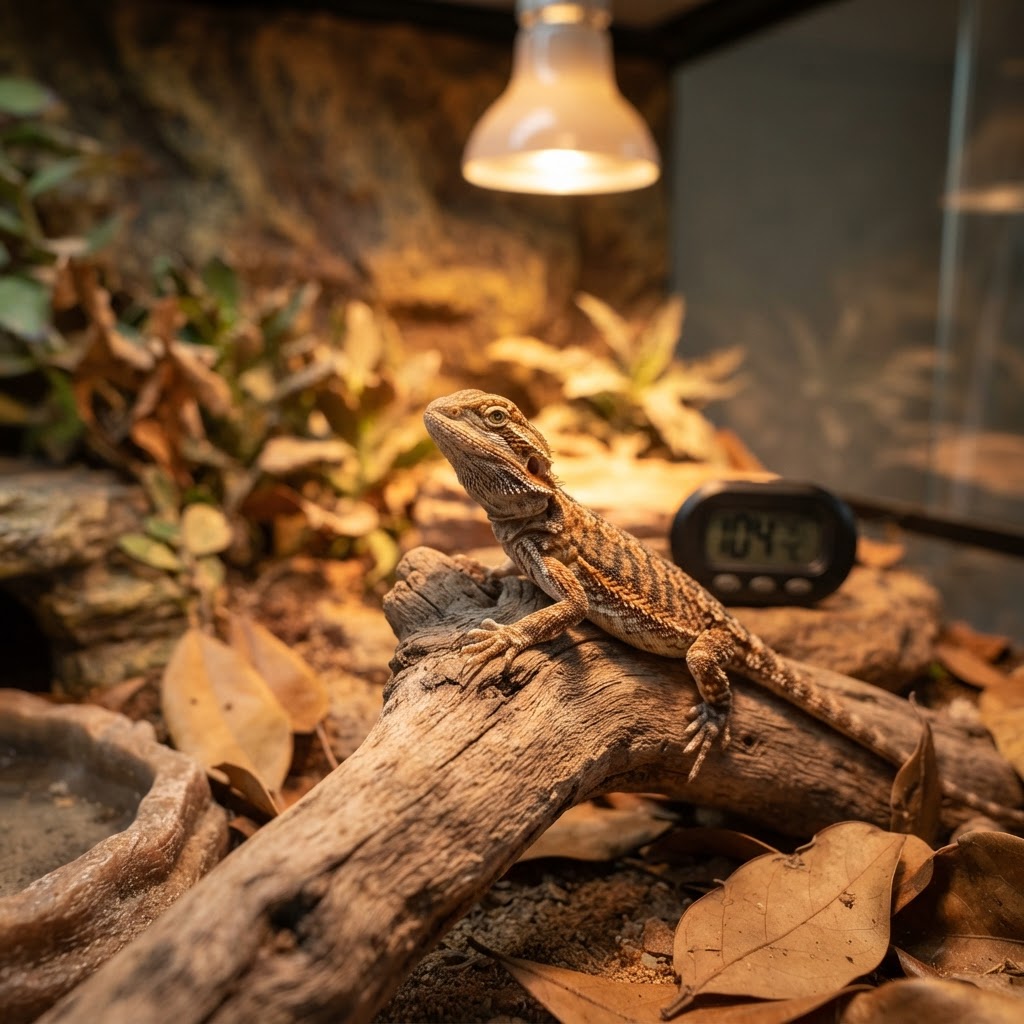
For baby dragons, I usually tell beginners to focus on the surface temperature, not just the air temperature. A digital thermometer on the wall might say the enclosure looks fine, while the actual rock or branch under the bulb is far too cool or dangerously hot.
Most babies do well when the basking surface is roughly 105-110°F, with a warm side around the low to mid 90s and a cool side around 75-85°F. Exact numbers can vary a bit based on behavior and enclosure design, but this range is a reliable starting point. If you want a deeper breakdown, see our guide to the best enclosure temperatures.
Just as important, basking bulbs do not replace UVB. Heat helps metabolism and digestion, while UVB helps your baby use calcium properly and build strong bones. Both are essential.
What to Look for in a Basking Bulb
When comparing the best basking lights for baby bearded dragons, start with function before brand. A great bulb is one that helps you maintain safe, repeatable temperatures every day.
Bright white daylight output
Choose a bulb that produces bright white light for daytime use. This encourages normal basking behavior and supports a natural day-night rhythm. Colored bulbs, especially red or blue ones, are outdated for regular daytime basking and can make the enclosure look unnatural.
Reliable heat without extreme spikes
Babies are less forgiving of setup mistakes than adults. A bulb that heats too aggressively in a small tank can create a dangerously hot hotspot very quickly. Look for bulbs known for consistent heat output, and pair them with a dome fixture rated for the bulb wattage.
The right beam spread
A narrow spotlight creates a small, intense hot point. A flood-style bulb spreads heat more gently across the basking area. For many baby setups, a slightly wider basking zone is easier to use because the dragon can warm up without balancing on one tiny 'perfect' spot.
Easy pairing with a proper UVB tube
In most baby enclosures, the best system is a separate basking bulb plus a linear T5 or T8 UVB tube. This gives you much better control than trying to do everything with one bulb. It also reduces the risk of overpowering a small enclosure.
Wattage that matches the enclosure
A 50W bulb may be perfect in one setup and too weak in another. The right wattage depends on:
- Tank size
- Screen top thickness
- Distance from bulb to basking platform
- Room temperature
- Type of fixture and reflector
As a general starting point, many baby enclosures use 50W to 75W bulbs, while larger or cooler setups may need 75W to 100W. These are only starting points. Always test and adjust.
Compatibility with a dimmer or lamp stand
One of the easiest ways to fine-tune heat is with a dimming fixture or plug-in dimmer made for compatible heat lamps. This is especially useful if your room gets warmer in summer or if your dragon's basking branch is close to the screen top.
Reviews: Best Basking Lights for Baby Bearded Dragons
Below are beginner-friendly picks that are commonly recommended for bearded dragon setups. Availability can change, but these are solid bulb types and brands to compare.
1. Zoo Med Repti Basking Spot Lamp
Best overall for beginners
The Zoo Med Repti Basking Spot Lamp is popular for a reason. It is easy to find, comes in multiple wattages, and gives a focused heat zone that works well in many baby dragon enclosures. For new keepers who want a simple, proven option, this is often the easiest place to start.
Why it stands out:
- Widely available in common wattages
- Bright daytime light
- Strong, reliable basking heat in standard domes
Best for:
- 20-40 gallon baby setups
- Owners who want a straightforward heat lamp
- Keepers pairing it with a separate UVB tube
Watch for:
The spotlight effect can create a smaller hot area than some babies prefer. If your basking platform is narrow, temperature can spike fast, so test the surface carefully.
2. Fluker's Basking Spotlight Bulb
Best budget-friendly option
Fluker's Basking Spotlight is a practical choice if you want solid performance without spending much. It usually produces a warm, bright basking area and is a good option for first-time owners learning how wattage and bulb distance affect temperatures.
Why it stands out:
- Affordable and easy to replace
- Good heat output for the price
- Simple option for starter enclosures
Best for:
- Budget-conscious setups
- Backup bulbs and emergency replacements
- Small to medium basking zones
Watch for:
Like many spotlight bulbs, it can create a tighter beam. If your baby avoids the hottest center, try raising the fixture slightly or switching to a flood-style bulb.
3. Exo Terra Intense Basking Spot
Best for stronger heat in cooler rooms
If your reptile room runs chilly, the Exo Terra Intense Basking Spot can be useful because it tends to provide a stronger, more concentrated basking zone. This can help in larger baby enclosures or homes where ambient temperature stays low.
Why it stands out:
- Strong heat output
- Good for setups that struggle to reach target basking temps
- Bright light that encourages basking behavior
Best for:
- Cooler climates
- Taller tanks or raised lamp fixtures
- Enclosures with thick mesh tops that reduce heat
Watch for:
This is not the bulb to guess with. In a smaller tank, it may run hotter than expected. Use a temp gun and check the basking surface more than once during the first few days.
4. Arcadia Halogen Heat Lamp
Best for a more natural, usable basking zone
Arcadia's halogen-style basking lamps are a favorite among many experienced keepers because they often create a more even, sun-like warmth than a very tight spotlight. For active babies that like to shift around on a branch or platform, this broader warmth can be a real advantage.
Why it stands out:
- Natural-feeling heat spread
- Bright, crisp daytime light
- Great for creating a wider basking platform temperature range
Best for:
- Babies that move a lot while basking
- Keepers who want a more refined heat setup
- Enclosures with a wider basking platform
Watch for:
Halogen lamps can be intense up close. They work best when paired with a suitable dome and carefully measured distance.
5. Flood-Style Daylight Basking Bulbs
Best for wider basking surfaces
Not every baby dragon loves a pinpoint hotspot. Flood-style daylight basking bulbs spread warmth over a broader area, which can make it easier for a young dragon to bask naturally. If your pet spends time on a hammock, slate ledge, or broad branch, this style can be very effective.
Why it stands out:
- Broader heat coverage
- Less extreme center hotspot than some spot bulbs
- Helpful for creating a more forgiving basking platform
Best for:
- Wide basking rocks or branches
- Babies that only partially bask under narrow spot bulbs
- Owners fine-tuning a larger enclosure
Watch for:
Flood bulbs may need a slightly different wattage than spot bulbs to reach the same surface temperature. Measure, adjust, and retest.
How to Choose the Right Wattage and Placement
The bulb itself matters, but placement matters just as much. You can buy a high-quality bulb and still get poor results if the fixture is too high, too low, or positioned over the wrong basking surface.
Start with the basking platform first
Before choosing wattage, decide what your dragon will bask on. A flat slate tile, sturdy branch, basking ledge, or textured rock all absorb heat differently. Darker, denser surfaces often get hotter than light hammocks or thin wood branches.
Use distance to fine-tune heat
A common beginner mistake is focusing only on wattage. In reality, distance is often the simplest adjustment.
- Too hot? Raise the bulb or lower the basking platform.
- Too cool? Bring the basking surface closer or try the next wattage up.
- Too concentrated? Switch from a spot bulb to a flood bulb.
Measure at dragon level
Check the exact surface your baby sits on while basking. Use an infrared temp gun for fast readings, and confirm the warm side and cool side with digital probe thermometers.
Watch your baby's behavior
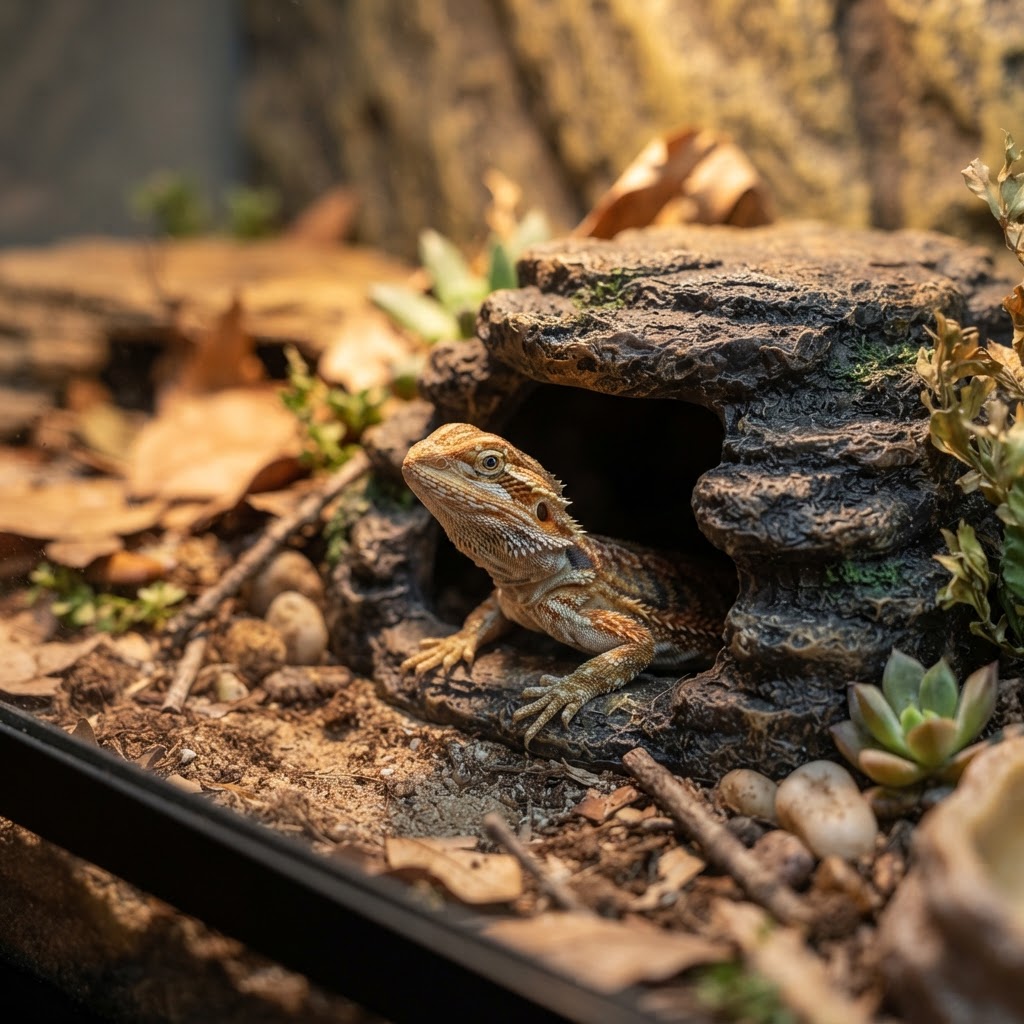
A properly heated baby dragon usually basks after meals, stays alert during the day, and moves between warm and cooler areas. If your dragon gapes constantly, glass surfs, avoids the basking area, or hides all day, something about the setup may be off.
Setup Tips Specific to Baby Bearded Dragons
Young dragons are smaller, more active, and more sensitive to setup errors than adults. Keep these baby-specific tips in mind:
Use a reachable basking zone
A baby dragon should be able to climb onto the basking spot easily and safely. Avoid tall, unstable stacks or slippery decor that place the bulb too close to the dragon.
Keep the basking area bright during the day
Babies are visual baskers. A warm spot that is dim or oddly colored is often less attractive than a bright white zone that clearly signals daytime.
Do not use night bulbs unless truly needed
At night, lights should go off so your dragon can rest. If your home drops below about 65°F, use a non-light-emitting heat source like a ceramic heat emitter instead of a red night bulb.
Pair heat with strong husbandry overall
Even the best bulb cannot fix poor husbandry. Appetite, growth, and energy also depend on diet, UVB, hydration, and stress levels. New owners often benefit from reviewing common baby bearded dragon mistakes and a general baby bearded dragon care guide.
Common Basking Light Mistakes to Avoid
A few mistakes show up again and again with new keepers:
Using colored bulbs
Red, blue, purple, and black bulbs are unnecessary for daytime basking and can interfere with a natural-looking enclosure.
Relying on one dial thermometer
Stick-on analog gauges are not accurate enough for basking surfaces. Always upgrade to a temp gun or digital probe setup.
Choosing a mercury vapor bulb for a small baby tank
Mercury vapor bulbs can work in some reptile setups, but they are often harder to control in smaller baby enclosures because they combine intense heat and UVB. Separate heat and UVB sources are usually easier and safer for beginners.
Forgetting seasonal adjustments
Your setup may be perfect in winter and too hot in summer. Recheck temperatures any time the room temperature changes significantly.
Replacing UVB but forgetting the heat bulb ages too
Even if a basking bulb still turns on, its performance can shift over time. If temperatures slowly drift, the bulb may need replacement.
Frequently Asked Questions
What wattage basking bulb does a baby bearded dragon need?
There is no single wattage that fits every setup. Many baby enclosures start somewhere between 50W and 75W, while some need 100W in cooler rooms or taller tanks. Measure the basking surface and adjust until it sits in the right range.
Do baby bearded dragons need both a basking light and UVB?
Yes. A basking bulb provides heat and visible light, while UVB helps your baby make use of calcium and support proper bone growth. For most owners, a separate basking bulb plus linear UVB tube is the best combination.
Can I use a red bulb at night?
It is better not to. Bearded dragons benefit from darkness at night. If nighttime heat is necessary because the room gets too cold, use a ceramic heat emitter instead of a colored light bulb.
How far should the basking bulb be from my baby dragon?
That depends on bulb type, wattage, and the height of the basking platform. Start with the manufacturer's safe fixture guidance, then measure the basking surface where your dragon actually sits. Adjust distance until the temperature is correct.
How do I know if the basking spot is too hot?
Signs include constant gaping, frantic climbing away from the hotspot, avoiding the basking area, or spending all day on the cool side. Use a temp gun to confirm. If the surface is too hot, raise the fixture, lower the platform, or reduce the bulb intensity.
Are halogen bulbs good for baby bearded dragons?
Yes, often very good. Many keepers like halogen-style basking bulbs because they create bright light and natural, effective heat. Just monitor temperatures carefully, since halogens can run intense at close range.
What are the best basking lights for baby bearded dragons if I am a beginner?
For most beginners, a bright white reptile basking bulb from a trusted brand like Zoo Med, Fluker's, Exo Terra, or Arcadia is a safe place to start. The real key is choosing a bulb you can control well in your specific tank and measuring the temperatures accurately every day at first.