Why Mistakes Happen
Most new bearded dragon owners follow the advice of pet store employees or outdated online guides. Unfortunately, much of that advice is incorrect or dangerously incomplete. Here are the 10 most common mistakes — and how to avoid them.
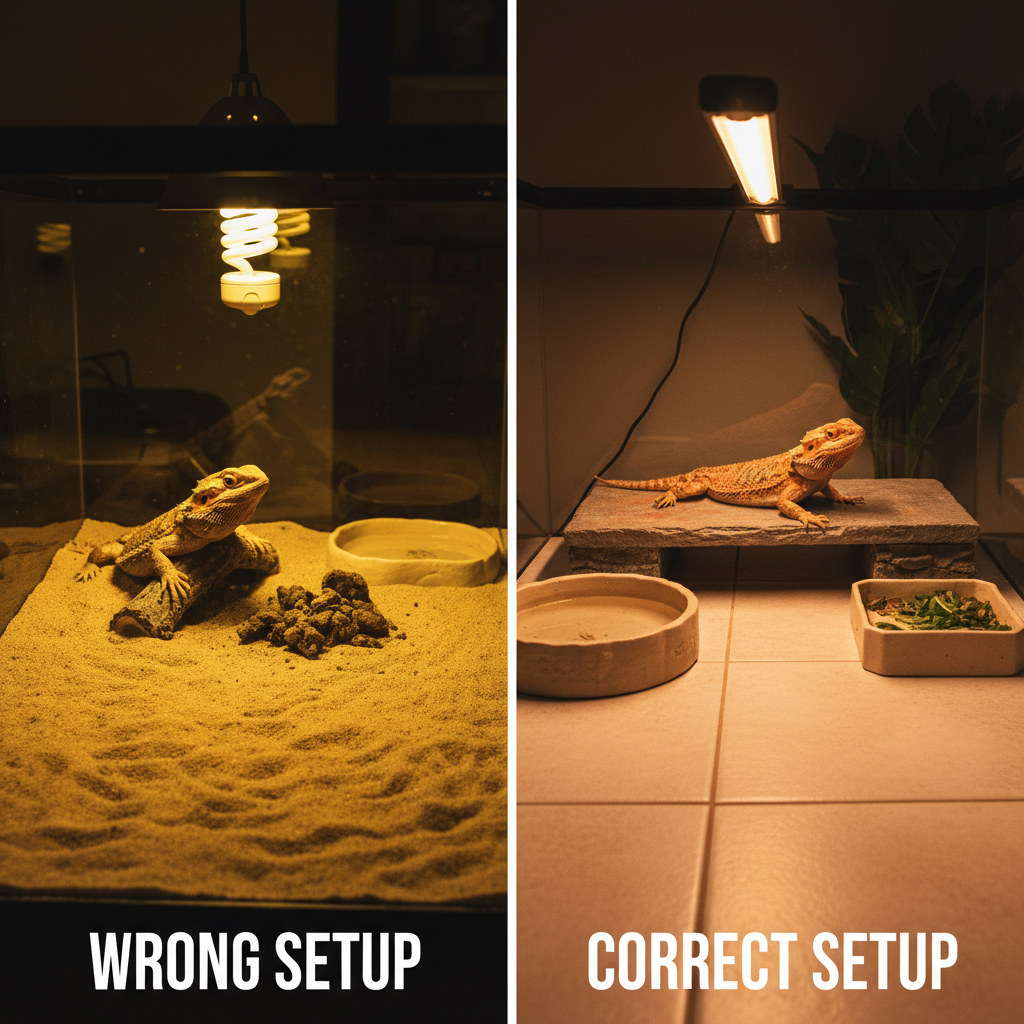
Mistake #1: Using Sand or Loose Substrate
The problem: Loose substrates like sand, calcium sand, or reptile bark are a major impaction risk for babies. Impaction is a fatal blockage of the digestive tract.
The fix: Use ceramic tile, slate, or paper towels for all dragons under 12 months.
Mistake #2: Using a Coil/Compact UVB Bulb
The problem: Compact UVB bulbs produce inconsistent UV output and have caused eye damage in reptiles. They're commonly sold in pet stores.
The fix: Use a T5 HO tube from Arcadia or Zoo Med. No exceptions.
Mistake #3: Feeding Insects That Are Too Large
The problem: Prey larger than the space between the eyes can cause choking, impaction, or paralysis.
The fix: Strictly size your feeders. For hatchlings, start with small crickets or 1/4-inch dubia roaches.
Mistake #4: Not Dusting Insects with Calcium
The problem: Captive feeder insects have poor calcium-to-phosphorus ratios. Without supplementation, MBD develops quickly.
The fix: Dust every single feeding with calcium powder. Rotate in D3 and multivitamin.
Mistake #5: Tank Too Small
The problem: Many owners start with a 10-gallon tank. This is far too small and causes stress, overheating on the basking side, and no cool zone.
The fix: Start with a 40-gallon breeder minimum for any dragon over 2 months old.
Mistake #6: Using Inaccurate Thermometers
The problem: Stick-on thermometers and cheap dial gauges can be off by 10–20°F. You think your basking spot is 110°F but it's really 90°F.
The fix: Use an infrared temperature gun to get accurate readings from the actual surface.
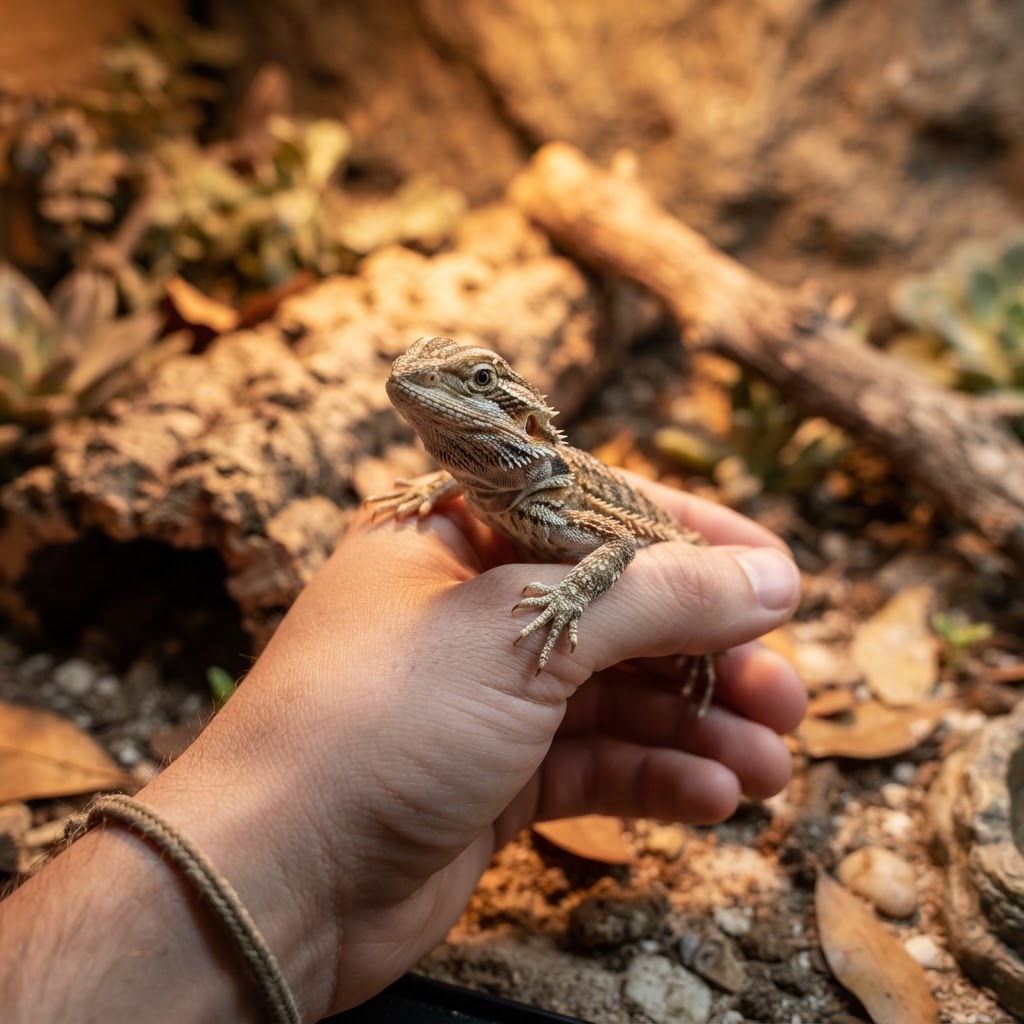
Mistake #7: Overhandling New Dragons
The problem: Eager new owners handle their dragons for hours, causing severe stress that suppresses appetite and immune function.
The fix: For the first 2 weeks, hands-off. Then build up to 10–15 minute sessions gradually.
Mistake #8: Offering Water in a Bowl
The problem: Large water bowls raise humidity (bad for beardies) and babies often fall in. Beardies rarely drink from still water anyway.
The fix: Offer water through warm baths 2–3 times per week. Mist greens lightly.
Mistake #9: Skipping Vet Visits
The problem: Many issues (parasites, early MBD, infections) are invisible until they're serious. By then, treatment is harder and more expensive.
The fix: Schedule a new reptile exam within the first few weeks with a herp vet, and annual checkups after.
Mistake #10: Relying on Pet Store Advice
The problem: Pet store employees often give incorrect or outdated information about diet, lighting, and substrate.
The fix: Use peer-reviewed reptile care resources, established keeper communities, and experienced herp vets.
Summary
Most of these mistakes are easy to avoid once you know about them. The fundamentals — proper UVB, correct temperatures, safe substrate, and proper feeding — cover 90% of what keeps a baby beardie healthy.