Introduction
Baby bearded dragons grow fast, eat often, and need the right minerals to build strong bones. That is why calcium is one of the most important parts of a healthy feeding routine during the first year of life. If you're trying to choose the best calcium supplements for baby bearded dragons, you are not alone. New owners are often overwhelmed by labels like with D3, without D3, phosphorus-free, and all-in-one formula.
The good news is that calcium supplementation does not have to be complicated. Once you understand how calcium works alongside UVB lighting, feeder insects, and your dragon's age, picking the right product becomes much easier. A good supplement routine can help support strong bone development and reduce the risk of serious health problems like metabolic bone disease.
In this guide, I'll walk you through what to look for, which supplement types are most useful for babies from 0 to 12 months, and how to use them correctly. If you are still building your care routine, it also helps to review what baby bearded dragons eat and your baby bearded dragon lighting and UVB setup, because diet and lighting work together.
Affiliate Disclosure: As an Amazon Associate I earn from qualifying purchases. BabyBeardedDragon.net is a participant in affiliate programs including Amazon Associates. We may earn a commission on qualifying purchases at no extra cost to you.
Key Takeaways
- Baby bearded dragons need more calcium support than adults because they are growing rapidly.
- The best everyday option for most babies is a phosphorus-free calcium powder without D3 if they have proper UVB lighting.
- A calcium powder with D3 is useful in smaller amounts, depending on your UVB strength and your reptile vet's guidance.
- Dust feeder insects lightly rather than coating them heavily.
- Good supplementation cannot make up for weak UVB bulbs, poor temperatures, or a low-quality diet.
- Babies that show tremors, soft jaws, weakness, swollen limbs, or poor growth should be seen by an experienced reptile vet promptly.
Why Calcium Matters So Much for Baby Beardies
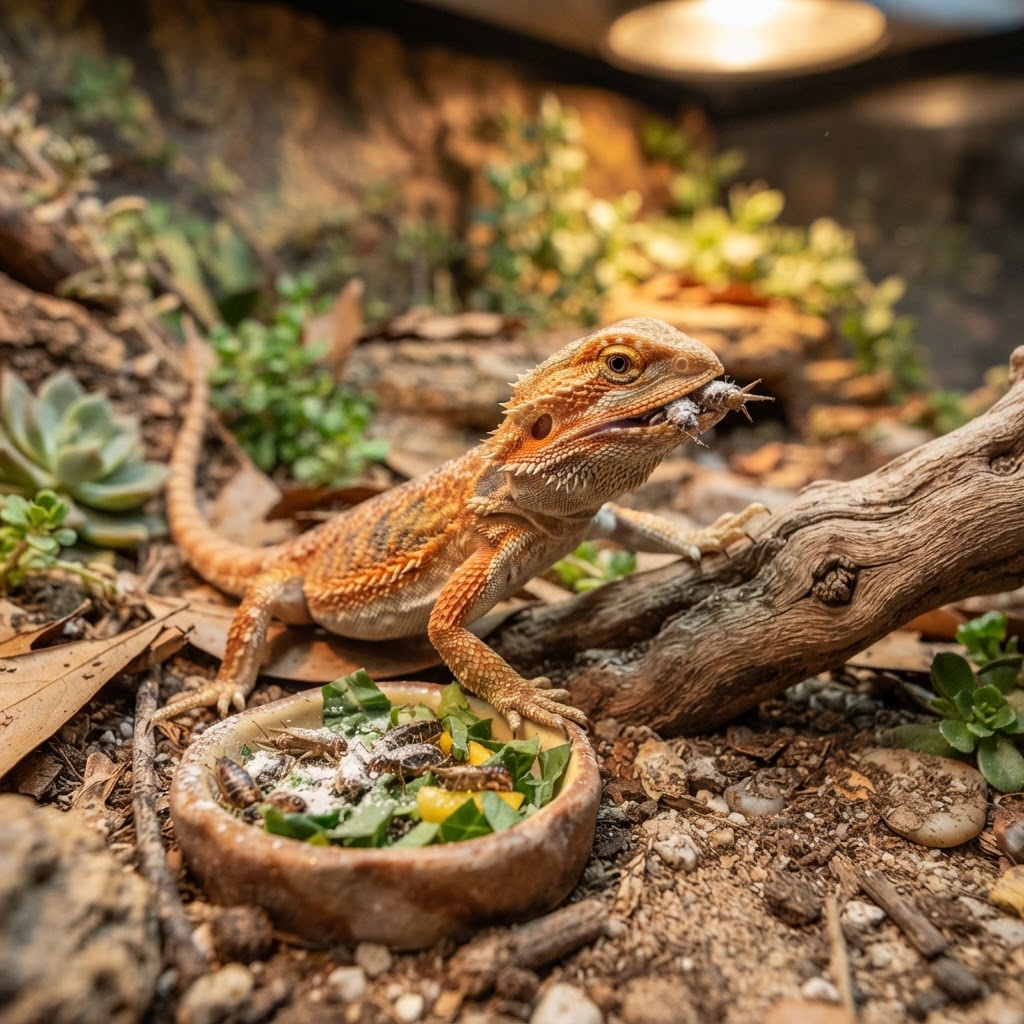
From hatchling size through about 12 months old, bearded dragons are building bone, muscle, and body mass at a rapid pace. Their diet is usually insect-heavy during this stage, which means they need regular calcium support to balance growth demands. If they do not get enough usable calcium, their bodies may pull it from their bones.
That can lead to weak skeletal development, poor muscle function, and eventually metabolic bone disease. Early signs may be subtle: shakiness, reduced appetite, slower growth, or difficulty moving normally. In more advanced cases, you may see deformities, jaw softness, or trouble climbing.
Calcium also does not work in isolation. For your baby dragon to actually use it, they need proper heat and high-quality UVB lighting. UVB helps the body produce vitamin D3, which then allows calcium absorption. That is why supplementation, lighting, and feeding all have to support each other. If you need help with the bigger picture, a solid feeding schedule for babies is just as important as the powder you buy.
What to Look for in a Calcium Supplement
Not every reptile supplement is ideal for a baby beardie. Here is what matters most.
Phosphorus-Free Formula
Most feeder insects already contain more phosphorus than calcium. Because of that, a phosphorus-free calcium powder is usually the better choice. You want to improve the calcium-to-phosphorus balance, not make it worse.
With D3 vs Without D3
This is where many beginners get stuck.
- Without D3: Best for routine use when your baby has a strong, correctly installed UVB bulb.
- With D3: Helpful in smaller amounts, especially when used strategically or when a vet recommends it.
Too little D3 can interfere with calcium use, but too much D3 can also be harmful. The goal is balance, not maximum supplementation.
Fine Texture
A fine powder sticks to insects more evenly than a gritty one. That makes it easier for your dragon to actually consume the dose instead of leaving the powder at the bottom of the feeding tub.
Reptile-Specific Ingredients
Choose a supplement made for reptiles rather than improvising with human calcium products. Reptile powders are formulated for dusting feeders and are easier to dose consistently.
Freshness and Storage
Check expiration dates and keep powders sealed in a cool, dry place. Supplements that sit open in humid conditions can clump and become less pleasant to use.
Best Calcium Supplements For Baby Bearded Dragons
The best calcium supplements for baby bearded dragons are reptile-specific, phosphorus-free, and matched to your UVB setup. For most new owners, it is smart to keep both a no-D3 powder and a with-D3 powder on hand so you can build a balanced routine.
| Supplement | Best for | Main advantage | Watch-out | |---|---|---|---| | Zoo Med Repti Calcium Without D3 | Daily use with proper UVB | Simple, widely available, phosphorus-free | Needs strong UVB to work best | | Repashy SuperCal NoD | Daily use with proper UVB | Very fine texture, easy dusting | Still requires good lighting | | Zoo Med Repti Calcium with D3 | Occasional support | Convenient for scheduled D3 use | Don't overuse | | Fluker's Repta Calcium with Vitamin D3 | Budget-friendly D3 option | Easy to find in pet stores | Use in moderation | | Vet-prescribed liquid calcium | Babies with confirmed deficiency | Useful in medical cases | Not for routine self-dosing |
1. Zoo Med Repti Calcium Without D3
This is one of the easiest beginner choices and a great everyday staple for babies with proper UVB lighting. It is phosphorus-free, simple, and commonly recommended because it does exactly what most young dragons need: adds calcium without adding extra phosphorus.
Why it works well:
- Good for frequent use
- Easy to find in many pet stores
- Straightforward option for daily insect dusting routines
This is often the first powder I suggest for owners who already have a quality linear UVB bulb in place. If your setup is correct, a no-D3 calcium like this usually becomes the backbone of your feeding plan.
2. Repashy SuperCal NoD
Repashy is popular with many reptile keepers because the powder texture is very fine and tends to coat insects evenly. SuperCal NoD is the version without D3, which makes it useful for babies getting adequate UVB exposure.
Why owners like it:
- Fine consistency helps light, even dusting
- Good for frequent supplementation
- Trusted reptile-specific formula
If your baby dislikes heavily coated feeders, a fine powder can make a real difference. Lightly dusted insects are often accepted better than insects buried in chalky powder.
3. Zoo Med Repti Calcium with D3
This is a good companion product to keep beside your everyday no-D3 powder. It gives you a simple way to offer scheduled D3 support without changing your entire routine.
Best use case:
- Owners who want a separate with-D3 option
- Babies that need occasional D3 support as part of a balanced schedule
- Homes where you are following vet or breeder guidance on D3 frequency
The key here is moderation. Calcium with D3 is helpful, but it should usually not replace your main plain calcium powder if your UVB lighting is already good.
4. Fluker's Repta Calcium with Vitamin D3
This is another commonly available option for keepers who want a D3-inclusive supplement at a friendly price point. It can work well as an occasional dusting powder in a baby beardie's rotation.
Why it can be a good pick:
- Budget-friendly
- Easy to find locally
- Useful as a secondary supplement to plain calcium
As with any D3-containing powder, use it thoughtfully. More is not better, especially for a rapidly growing baby.
5. Vet-Prescribed Liquid Calcium
This is not a routine supplement for healthy babies, but it deserves a quick mention. If a veterinarian diagnoses calcium deficiency or early metabolic bone disease, they may prescribe liquid calcium because it allows more precise dosing.
Important note:
- Do not start liquid calcium on your own unless your reptile vet instructs you to do so.
For everyday use, powders are still the standard choice for most baby beardies.
Calcium With D3 or Without D3?
This is the question behind most searches for the best calcium supplements for baby bearded dragons.
A simple rule helps:
- Use calcium without D3 as your main supplement if your baby has a proper linear UVB bulb, correct distance, and good basking temperatures.
- Use calcium with D3 more sparingly as a support tool, not as an excuse to ignore lighting.
A supplement cannot fix weak UVB. If your bulb is compact, old, mounted incorrectly, or too far from the basking area, your dragon may still struggle to use calcium properly. In that case, fix the setup first rather than trying to compensate with extra D3 powder.
For many babies, the safest routine is plain calcium on most dusted insect meals, with a D3 version used only occasionally. Exact frequency can vary based on the bulb type, enclosure design, health history, and your vet's recommendations.
How to Dust Feeders the Right Way
Even a great supplement can be wasted if it is used incorrectly.
Step-by-Step Dusting Method
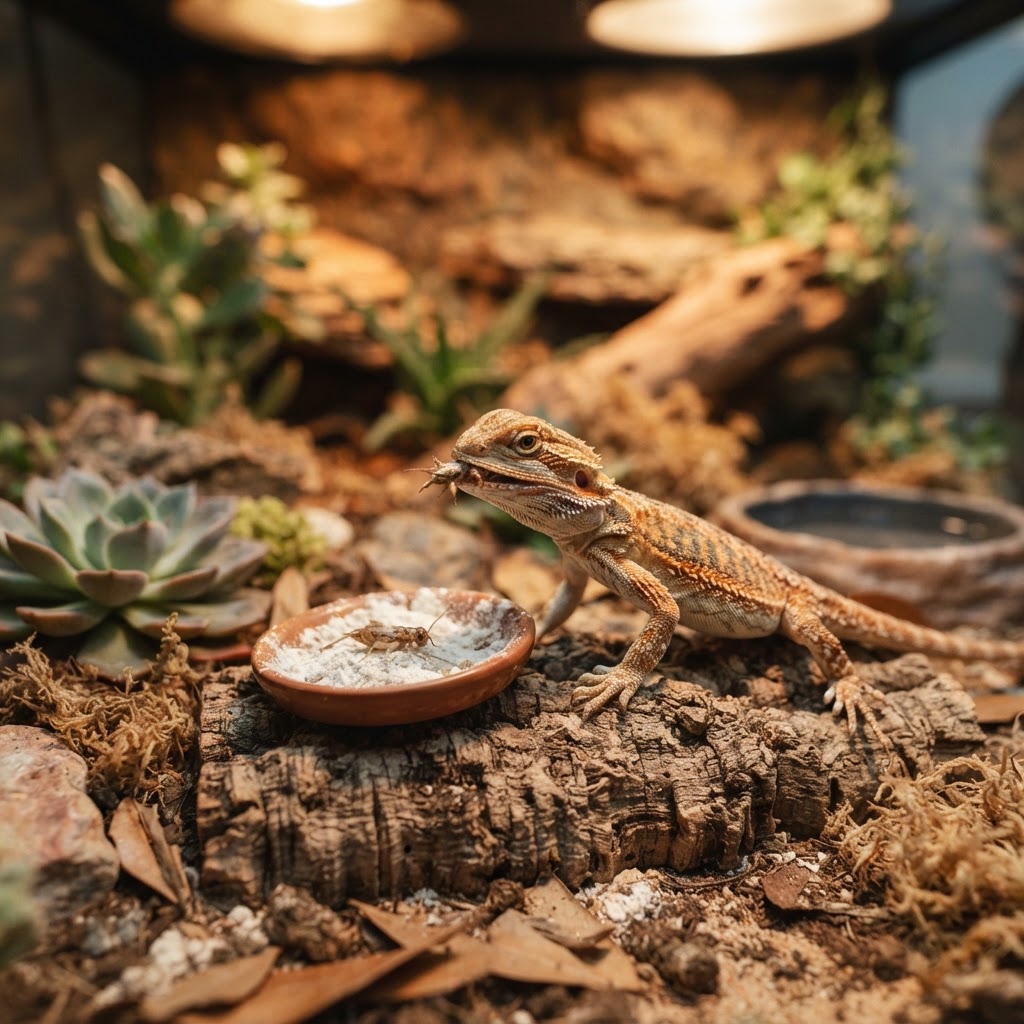
- Place feeder insects in a cup, deli container, or small bag.
- Add a small pinch of calcium powder.
- Gently shake until the insects have a light coating.
- Feed them right away so the powder does not rub off.
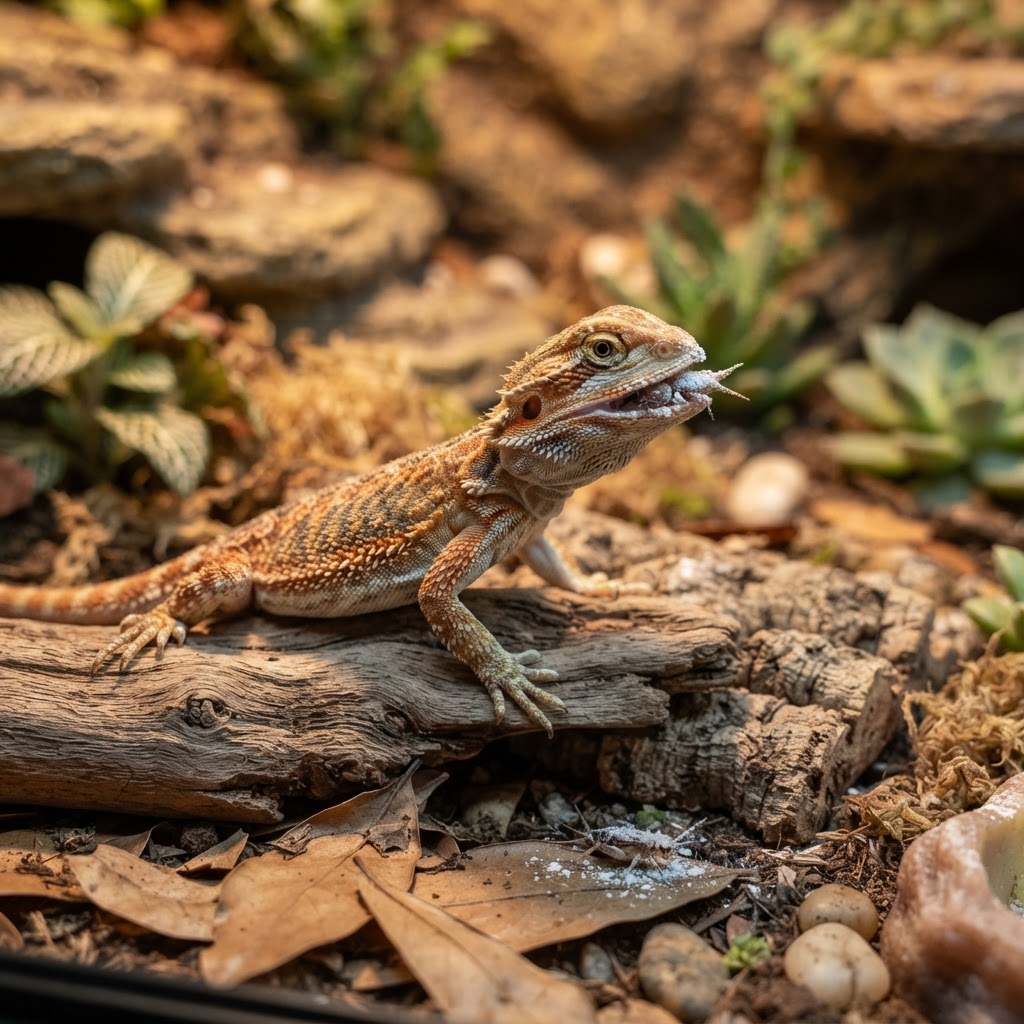
The goal is a thin dusting, not a thick white shell. Over-dusting can make insects less appealing and may cause picky eating.
Best Feeders to Dust
Crickets, dubia roaches, and black soldier fly larvae are common baby staples, though larvae naturally contain more calcium than many other feeders. If you are comparing options, look at the best insects for baby bearded dragon diets.
Don't Forget the Rest of the Diet
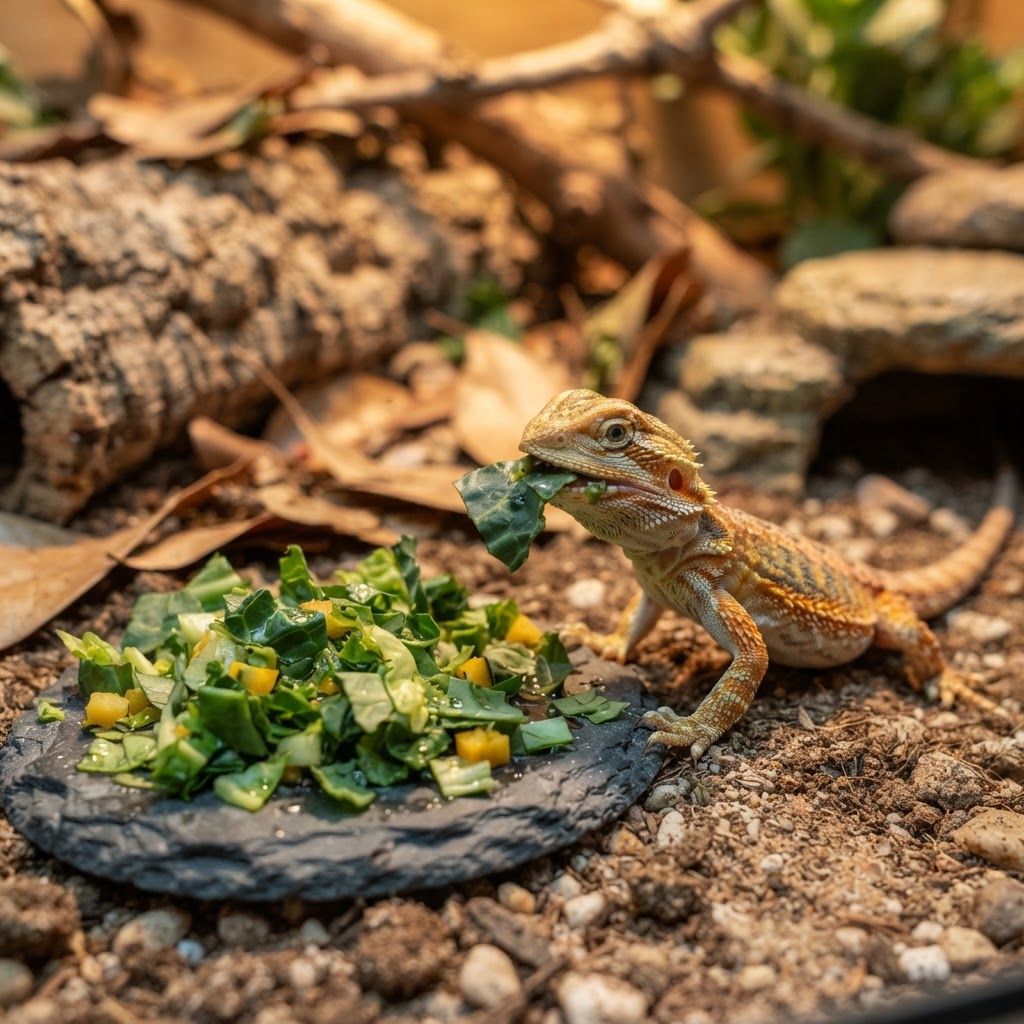
Calcium powder matters, but variety matters too. Babies still benefit from appropriate greens alongside insect meals. Supplements should support a good diet, not replace one.
A Practical Calcium Schedule for Baby Bearded Dragons
Choosing the best calcium supplements for baby bearded dragons gets easier when you pair the product with a simple routine.
Babies 0-6 Months
At this age, babies usually eat insects multiple times per day and need consistent support for rapid growth.
A common beginner-friendly routine is:
- Plain calcium without D3 on 4-5 feedings per week
- Calcium with D3 on 1-2 feedings per week if appropriate for your setup
- Multivitamin on 1-2 feedings per week, on separate days when possible
Babies 6-12 Months
As growth begins to slow, many dragons still need regular calcium, but you may not be dusting quite as many insect meals as before.
A common routine is similar:
- Plain calcium without D3 on 4-5 feedings per week
- Calcium with D3 on 1 feeding per week, sometimes 2 depending on setup and vet guidance
- Multivitamin 1-2 times per week
These are general guidelines, not a substitute for veterinary advice. Babies with illness, poor growth, previous deficiency, or unusual lighting setups may need a custom plan.
Common Calcium Mistakes Beginners Make
A lot of problems come from routine errors rather than bad products.
Relying on Supplements Instead of UVB
This is the biggest mistake. Calcium powder helps, but your baby still needs a strong UVB source to process it well.
Using Too Much D3
Many owners think D3 powder is always better. It is not. Overuse can be just as problematic as underuse.
Coating Insects Too Heavily
A thick chalk layer is unnecessary and can make feeders less attractive.
Skipping Supplements Randomly
Consistency matters. A steady schedule is better than guessing each week.
Ignoring Early Health Changes
Poor appetite, weak movement, slow growth, tremors, or swelling should not be brushed off. Review signs of illness in baby bearded dragons if something seems off.
Frequently Asked Questions
How often should I give calcium to a baby bearded dragon?
Most baby bearded dragons do best with calcium on several feedings each week, often around 4 to 5 times weekly for plain calcium. D3-containing calcium is usually used less often. The exact schedule depends on age, UVB quality, overall diet, and vet guidance.
Can I give calcium with D3 every day?
Usually, that is not the best approach for a baby with proper UVB lighting. Most keepers use plain calcium more often and reserve D3 calcium for occasional use. Too much D3 can create its own problems, so daily use should only happen if a reptile vet specifically recommends it.
Should I dust insects or vegetables?
For babies, insects are usually the main target because that is where most of their nutrition is coming from during early growth. You can lightly dust greens sometimes, but insect meals are usually where calcium supplementation matters most.
What if my baby bearded dragon refuses dusted insects?
First, make sure you are using only a light coating. Many babies reject feeders that look heavily powdered. You can also try a finer powder, smaller feeder batches, or offering the insects immediately after dusting. Double-check temperatures too, because a cool baby may seem picky when the real issue is husbandry.
Is liquid calcium better than powder?
Not for routine use in healthy babies. Powder is the standard for regular supplementation. Liquid calcium is more often used when a veterinarian wants precise dosing for a medical reason, such as deficiency or suspected metabolic bone disease.
Can too much calcium hurt a baby bearded dragon?
Yes, especially when overused along with vitamin D3 or when owners are guessing rather than following a schedule. More supplement is not always safer. Balanced use, proper UVB, and good feeding habits are the goal.
What is the single best choice for most beginners?
For many first-time owners, a phosphorus-free calcium powder without D3 is the best everyday starting point, paired with a separate with-D3 product used more sparingly. That combination gives you flexibility and fits most healthy baby care routines.