Introduction
Feeding a baby bearded dragon can feel overwhelming at first. New owners often hear that babies need lots of protein, daily greens, calcium, vitamins, hydration, and proper lighting—and that is all true. The challenge is knowing how to turn that advice into a simple routine that helps your dragon grow well from hatchling stage through the first year.
If you're wondering how to improve baby bearded dragon's diet, the good news is that small changes can make a big difference. A better diet does not mean making things complicated. It means offering the right foods at the right life stage, using supplements correctly, encouraging healthy plant eating early, and avoiding common feeding mistakes.
In this guide, you'll learn exactly what to adjust for baby bearded dragons from 0 to 12 months old, with beginner-friendly steps you can start today.
Why Diet Matters So Much in the First Year
A baby bearded dragon grows far faster than an adult. During the first year, your beardie is building bone, muscle, organs, and a healthy immune system. That growth requires steady energy, plenty of usable protein, and enough calcium to support proper skeletal development.
When a baby's diet is weak or unbalanced, the effects can show up quickly. Poor appetite, slow growth, weak limbs, lethargy, bad sheds, and soft stools may all be linked to feeding problems. Sometimes owners think their dragon is just "picky," when the real issue is too little variety, poor supplement use, or incorrect enclosure conditions.
Diet also works together with husbandry. Even the best foods will not help much if your dragon cannot digest them properly. Heat and UVB lighting are essential for appetite, metabolism, and calcium use. That is why nutrition should always be viewed as part of your full care routine, not as a separate topic.
What a Better Baby Beardie Diet Looks Like
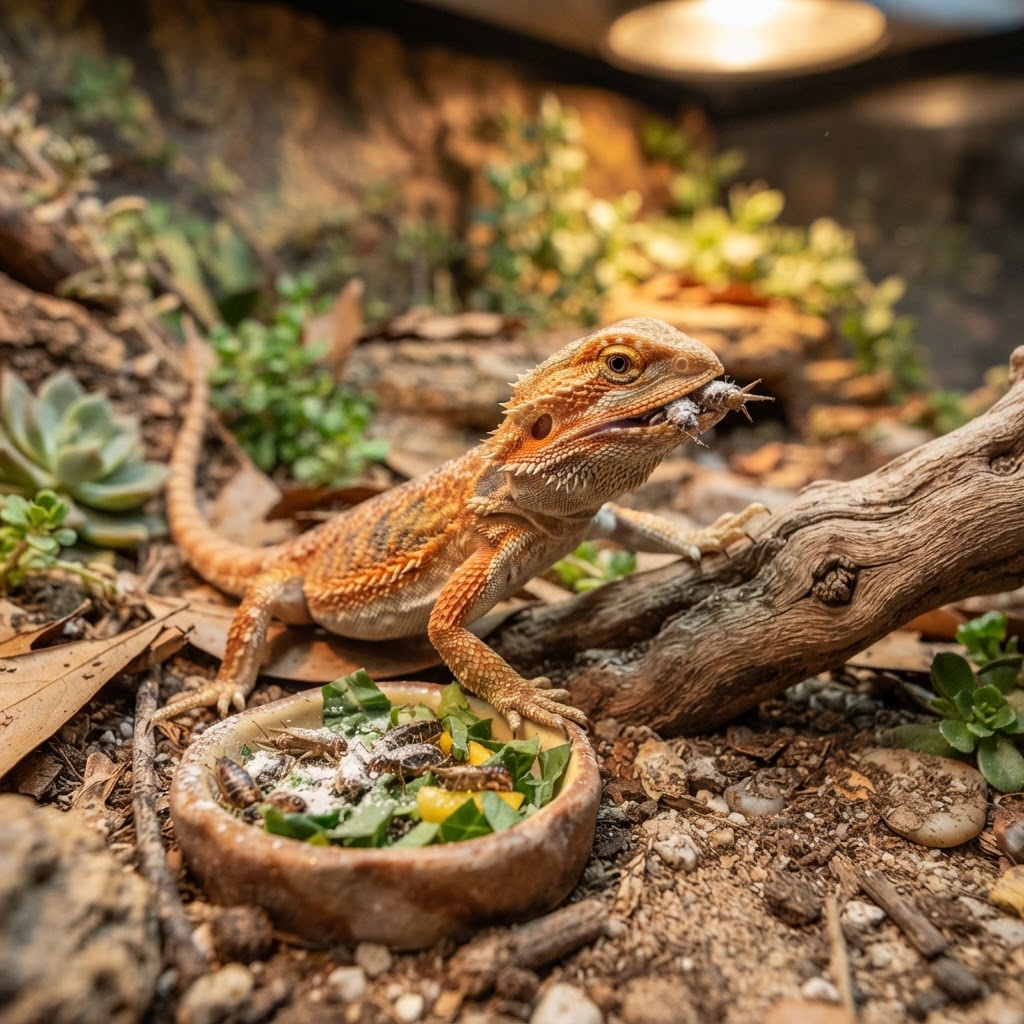
Baby bearded dragons need more insects than adults, but they should still be introduced to plant foods early. A healthy feeding plan changes gradually as your dragon grows:
- 0-3 months: mostly insects, with daily exposure to finely chopped greens
- 4-6 months: still insect-heavy, but salads should become a normal daily offering
- 7-12 months: insects remain important, while vegetables and greens take on a larger role
If you are still learning the basics of what baby bearded dragons eat, think in terms of balance rather than one "perfect" feeder or vegetable.
Best insect staples for babies
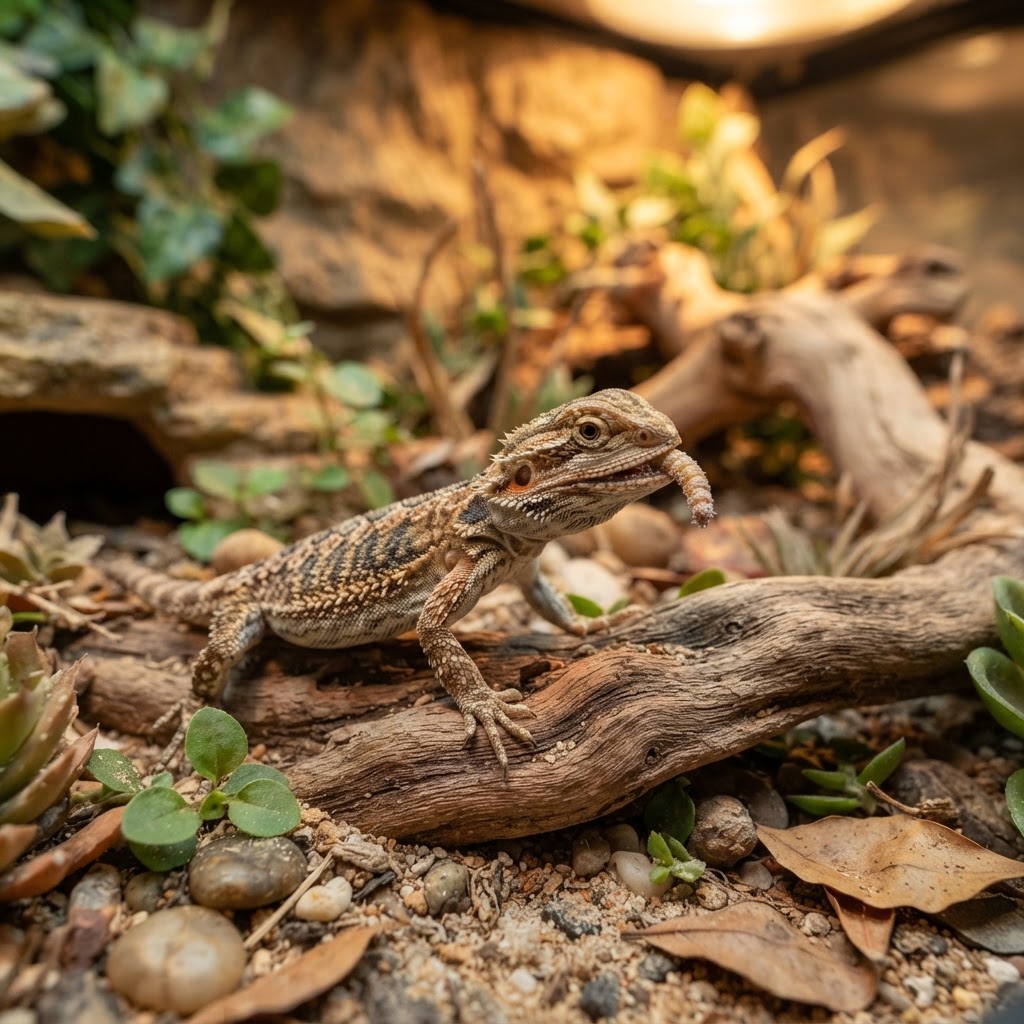
Staple insects should be easy to digest, appropriately sized, and nutritious. Good options include:
- Dubia roaches
- Crickets
- Black soldier fly larvae
- Silkworms
- Small locusts, where available
Rotating insects is one of the best ways to improve nutrition. Different feeders provide slightly different moisture levels, fat content, and mineral balance. Variety also helps prevent your baby from becoming fixated on one food and refusing others.
As a rule, the prey item should be no longer than the space between your baby dragon's eyes. Oversized insects can lead to stress, regurgitation, or digestive trouble.
Greens and vegetables to offer daily
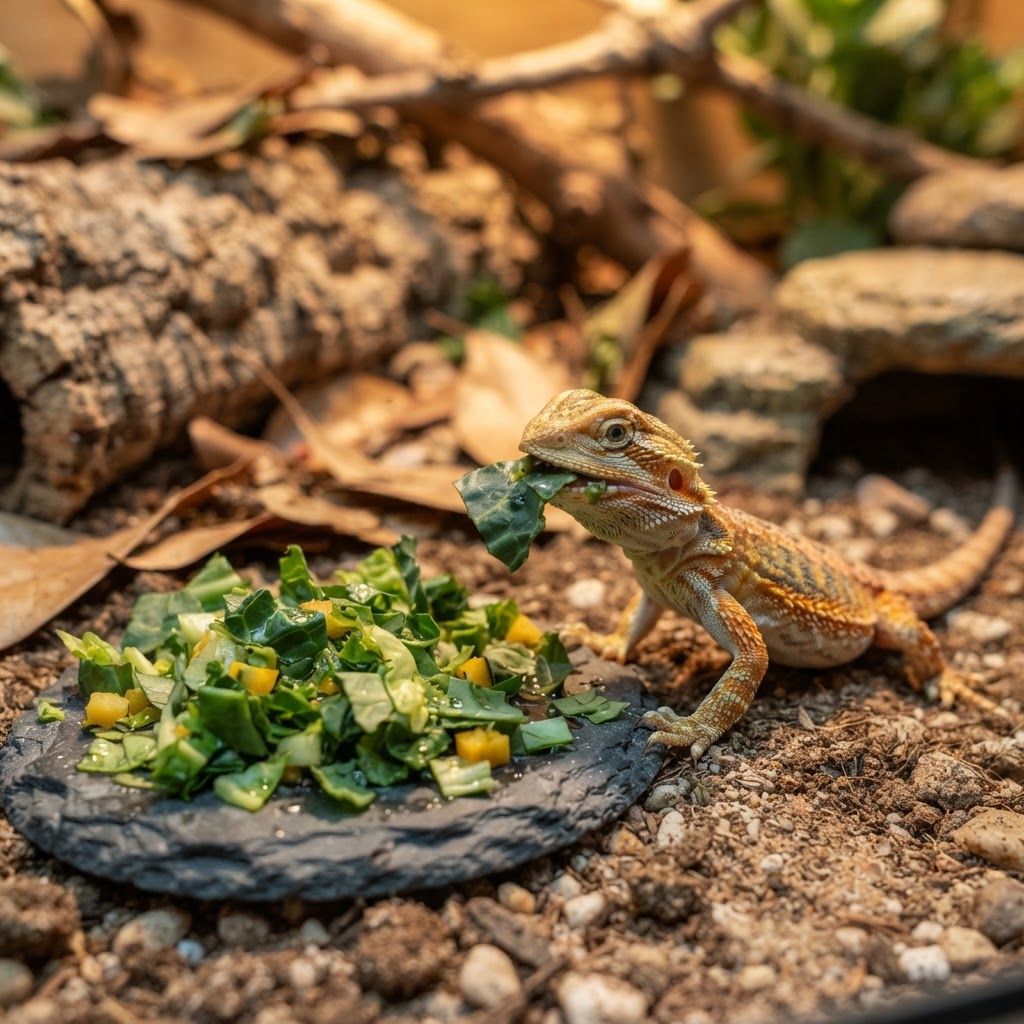
Even tiny babies should see plant food every day. They may ignore it at first, but early exposure teaches them that greens are part of normal feeding.
Strong choices include:
- Collard greens
- Mustard greens
- Turnip greens
- Dandelion greens
- Endive
- Escarole
- Butternut squash, finely grated
- Bell pepper, offered in small amounts for color and variety
For a deeper list of safe options, check out these best greens for baby bearded dragons.
Chop greens into tiny, bite-size pieces. Babies are much more likely to sample a salad when it is fresh, colorful, and easy to eat.
How To Improve Baby Bearded Dragon's Diet: Key Steps
When people ask how to improve baby bearded dragon's diet, the answer usually comes down to six core upgrades: more variety, better greens, proper gut-loading, correct supplements, age-appropriate portions, and close observation.
Offer more than one insect feeder
One of the biggest beginner mistakes is relying on a single feeder insect every day. Crickets alone can work for a while, but a rotation is better.
Try this simple pattern:
- Main feeder 3-4 days per week
- Second staple feeder 2-3 days per week
- Moisture-rich or nutrient-dense feeder 1-2 days per week
For example, you might rotate dubia roaches, crickets, and black soldier fly larvae. This helps fill nutritional gaps and often improves appetite in babies that are becoming bored with one food.
Avoid turning treats into staples. Waxworms and butterworms are high in fat and can make babies ignore healthier feeders if offered too often.
Build a daily salad habit early
Many baby beardies eat insects enthusiastically and ignore greens for weeks. That does not mean you should stop offering salads. In fact, early consistency is what teaches long-term healthy eating.
To improve salad acceptance:
- Offer greens in the morning before insects
- Keep pieces very small and thin
- Use bright, appealing ingredients like finely grated squash
- Remove wilted food and replace it with fresh salad later in the day
- Change green varieties every few days
A baby may only take a few bites at first, and that is okay. The goal is exposure and routine, not a giant salad intake right away.
Gut-load feeder insects for 24-48 hours
Your dragon only gets out of feeder insects what those insects were fed. A cricket that has been sitting in a bare bin is far less useful than one that has been eating nutritious greens and vegetables.
Good gut-loading foods for feeders include:
- Collard greens
- Mustard greens
- Squash
- Carrots in small amounts
- Quality commercial insect chow
Avoid feeding your insects junk foods or watery, low-nutrient scraps. Well-fed insects become more valuable meals for your beardie.
Use calcium and vitamins correctly
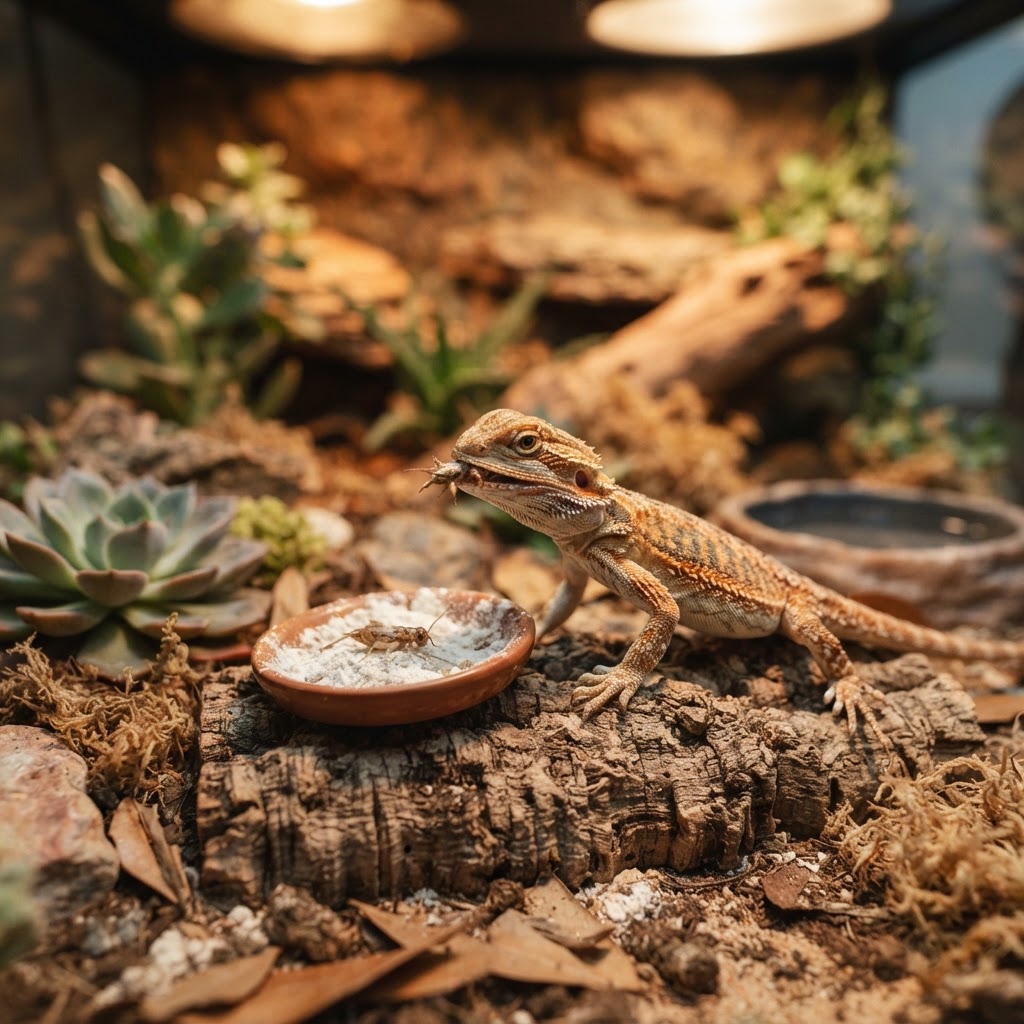
Supplement dusting is one of the quickest ways to strengthen a weak feeding routine. Babies need regular calcium support because they are growing so quickly.
A common beginner approach is:
- Calcium powder: dust insects 4-5 feedings per week
- Multivitamin: dust 1-2 feedings per week
However, exact supplement frequency can vary depending on your UVB setup, feeder variety, and your reptile vet's guidance. If you need more background, review your baby bearded dragon feeding schedule and make sure it matches your dragon's age.
Important: do not overdo supplements. More is not always better. A light dusting is enough; insects should look lightly coated, not caked in white powder.
Match portions and frequency to your baby's age
Young babies usually eat multiple times per day, while older juveniles gradually shift toward fewer, more structured meals. If you feed too little, growth can stall. If you feed too much fatty food, your dragon may become selective or develop loose stools.
General beginner guidelines:
- 0-3 months: 2-3 insect feedings daily, plus fresh greens
- 4-6 months: 2 insect feedings daily, plus daily greens
- 7-12 months: 1-2 insect feedings daily, plus a larger salad portion
Let your baby eat an appropriate amount within a reasonable feeding window, then remove leftovers. This helps you monitor appetite and keeps the enclosure cleaner.
Support digestion with proper UVB and basking heat
A beardie with poor lighting often looks like a beardie with a poor diet. Without strong UVB and correct basking temperatures, your dragon may not process calcium efficiently or show normal feeding behavior.
Make sure your setup supports digestion, activity, and bone health. If you have any doubt here, read up on baby bearded dragon UVB lighting. Many feeding problems improve once lighting and heat are corrected.
Watch hydration, stool quality, and appetite patterns
Improving diet is not only about what goes in; it is also about what comes out and how your baby acts afterward.
Healthy signs include:
- Alert behavior after basking
- Strong feeding response
- Regular stools
- Steady weight gain
- Good body condition
- Cleaner, more complete sheds over time
If stools are persistently runny, unusually smelly, bloody, or infrequent, diet may be part of the issue—but parasites, stress, or illness are also possible. Persistent problems should be checked by an experienced reptile vet.
Common Diet Mistakes That Hold Babies Back
Feeding too many fatty worms
Mealworms, waxworms, and similar feeders are often easy to buy, but they should not form the core of a baby dragon's diet. Some are too fatty, some have a poor calcium-to-phosphorus ratio, and some are simply less ideal as everyday staples for young dragons.
Use them sparingly, if at all, and prioritize better staple insects.
Offering weak salads
A bowl full of iceberg lettuce is not a nutritious salad. Many beginners think any green vegetable is fine, but some options are mostly water and provide very little value.
Choose dark leafy greens and colorful vegetables instead. Skip heavily fruit-based salads too. Fruit can be offered only occasionally and in tiny amounts because too much sugar may upset digestion.
Changing everything at once
It is tempting to panic and overhaul the whole diet in a single day. That can backfire, especially with babies that are already stressed. Improve the routine in layers:
- upgrade one feeder insect
- improve the salad base
- add proper dusting
- confirm lighting and heat
- track appetite for a week
This step-by-step method makes it easier to see what is helping.
A Simple 7-Day Diet Improvement Plan
If your current feeding routine feels messy, use this beginner-friendly reset.
Day 1: Replace low-value greens with collards or mustard greens. Chop them finely.
Day 2: Introduce a second staple insect so your dragon is not eating only one feeder.
Day 3: Start gut-loading insects with greens and squash.
Day 4: Review your supplement routine and begin light calcium dusting on the correct days.
Day 5: Offer salad first thing in the morning before the first insect feeding.
Day 6: Check basking and UVB conditions to make sure appetite and calcium use are supported.
Day 7: Record what your dragon actually ate, how active it was, and what the stool looked like.
For most owners, this is the easiest way to start how to improve baby bearded dragon's diet without getting overwhelmed.
How to Know the Diet Is Working
Learning how to improve baby bearded dragon's diet is really about tracking results, not chasing perfection. You should see progress over time rather than overnight.
Positive signs include:
- consistent interest in food
- gradual acceptance of greens
- brighter alertness during the day
- steady growth from month to month
- healthier body condition without looking overly thin or bloated
- more predictable stools
Some babies improve within days, while others need a few weeks to adapt. Be patient and consistent. A dragon that has eaten poorly for a while may need time to trust a new routine.
Key Takeaways
- Baby bearded dragons need insect-heavy diets, but daily greens should begin early.
- Variety matters more than feeding one "favorite" insect every day.
- Gut-loading feeder insects improves the nutrition your dragon receives.
- Calcium and multivitamin dusting should be regular but not excessive.
- Proper UVB and basking temperatures are essential for appetite and calcium use.
- Avoid fatty treats, weak salads, and sudden drastic changes.
- Track appetite, stool quality, growth, and behavior to judge whether the diet is improving.
Frequently Asked Questions
How many insects should a baby bearded dragon eat each day?
It depends on age, size, and appetite. Very young babies often eat insects 2-3 times per day, while older juveniles may do well with 1-2 insect meals daily. Focus less on a fixed number and more on age-appropriate feeding sessions, proper prey size, and steady growth.
Can I feed my baby bearded dragon only vegetables?
No. Babies need much more protein than adults because they are growing quickly. Daily greens are important, but a baby should not live on vegetables alone. Insects remain the main calorie source for most of the first year.
What are the best insects for a picky baby beardie?
Dubia roaches, crickets, black soldier fly larvae, and silkworms are strong choices. If your baby is picky, try rotating feeders rather than offering the same one over and over. Warm, active insects often trigger a better feeding response than sluggish ones.
How often should I use calcium powder?
Many baby bearded dragons do well with calcium dusted on insects 4-5 times per week and a multivitamin 1-2 times per week. That said, husbandry matters. If you are unsure, review your UVB setup and ask a reptile vet for a schedule tailored to your dragon.
Is fruit good for baby bearded dragons?
Fruit should be limited. Small amounts can be offered occasionally, but it should not be a major part of the diet. Too much fruit may contribute to loose stools and encourages a preference for sweeter foods over healthier greens.
What should I do if my baby beardie still refuses food?
First, check the basics: basking temperature, UVB quality, stress level, hydration, prey size, and supplement routine. If those look correct and your dragon still eats very little for several days, loses weight, acts lethargic, or has abnormal stools, contact a reptile vet. Appetite loss can be caused by more than diet alone.
How long does it take to see improvement after changing the diet?
Some babies show better appetite within a few days, especially when variety, heat, and UVB improve at the same time. For others, it may take 2-4 weeks to see stronger salad interest, better body condition, and more consistent stools. Stay patient and make changes consistently rather than randomly.