Introduction
Raising a baby bearded dragon is exciting, but it can also feel overwhelming when you start learning about nutrition. Babies grow incredibly fast during their first year, which means their bodies need the right balance of protein, calcium, vitamins, heat, and UVB to develop strong bones and healthy muscles. Even if you are feeding a varied diet, captive bearded dragons often still need carefully chosen supplements to fill in the gaps.
That is why many new owners search for the best supplements for baby bearded dragons as soon as they bring their pet home. The tricky part is that supplements are helpful only when they are used correctly. Too little can contribute to weak growth and metabolic bone disease, while too much can create its own health problems. The goal is not to dust everything heavily every day. The goal is to support healthy development with a simple, consistent routine.
In this guide, I will walk you through which supplements matter most for baby bearded dragons from 0 to 12 months, how often to use them, how UVB changes the equation, and the most common beginner mistakes to avoid. If you are still building your feeding basics, start with this guide to what baby bearded dragons eat and a sample baby bearded dragon feeding schedule.
As an Amazon Associate I earn from qualifying purchases. BabyBeardedDragon.net is a participant in affiliate programs including Amazon Associates. We may earn a commission on qualifying purchases at no extra cost to you.
Key Takeaways
- Baby bearded dragons need supplements because rapid growth increases their calcium and vitamin needs.
- Plain calcium is usually the most important supplement for babies.
- Calcium with D3 can be useful, but the right amount depends on your UVB setup.
- A reptile multivitamin helps cover nutrients that may be missing from insects and greens.
- Supplements should support a good diet, not replace proper lighting, heat, and varied food.
- Over-supplementing can be just as harmful as under-supplementing.
- Consistency matters more than using large amounts of powder at one feeding.
Why Baby Bearded Dragons Need Supplements
Baby bearded dragons are not just small adults. During the first 12 months, they are building bone, muscle, and body mass very quickly. Most babies eat a high percentage of insects, which provide protein and energy but are naturally low in calcium unless they are properly gut-loaded and dusted.
In the wild, bearded dragons get a broad range of foods and natural sunlight. In captivity, we try to recreate that environment, but there are always limits. Feeders vary in nutrition, babies may ignore some vegetables, and indoor reptiles depend completely on us for UVB exposure. That combination is why supplementation plays such a major role in a healthy juvenile diet.
Without enough calcium and proper vitamin support, a baby may develop weak bones, poor growth, twitching, lethargy, or more serious issues over time. If you want a full big-picture overview beyond nutrition, this baby bearded dragon care guide is a helpful next read.
The Core Supplements Babies Usually Need
Plain Calcium Without D3
For most baby beardies, plain calcium powder is the foundation supplement. Calcium is essential for bone growth, muscle function, nerve function, and normal movement. Because feeder insects tend to have poor calcium-to-phosphorus ratios, babies usually need calcium dusting several times each week.
Look for a phosphorus-free calcium powder made specifically for reptiles. This is usually the everyday calcium option when your baby has access to strong, appropriate UVB lighting.
Calcium With D3
Vitamin D3 helps the body absorb calcium. Some keepers use a calcium powder that includes D3 once or twice per week, especially when they want a little extra nutritional support. However, this is not something to use heavily without thinking about your enclosure setup.
If your baby has high-quality UVB and proper basking temperatures, the need for extra D3 may be lower. If UVB is weak, outdated, or incorrectly placed, relying on a supplement alone will not truly solve the problem. For that reason, supplementation and lighting must always be considered together.
Reptile Multivitamin
A good reptile multivitamin helps cover trace nutrients that are harder to provide consistently through insects and greens alone. This may include vitamin A, vitamin E, B vitamins, and other micronutrients.
For babies, a multivitamin is helpful, but it is usually not needed as often as plain calcium. Most beginners do well by offering it once or twice weekly rather than daily. Too much of certain vitamins can become a problem, especially fat-soluble vitamins.
Electrolyte or Recovery Support
These are not routine daily supplements for healthy babies. They can sometimes be used during stress, mild dehydration, transport, or recovery under guidance from an experienced reptile veterinarian. For normal feeding, focus first on calcium, D3 strategy, hydration, gut-loaded insects, and a quality multivitamin.
UVB and Supplements Must Work Together
One of the biggest mistakes new owners make is thinking supplements can fix poor lighting. They cannot. A baby bearded dragon needs appropriate UVB to synthesize vitamin D3 properly and use calcium effectively. Without that, even a well-dusted diet may not be enough.
If your enclosure setup is not dialed in, read this guide on UVB lighting for baby bearded dragons. Proper bulb strength, distance, and replacement schedule matter just as much as the powder you use.
A simple way to think about it is this:
- Good UVB + plain calcium used regularly is the usual foundation.
- Good UVB + occasional calcium with D3 may be useful depending on your routine.
- Poor UVB + lots of supplements is still a problem.
Heat matters too. Babies need the right basking temperatures to digest food and use nutrients efficiently. If a dragon is too cool, appetite and nutrient absorption can both suffer.
How to Choose the Best Supplements for Baby Bearded Dragons
When people ask about the best supplements for baby bearded dragons, they often expect a long shopping list. In reality, most babies do best with just two essentials and one support item: plain calcium, calcium with D3 used carefully, and a reptile multivitamin.
As you compare options, look for these features:
- Calcium powder without phosphorus for regular use
- A separate D3 version so you can control how often it is offered
- A reptile-specific multivitamin rather than a generic pet supplement
- Fresh product dates and containers stored in a cool, dry place
- Clear dosage guidance from the manufacturer
The best supplements for baby bearded dragons are not always the ones with the most ingredients. They are the ones that fit your baby’s age, diet, and lighting setup.
A Simple Supplement Routine by Age
Every dragon is a little different, and your exotic vet may suggest changes based on health, growth, or husbandry. Still, a beginner-friendly routine can help you stay consistent.
0 to 3 Months
This is the fastest growth stage. Babies this young often eat multiple insect meals per day.
A common approach is:
- Plain calcium on 5 feedings per week
- Calcium with D3 on 1 feeding per week
- Multivitamin on 1 feeding per week
Use light dusting, not thick coating. Feeders should look lightly powdered, not caked.
4 to 6 Months
Growth is still rapid, but many dragons begin taking greens more reliably.
A common approach is:
- Plain calcium on 4 to 5 feedings per week
- Calcium with D3 on 1 feeding per week
- Multivitamin on 1 to 2 feedings per week
Pay attention to body condition, appetite, and stool quality. If your baby is thriving and your lighting is solid, keeping the routine simple usually works best.
7 to 12 Months
At this stage, your dragon is transitioning toward a more balanced juvenile diet with more plant matter.
A common approach is:
- Plain calcium on 3 to 4 feedings per week
- Calcium with D3 on 1 feeding per week
- Multivitamin on 1 feeding per week
By now, growth may start slowing compared with early babyhood. If you are unsure whether your dragon is developing normally, compare with expected milestones in this guide to baby bearded dragon growth rate.
How to Dust Feeders and Greens Correctly
Using supplements properly is just as important as choosing them.
For Insects
- Place feeders in a cup, bag, or small container.
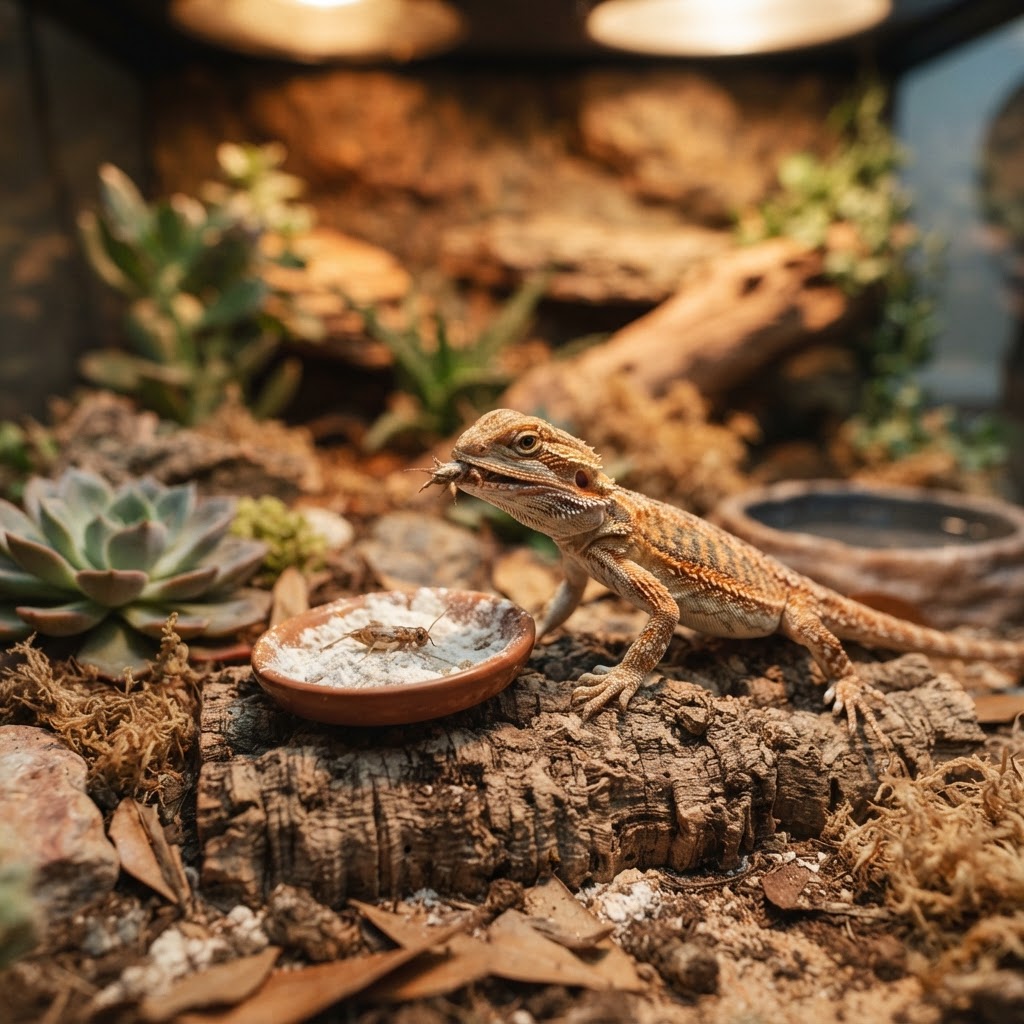
- Add a small pinch of supplement powder.
- Gently shake until the insects have a thin, even coating.
- Feed immediately so the powder does not fall off.
Dubia roaches, crickets, and black soldier fly larvae all behave a little differently when dusted. Do not panic if every insect is not perfectly coated.
For Greens
You can lightly dust salads, but many babies eat far more insects than greens. Because of that, insect dusting is usually the most reliable way to make sure supplements are actually consumed.
Keep It Light
More is not better. Thick powder can make food less appealing and may lead to uneven intake. A thin, barely visible coating is usually enough.
Signs Your Baby May Need a Routine Adjustment
No article can replace a reptile-savvy veterinarian, but there are some signs that your supplementation plan may need review.
Possible Signs of Too Little Support
- Slow or poor growth
- Soft jaw or limbs
- Tremors or twitching
- Weakness
- Difficulty moving normally
- Decreased appetite over time
Possible Signs of Too Much Supplementation
- Heavy, chalky over-dusting at most feedings
- Poor appetite for heavily coated prey
- Constipation in some cases
- Imbalances caused by overusing D3 or vitamins
These signs can overlap with other problems, including dehydration, parasites, incorrect temperatures, and poor UVB. If your baby seems unwell, do not guess for too long. A qualified reptile vet is always the safest next step.
Common Supplement Mistakes to Avoid
Using Calcium but Ignoring UVB
This is probably the biggest issue beginners run into. Calcium works best when your baby has proper UVB and basking conditions.
Dusting Every Meal Heavily
A routine supplement plan should be measured and repeatable. Piling on powder at every feeding can create avoidable problems.
Using Old or Poorly Stored Powder
Supplements do not stay fresh forever. Heat, humidity, and time reduce quality. Replace old containers and keep them sealed.
Not Gut-Loading Feeders
Supplements help, but feeder nutrition still matters. Well-fed insects provide a much better nutritional base than empty, dry feeders.
Guessing Instead of Tracking
Keep a simple note on your phone or a paper calendar. Mark calcium days, D3 day, and multivitamin day. This makes it much easier to stay consistent and avoid doubling up by accident.
Final Thoughts
The best supplements for baby bearded dragons are the ones that support healthy growth without overcomplicating your routine. For most babies, that means regular plain calcium, careful use of D3, a reptile multivitamin, strong UVB, and a varied diet.
If you keep the plan simple and consistent, your baby beardie has a much better chance of growing into a strong, active, healthy adult. Supplements are important, but they work best as part of the full care picture: proper heat, lighting, hydration, and good feeding habits.
Frequently Asked Questions
How often should I give calcium to a baby bearded dragon?
Most baby bearded dragons do well with plain calcium on 4 to 5 feedings per week, especially during the first several months of life. Very young babies may need it a little more often, while older juveniles may need it slightly less often. UVB quality and your vet’s advice should guide the final routine.
Does my baby bearded dragon need calcium with D3 if I have a UVB bulb?
Usually, yes, but only in moderation. Many keepers offer calcium with D3 once weekly even when UVB is good. The exact amount depends on your bulb strength, distance, enclosure design, and overall husbandry. Too much D3 is not ideal, so more is not better.
Can I use adult bearded dragon supplements for a baby?
Sometimes, but only if the supplement is reptile-safe and the dosage works for a baby’s schedule. What matters most is the formula and frequency, not the marketing label alone. Always read the directions and avoid assuming all supplements are interchangeable.
Is a multivitamin really necessary if I feed lots of insects?
In most cases, yes. Insects are excellent for protein, but they do not always provide a complete micronutrient profile on their own. A reptile multivitamin once or twice per week helps fill those nutritional gaps.
What if my baby refuses insects after I dust them?
Try using less powder first. Many babies reject prey that is over-coated. You can also dust smaller batches so the coating stays lighter and fresher. If appetite remains poor, review temperatures, UVB, stress, and hydration before blaming the supplement alone.
Can too much calcium hurt a baby bearded dragon?
Yes. Over-supplementing can contribute to imbalances and may reduce appetite if food becomes unpleasantly powdery. Calcium is vital, but it should be used on a schedule rather than dumped onto every meal.
Do baby bearded dragons need probiotic supplements?
Not as a normal daily requirement. Healthy babies usually do not need routine probiotics if husbandry and diet are correct. In special situations such as illness or recovery, your reptile vet may recommend additional support.