Introduction
Baby bearded dragons are hardy little reptiles, but they can also go downhill faster than many new owners expect. Because they are prey animals, they often hide weakness until a problem has already been building for days or even weeks. That is why learning the signs of illness in baby bearded dragons is one of the most important parts of responsible care.
A healthy baby beardie is usually alert, curious, warm to the touch after basking, eager to eat, and steadily growing. Small changes in appetite, poop, posture, or energy can be your first clue that something is wrong. The earlier you notice those clues, the better the chance of correcting a husbandry issue or getting veterinary help before the problem becomes serious.
In this guide, you will learn what normal looks like, which symptoms should never be ignored, what commonly causes illness in dragons from 0 to 12 months old, and what steps to take right away if you are worried.
BabyBeardedDragon.net is a participant in affiliate programs including Amazon Associates. We may earn a commission on qualifying purchases at no extra cost to you.
Key Takeaways
- Baby bearded dragons can hide sickness, so subtle changes matter.
- Loss of appetite, unusual lethargy, weight loss, diarrhea, swelling, wheezing, and weakness are common warning signs.
- Babies are more sensitive than adults to dehydration, poor temperatures, weak UVB, and diet mistakes.
- Trouble breathing, black beard with severe weakness, blood in stool, seizures, or inability to move normally need urgent reptile vet care.
- Good husbandry prevents many illnesses: proper heat, strong UVB, safe substrate, hydration, a correct diet, and regular monitoring.
- When in doubt, contact an experienced reptile or exotic veterinarian rather than waiting to see if your baby improves on its own.
Why Baby Bearded Dragons Get Sick Faster
Young bearded dragons grow quickly, eat often, and have less reserve than adults. That means even a short period of poor temperatures, dehydration, or skipped meals can affect them more dramatically. A baby that is only a few months old can lose weight, become weak, or develop bone problems much faster than a full-grown dragon.
Another challenge is that many new owners bring home babies from pet stores, expos, or breeders where stress, transport, and exposure to parasites may already be part of the picture. If the enclosure at home is not fully dialed in, the stress can stack up quickly.
If you are still fine-tuning your setup, review your baby bearded dragon tank setup and your UVB lighting for baby bearded dragons. Husbandry mistakes are behind many early health problems.
Common Signs of Illness in Baby Bearded Dragons
Some signs of illness in baby bearded dragons are obvious, but others are easy to dismiss as shedding, stress, or a “picky eater” phase. Pay attention to patterns, especially if more than one symptom appears at the same time.
Lethargy or unusual weakness
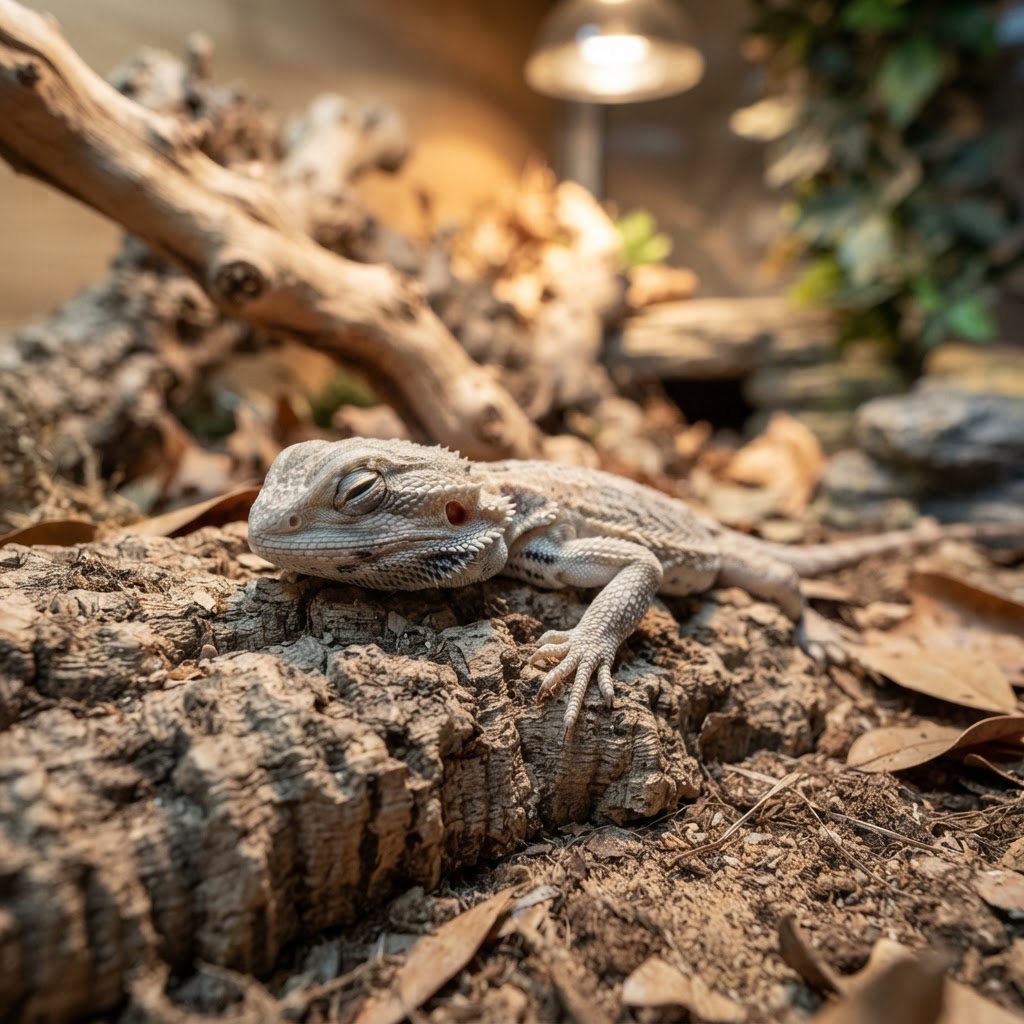
Healthy babies spend a good part of the day basking, exploring, watching movement, and reacting when food appears. A sick baby may stay flattened in one spot, keep its eyes closed for long periods, or seem too weak to chase insects.
Watch for:
- Sleeping much more than usual outside normal nighttime rest
- Staying on the cool side all day
- Little response to movement, food, or handling
- Shaky or weak climbing
One lazy afternoon does not always mean illness. A pattern lasting more than a day or paired with other symptoms is more concerning.
Poor appetite or suddenly refusing food
Babies usually have strong appetites. A sudden drop in feeding response is one of the biggest red flags. If your dragon ignores insects it normally loves, chews weakly, or stops eating altogether, investigate quickly.
Possible causes include low basking temperature, incorrect UVB, stress, impaction, parasites, infection, or pain. For feeding basics, see what baby bearded dragons eat. If appetite loss is your main concern, our article on baby bearded dragon not eating may also help.
Weight loss or failure to grow
A growing baby should gradually gain weight and length over time. If your dragon looks thinner, the tail base is shrinking, or growth seems stalled for weeks, do not ignore it.
Signs include:
- Prominent hip bones
- A thin tail base
- A helmet-like head with a noticeably bony look
- No steady growth despite regular feeding
A simple weekly weight check can reveal a problem before it becomes visible.
Abnormal poop
Stool changes are often one of the earliest signs of health issues. Normal baby beardie poop usually includes a brown fecal part and a white urate. Consistency can vary based on diet and hydration, but major changes deserve attention.
Concerning stool signs include:
- Frequent diarrhea
- Extremely foul-smelling stool
- Mucus in the stool
- Blood
- Very dry urates or hard stool
- Not passing stool while the belly looks swollen
Diarrhea can be linked to parasites, stress, overhydration, or diet imbalance. Lack of stool can point to dehydration, low heat, or impaction.
Sunken eyes or signs of dehydration
Baby dragons dry out faster than adults. Mild dehydration can quickly turn into weakness and appetite loss.
Look for:
- Sunken or less full-looking eyes
- Wrinkled skin that stays folded briefly
- Thick or sticky saliva
- Dry, chalky urates
- Reduced energy and poor feeding
Hydration problems often happen alongside temperature issues, illness, or shipping stress.
Breathing problems
Respiratory symptoms should always be taken seriously, especially in babies.
Warning signs include:
- Wheezing or clicking sounds
- Mucus around the nose or mouth
- Open-mouth breathing when not basking
- Repeated gaping with distress
- Neck stretching to breathe
Respiratory infections can be linked to low temperatures, chronic stress, poor hygiene, or other underlying problems.
Swelling, twitching, or trouble moving
Weak limbs, shaking, tremors, a soft jaw, swollen legs, or difficulty lifting the body can point to metabolic bone disease, injury, severe weakness, or neurological issues. In young dragons, poor UVB exposure and calcium imbalance can cause these symptoms surprisingly fast.
If a baby is dragging its legs, missing jumps, or trembling during movement, seek veterinary advice promptly.
Persistent dark coloration or black beard
Bearded dragons may darken when cold, stressed, or basking. But persistent dark coloring, a black beard, or severe stress marks paired with lethargy, poor appetite, or pain should not be brushed off.
Color changes alone do not diagnose illness, but they can be part of the overall picture.
Eye, nose, or mouth problems
Healthy babies should have clear eyes, clean nostrils, and a normal pink mouth. Concerning signs include:
- Swollen or closed eyes
- Eye discharge
- Crust around the nostrils
- Excess saliva
- Red, pale, or cheesy-looking patches in the mouth
Mouth problems can make eating painful and may indicate infection, injury, or husbandry issues.
Difficult sheds that affect movement or circulation
Shedding itself is normal, but stuck shed around toes, tail tips, or eyes can become a health problem. If a baby is shedding badly over and over, check humidity, hydration, nutrition, and overall care. Repeated poor sheds can also happen when a dragon is already unwell.
Urgent Red Flags That Need a Vet Now
Some symptoms should be treated as emergencies. Contact a reptile-savvy vet as soon as possible if your baby bearded dragon has:
- Blood in the stool
- Severe weakness or collapse
- Seizures or repeated twitching
- Trouble breathing or constant open-mouth breathing away from basking
- A swollen belly with straining and no stool
- Inability to use one or more limbs normally
- Significant weight loss in a short time
- A prolapse
- Eyes closed most of the day for more than a day
Young dragons can decline quickly. Waiting too long often turns a manageable problem into a life-threatening one.
Common Causes of Illness in Young Beardies
Many of the signs of illness in baby bearded dragons come back to a few common root causes.
Incorrect temperatures
If the basking area is too cool, your baby cannot digest food properly, use nutrients efficiently, or maintain normal activity. Too much heat can also cause stress and dehydration. Always verify enclosure temperatures with accurate measuring tools rather than guessing.
Poor or weak UVB exposure
UVB is essential for calcium metabolism and bone development. Without proper UVB, a growing dragon can develop weakness, poor appetite, tremors, and deformities. This is one reason lighting mistakes are so dangerous in the first year.
Diet imbalance
Babies need frequent, nutritious meals and an appropriate calcium routine. Feeders that are too large, poor variety, or long gaps between meals can contribute to weakness and poor growth. A solid complete baby bearded dragon care guide can help you check the basics.
Parasites and infections
Internal parasites are common in young dragons, especially recent purchases. Symptoms may include diarrhea, stinky stool, weight loss, poor growth, and reduced appetite. A fecal exam from a reptile vet is often the best way to confirm the issue.
Impaction
Impaction can happen when a baby eats loose substrate, oversized feeders, or indigestible material. Signs may include loss of appetite, straining, belly swelling, weakness, or not passing stool. Safe enclosure surfaces matter, especially for babies.
Stress
Frequent handling, cohabitation, loud environments, visual stress from other pets, recent relocation, and constant enclosure changes can all suppress appetite and weaken the immune system. Babies need security and routine more than many owners realize.
What To Do if You Suspect Your Baby Is Sick
If you notice symptoms, stay calm and work through the basics quickly.
1. Review husbandry first
Check basking temperatures, cool side temperatures, nighttime warmth if needed, and UVB placement. Many mild cases improve only after the setup is corrected.
Also review:
- Is the enclosure too large and stressful without enough cover?
- Is the substrate safe for a baby?
- Are feeder insects the right size?
- Is the dragon getting enough meals for its age?
2. Stop guessing and start recording
Write down:
- Weight
- Last normal meal
- Last bowel movement
- Current symptoms
- Temperatures and lighting schedule
- Any recent changes in food, setup, or handling
This record helps you notice patterns and gives a vet useful information.
3. Encourage hydration safely
Offer fresh water and moisture-rich greens if your baby is eating. You can place a small drop of water on the snout to see if it licks it off. Avoid force-feeding or overhandling a weak dragon. If dehydration looks significant, veterinary help is safer than trying home remedies for too long.
4. Avoid random treatments
Do not give human medications, oils, calcium overloads, or internet-suggested cures without knowing the cause. Treating the wrong problem can make things worse.
5. Contact a reptile veterinarian
If symptoms are moderate, persistent, or worsening, book an appointment with an exotic vet. Bring photos of the enclosure, a fresh stool sample if possible, and your symptom notes.
How To Monitor a Healthy Baseline
One of the best ways to catch problems early is to know what is normal for your own dragon.
Track weight and growth
Weigh your baby once a week at the same time of day. Steady growth is reassuring. Sudden plateaus or drops deserve a closer look.
Watch feeding response
A healthy baby usually notices food quickly and hunts with enthusiasm. A slower response over several days is worth investigating.
Notice posture and movement
Strong babies stand up well, bask with purpose, and move with coordination. Wobbling, flattening constantly, or reluctance to move can be meaningful.
Keep a poop log
It sounds simple, but it works. Frequency, color, smell, and consistency can help you spot developing problems sooner.
Prevention Tips for the First Year
Preventing illness is much easier than treating it later.
- Set up heat and UVB correctly before bringing your baby home.
- Feed a proper age-appropriate diet with suitable insect size and balanced greens.
- Keep the enclosure clean and remove waste promptly.
- Avoid loose substrates that can be swallowed by babies.
- Limit handling during the adjustment period and after meals.
- Never house baby bearded dragons together unless you are an experienced keeper managing a very specific situation.
- Schedule a wellness exam and fecal test with a reptile vet, especially for a new baby.
When you understand the signs of illness in baby bearded dragons, you become much more confident as an owner. Most beginners are not dealing with “mystery sickness” at all—they are dealing with a fixable setup issue, stress, or a problem that simply needs quick veterinary attention.
Frequently Asked Questions
Is it normal for a baby bearded dragon to sleep more during shed?
A baby may act a little quieter or less interested in food during a shed, but it should not look severely weak, keep its eyes closed all day, or stop eating for an extended period. If sleepiness during shedding comes with weight loss, breathing issues, or abnormal poop, do not assume shedding is the only cause.
How long can a baby bearded dragon go without eating before it is serious?
Because babies grow quickly, even a short fast matters more than it would in an adult. Missing one meal is not automatically an emergency, but refusing food for more than a day or two—especially with lethargy or weight loss—deserves immediate review of husbandry and likely a vet call.
Are stress marks always a sign of illness?
No. Stress marks can appear from relocation, handling, temperature changes, or normal mood shifts. But if dark stress marks are persistent and paired with weakness, hiding, or appetite loss, they may be part of a health problem.
Can bad UVB really make a baby sick that fast?
Yes. Young dragons depend on proper UVB to use calcium and build bone. In babies, weak or incorrect UVB can contribute to poor appetite, slow growth, weakness, twitching, and early metabolic bone disease much faster than many owners realize.
What should healthy baby bearded dragon poop look like?
Healthy poop usually has a brown solid stool and a white urate. Very runny stool, strong odor, mucus, blood, or very dry urates can all suggest a problem with diet, hydration, parasites, or husbandry.
Should I take a new baby bearded dragon to the vet even if it looks healthy?
Yes, that is a smart idea. A new-patient exam gives you a baseline, and a fecal test can catch parasites before they cause major symptoms. New babies often arrive stressed, and a wellness check can save trouble later.
What is the best first step if I notice symptoms tonight?
Start by checking heat, UVB, and behavior right away. Remove obvious stressors, offer safe hydration, and monitor closely. If the symptoms are severe or your baby has trouble breathing, cannot move normally, or looks dramatically weak, contact an emergency exotic vet without waiting.