Introduction
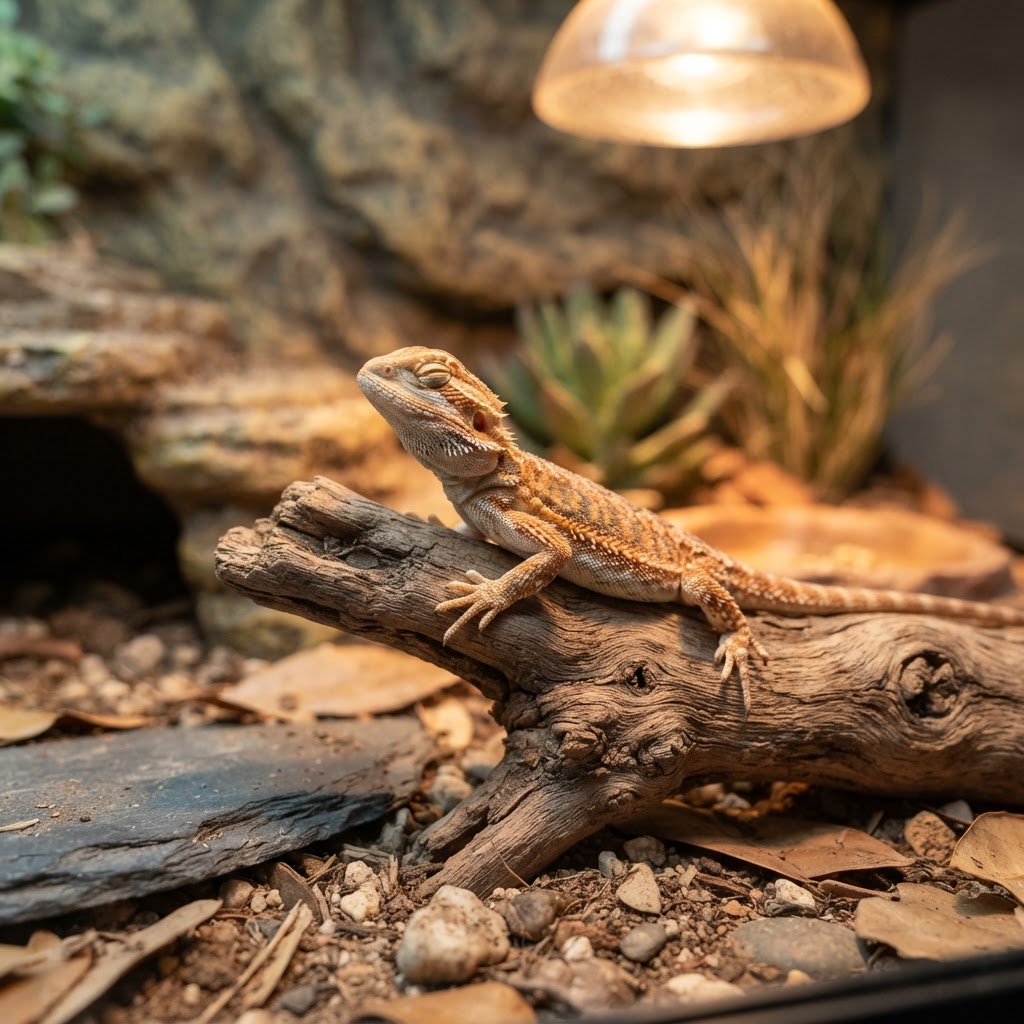
Baby bearded dragons may look tough, but they are surprisingly sensitive to temperature. During the first year of life, they grow quickly, eat often, and rely on outside heat to digest food, build strength, and stay active. If their enclosure is too cool, even for part of the day, you may see sluggish behavior, poor appetite, slow growth, or trouble shedding.
Learning how to keep baby bearded dragons warm is one of the most important parts of new-owner setup. Heat is not just about making the tank feel cozy. It affects metabolism, immune function, and whether your baby dragon can properly use the nutrients from its food. Good heating also works hand in hand with UVB lighting, diet, and a safe enclosure, so it fits right into a complete baby bearded dragon care guide.
In this article, you will learn the best temperature ranges for babies and juveniles, which heat sources are safest, how to measure temperatures accurately, and how to avoid the most common heating mistakes. If you are setting up a new habitat or fixing one that feels too cold, these tips will help you create a warm, stable environment your baby beardie can thrive in.
Why Warmth Matters for Baby Bearded Dragons
Bearded dragons are ectothermic, which means they depend on external heat to regulate body functions. A baby beardie cannot simply warm itself up the way a mammal can. It needs a proper basking area and a temperature gradient to move between warmer and cooler zones as needed.
For babies from 0 to 12 months old, warmth matters even more because their metabolism is fast. They eat more frequently than adults, grow rapidly, and burn energy quickly. Without enough heat, food may sit too long in the stomach, appetite can drop, and the dragon may become weak or inactive.
A correctly heated enclosure supports:
- Healthy digestion after meals
- Strong appetite and feeding response
- Normal energy and alertness
- Better nutrient use for growth
- More reliable shedding
- Reduced stress
If a baby beardie suddenly seems lazy or refuses food, temperature is one of the first things to check before assuming something more serious is wrong. Problems that look medical are sometimes husbandry issues, especially in new setups.
Ideal Temperature Ranges for Babies and Juveniles
The word warm can mean different things to different owners, so it helps to think in specific numbers. Baby bearded dragons do best when the enclosure provides a hot basking area, a warm side, and a cooler side.
Basking spot temperature
For most baby bearded dragons, the basking surface should reach about 105 to 110 degrees Fahrenheit. Young babies, especially under 6 months old, often do best near the upper part of that range. Older juveniles from around 6 to 12 months may be comfortable closer to 100 to 105 degrees Fahrenheit.
The key word here is surface. The branch, rock, or platform where your dragon sits should hit the target temperature, not just the air above it.
Warm side ambient temperature
The warm side of the enclosure should generally stay around 88 to 95 degrees Fahrenheit during the day. This gives your baby dragon a heated area beyond the basking perch without forcing it to sit directly under the hottest spot all day.
Cool side ambient temperature
The cool side should stay around 75 to 85 degrees Fahrenheit during the day. This lower range gives your beardie a safe place to cool off. A tank that is hot everywhere can be just as stressful as one that is too cold.
Nighttime temperature
At night, it is normal for temperatures to drop. In most homes, a nighttime range of 65 to 75 degrees Fahrenheit is fine. If the enclosure drops below 65 degrees Fahrenheit, add a non-light-emitting heat source.
Remember that babies need options
A healthy setup is not one fixed number. It is a gradient. Your baby beardie should be able to warm up, cool down, and choose a comfortable spot throughout the day. That is one reason a thoughtful baby bearded dragon tank setup matters so much.
Best Heat Sources for a Baby Bearded Dragon
The safest way to warm a baby bearded dragon is from above, mimicking the sun. Overhead heat encourages natural basking behavior and helps create a proper temperature gradient.
BabyBeardedDragon.net is a participant in affiliate programs including Amazon Associates. We may earn a commission on qualifying purchases at no extra cost to you.
Use a bright white basking bulb during the day
For daytime heat, use a standard basking bulb, halogen flood bulb, or reptile basking lamp that gives off bright white light. Place it above the basking area on one side of the enclosure so your beardie can choose between warmer and cooler zones.
The right bulb wattage depends on your enclosure size, room temperature, screen top, and bulb height. Because of those variables, always adjust based on thermometer readings rather than the bulb label alone.
Pair heat with UVB lighting
Heat alone is not enough. Baby bearded dragons also need strong UVB to process calcium properly and support healthy bone growth. The basking zone should overlap with the UVB zone so your dragon gets both warmth and beneficial light while basking. If you need help with bulb choice and placement, read our baby bearded dragon UVB lighting guide.
Use nighttime heat only when necessary
If your house stays above 65 degrees Fahrenheit overnight, you usually do not need extra heat. If it drops lower, use a ceramic heat emitter or another non-light heat source controlled by a thermostat. This keeps the enclosure warm enough without disturbing your baby dragon's sleep.
Avoid these risky heat sources
Some popular products are not good choices for baby beardies. Avoid:
- Red, blue, or purple night bulbs
- Heat rocks
- Under-tank heaters as the main heat source
- Unregulated heat emitters with no thermostat
Bearded dragons sense overhead warmth better than belly heat, and heat rocks can create dangerous hot spots.
How to Measure Temperature Accurately
If you are wondering how to keep baby bearded dragons warm without overheating them, the answer is simple: measure everything accurately. Guessing is where many beginners run into trouble.
Use digital probe thermometers
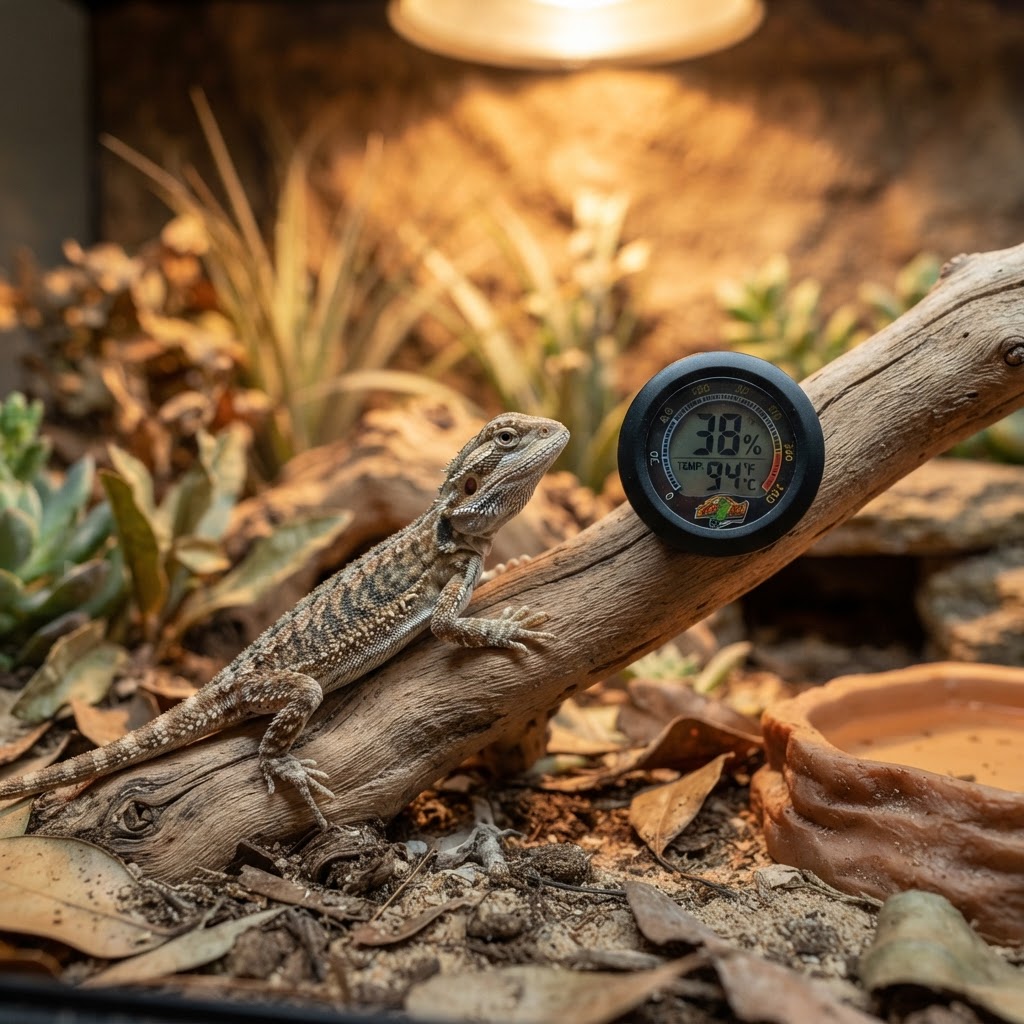
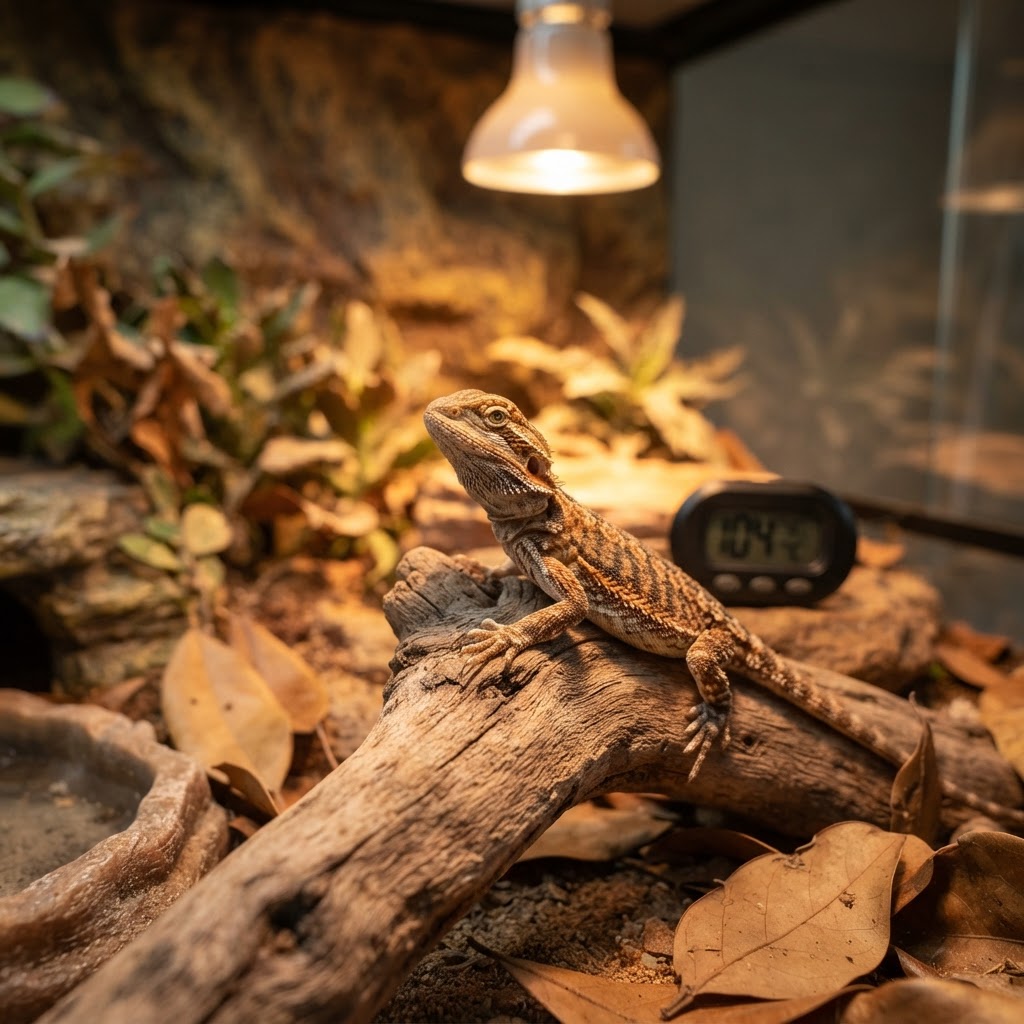
A digital thermometer with a probe is one of the best tools you can own. Place one probe at the basking area and another on the cool side to track the full temperature gradient. This gives a much more reliable picture than a basic stick-on gauge.
Check basking surfaces with an infrared temp gun
A temp gun is excellent for reading the exact surface temperature of the basking rock, branch, or platform. This is especially helpful because the air temperature may look correct while the basking surface is still too cool or too hot.
Do not rely on stick-on dial thermometers alone
Stick-on analog thermometers are often inaccurate and usually read only the glass near them, not the actual basking surface or the main air zone where your dragon spends time.
Test before and after setup changes
Any time you change the bulb wattage, lamp height, basking decor, or enclosure placement, recheck temperatures. Even moving the tank away from a drafty window can make a noticeable difference.
A good rule is to let a new setup run for a full day before your baby beardie uses it, then fine-tune based on real readings.
How to Create a Safe Heat Gradient
A baby beardie should not have to choose between being too hot and too cold. The goal is to create a basking zone on one end and a cooler retreat on the other.
Build one clear basking area
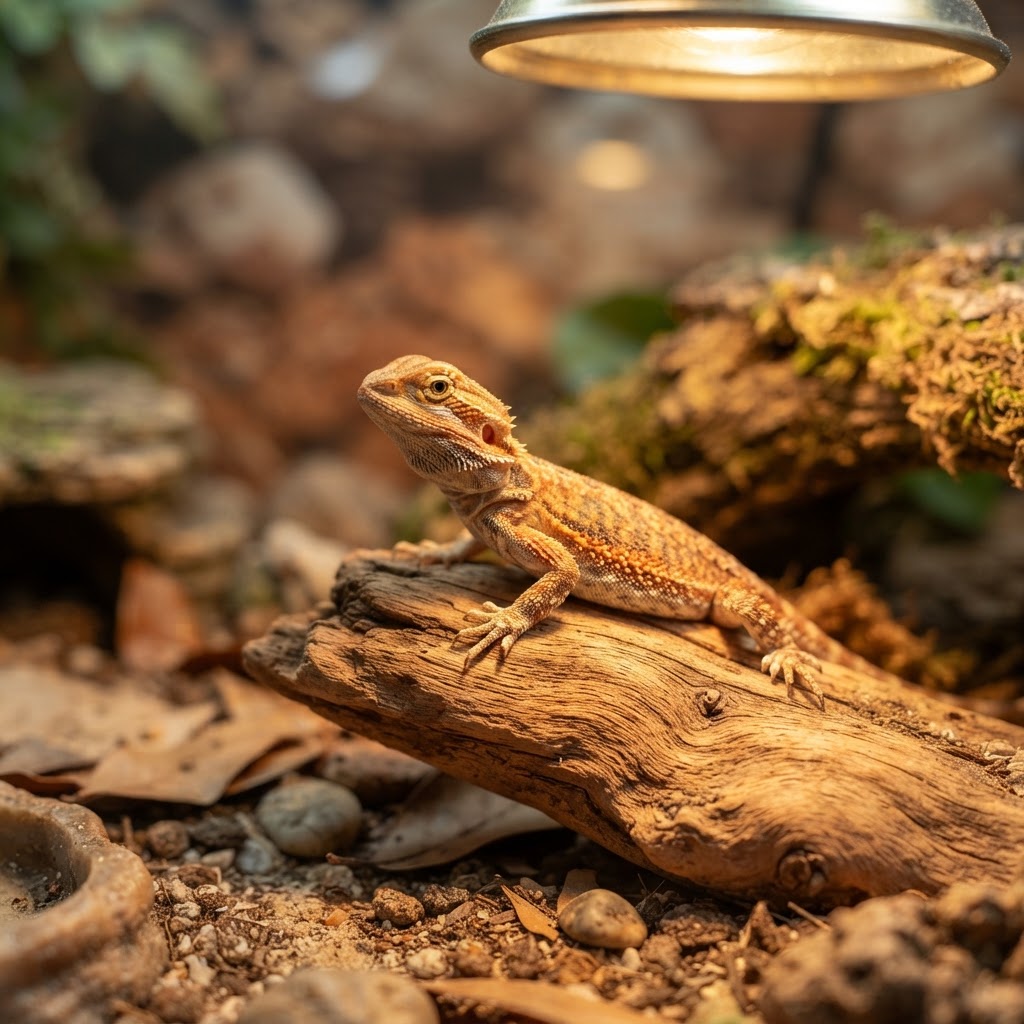
Use a stable rock, branch, or basking platform directly under the heat lamp. The surface should be easy for a baby dragon to climb and wide enough for its whole body to rest comfortably.
Keep the hot side and cool side separate
Place the basking lamp on one end of the enclosure, not in the center. This allows heat to taper off naturally across the tank.
Add hides on both sides
A hide on the warm side and another on the cool side give your baby dragon safe choices. This helps reduce stress while still allowing self-regulation.
Adjust height before swapping bulbs
If your basking surface is only a few degrees off, you may not need a new bulb. Sometimes raising or lowering the basking platform, changing the dome height, or switching to a wider flood bulb solves the problem.
Daytime and Nighttime Heating Tips
Daily routine matters almost as much as the equipment itself. Babies do best with a predictable schedule.
Warm the enclosure before feeding
Turn lights on in the morning and give your baby beardie time to warm up before offering food. Most babies digest best when they have had at least 30 to 60 minutes of heat first.
Keep lights on after meals
Do not feed right before the lights go out. Leave the basking light on for at least a couple of hours after the last meal so digestion can continue properly.
Provide darkness at night
Bearded dragons sleep best in darkness. If nighttime heating is needed, use a ceramic heat emitter instead of any bulb that produces visible light.
Watch for seasonal changes
Winter weather, air conditioning, and room drafts can all lower enclosure temperatures. Check readings more often during seasonal transitions, especially in homes where temperatures change a lot from day to night.
Signs Your Baby Bearded Dragon Is Too Cold
Sometimes the tank looks fine at a glance, but your dragon's behavior tells a different story. Watch for these common signs of insufficient warmth:
- Lethargy or low activity
- Spending all day under the lamp
- Poor appetite or refusing insects
- Slow digestion or infrequent stools
- Darker body color from stress or heat-seeking
- Sleeping more than usual during the day
- Slower-than-expected growth
If your beardie is refusing food, double-check temperatures before panicking. Low heat is a very common reason babies stop eating well. You may also find our guide on why a baby bearded dragon is not eating helpful.
If temperatures are correct and your baby still seems weak, unwell, or persistently inactive, contact a reptile veterinarian.
Common Heating Mistakes New Owners Make
Many early husbandry problems come from not fully understanding how to keep baby bearded dragons warm consistently. The good news is that most mistakes are easy to fix once you know what to look for.
Using only one temperature reading
A single thermometer cannot tell you whether the basking surface, warm side, and cool side are all safe. Babies need a gradient, not just a random warm tank.
Choosing bulbs by wattage alone
A 100-watt bulb may be perfect in one enclosure and much too hot in another. Always trust measured temperatures, not packaging claims.
Heating the tank from below
Heat mats and heat rocks do not recreate natural basking and can cause burns. Overhead heat is the standard for a reason.
Using colored bulbs at night
Red or blue night bulbs are still visible light and can disrupt sleep. Darkness matters for healthy rest.
Letting room drafts cool the enclosure
Tanks placed near windows, vents, or exterior doors often lose heat faster than owners realize.
Ignoring the relationship between heat and other care
Heating works together with lighting, feeding, and enclosure layout. Many avoidable setup issues come from overlooking that bigger picture, which is why new keepers should also review common baby bearded dragon mistakes.
Key Takeaways
- Baby bearded dragons need warmer basking temperatures than adults because they grow and digest food quickly.
- Aim for a basking surface of about 105 to 110 degrees Fahrenheit for young babies, with slightly lower basking temps for older juveniles.
- Keep the warm side around 88 to 95 degrees Fahrenheit and the cool side around 75 to 85 degrees Fahrenheit during the day.
- Nighttime temperatures can safely drop to 65 to 75 degrees Fahrenheit in most homes.
- Use overhead heat from a bright white basking bulb during the day.
- Only add nighttime heat if the enclosure drops below 65 degrees Fahrenheit, and use a non-light heat source.
- Measure temperatures with digital probes and a temp gun instead of guessing.
- Avoid heat rocks, colored night bulbs, and under-tank heat as primary heating.
Frequently Asked Questions
How warm should a baby bearded dragon be at night?
Most baby bearded dragons do well with nighttime temperatures between 65 and 75 degrees Fahrenheit. If your home stays in that range, extra heat is usually not needed. If the enclosure drops below 65 degrees Fahrenheit, add a ceramic heat emitter or another non-light heat source on a thermostat.
Can I use a heat mat for a baby bearded dragon?
Heat mats are not recommended as the main heat source for baby beardies. Bearded dragons naturally warm themselves by basking under overhead heat, and mats do not provide the same benefit. They can also create unsafe hot spots, especially in small enclosures.
What watt basking bulb does a baby bearded dragon need?
There is no single wattage that works for every setup. The right bulb depends on enclosure size, distance from the basking surface, room temperature, and ventilation. Start with a quality basking bulb and adjust based on thermometer readings rather than guessing.
Should I use a red light at night?
No. Red lights are still visible to reptiles and can interfere with normal sleep. If your enclosure gets too cold at night, use a ceramic heat emitter instead so your baby dragon gets warmth without light.
How long should the basking light stay on each day?
A baby bearded dragon usually does well with about 12 to 14 hours of daytime light and heat. Keep the schedule consistent so your dragon can settle into a healthy routine for basking, eating, and sleeping.
My baby beardie sits under the lamp all day. Is that normal?
Sometimes, but not always. Young dragons do spend a lot of time basking, especially after meals. However, if your beardie never leaves the hot spot, the enclosure may be too cool overall. Recheck the warm side and cool side temperatures, not just the basking surface.
What is the easiest way to think about how to keep baby bearded dragons warm?
The simplest approach is to think in zones, not just one number. Give your baby a hot basking surface, a warm side, a cool side, and darkness at night. Once you understand how to keep baby bearded dragons warm through a proper gradient, the rest of your setup becomes much easier to manage.