Introduction
Baby bearded dragons may be small, but they communicate constantly. They use posture, color changes, movement, eye behavior, and even where they choose to sit in the tank to show whether they feel safe, stressed, curious, cold, or uncomfortable. If you are learning how to understand baby bearded dragon body language, the good news is that most signals become much easier to read once you know what to look for.
For new owners, the tricky part is that baby dragons do not always behave like calm adult beardies. Young dragons from 0 to 12 months are more alert, more sensitive to handling, and more reactive to changes in their environment. A baby that seems "moody" may actually be too cold, overwhelmed, shedding, or unsure of your hands. In this guide, you will learn how to read common body language, what different signals usually mean, and how to respond in a way that builds trust instead of stress.
Why Body Language Matters More in Babies
Baby bearded dragons live in a fast-growing, high-alert stage of life. In the wild, a tiny dragon is both hunter and prey, so cautious behavior is normal. That instinct does not disappear just because your dragon lives in a safe enclosure.
Young beardies also go through frequent growth spurts, regular sheds, changing appetites, and rapid adjustment periods after coming home. That means their body language can shift from day to day. A baby that gladly climbs onto your hand one afternoon may freeze or dart away the next morning simply because it is tired, shedding, or still settling in.
The goal is not to judge one signal in isolation. Instead, look for patterns. When you start recognizing those patterns, you can react faster and care for your dragon with more confidence.
Read the Whole Picture First
If you want to master how to understand baby bearded dragon body language, start by reading the full situation instead of one behavior alone. A dark beard means something different in a cold tank than it does during handling. Closed eyes may mean relaxation in one moment and discomfort in another.
Before you interpret any signal, check these pieces of context:
- What time of day is it?
- Is your dragon under the basking spot, hiding, or trying to escape?
- Did you just feed, handle, or wake them?
- Are they in shed?
- Has anything changed in the room, tank, or routine?
Check the enclosure before blaming temperament
A lot of "bad attitude" is really a husbandry problem. Babies are especially sensitive to incorrect temperatures, poor UVB exposure, too much tank traffic, or lack of hiding spots. If your dragon seems restless, dark, or defensive every day, review your setup first. Our guide to baby bearded dragon tank setup can help you check the basics.
BabyBeardedDragon.net is a participant in affiliate programs including Amazon Associates. We may earn a commission on qualifying purchases at no extra cost to you.
Use reliable tools like digital thermometers and a proper UVB setup so you are working from facts, not guesses.
Notice what changed today
Body language is often tied to recent events. A baby may act jumpy after a long handling session, darker before lights-out, or irritable during a shed. If the behavior is new, ask yourself what changed in the last 24 hours before assuming something is seriously wrong.
Calm and Comfortable Signals
Not every movement is a warning. Many beginner owners worry because babies are naturally watchful. Alert does not always mean afraid.
Relaxed basking posture
A comfortable baby often basks with a loose, natural posture. The body looks supported, not tense. Legs rest normally instead of bracing hard, and the tail lies calmly behind them.
Some babies flatten slightly under the basking light to warm up faster. This is normal if the rest of their behavior looks calm and they are not desperately trying to escape the heat.
Bright eyes and curious tracking
A baby that watches you with interest, turns its head, or follows movement without running is often curious rather than frightened. Curious babies may walk toward the front of the enclosure, climb to get a better view, or tilt their head when they see feeding tongs.
That kind of alertness is healthy. It shows the dragon is engaged with its environment.
Choosing to come closer
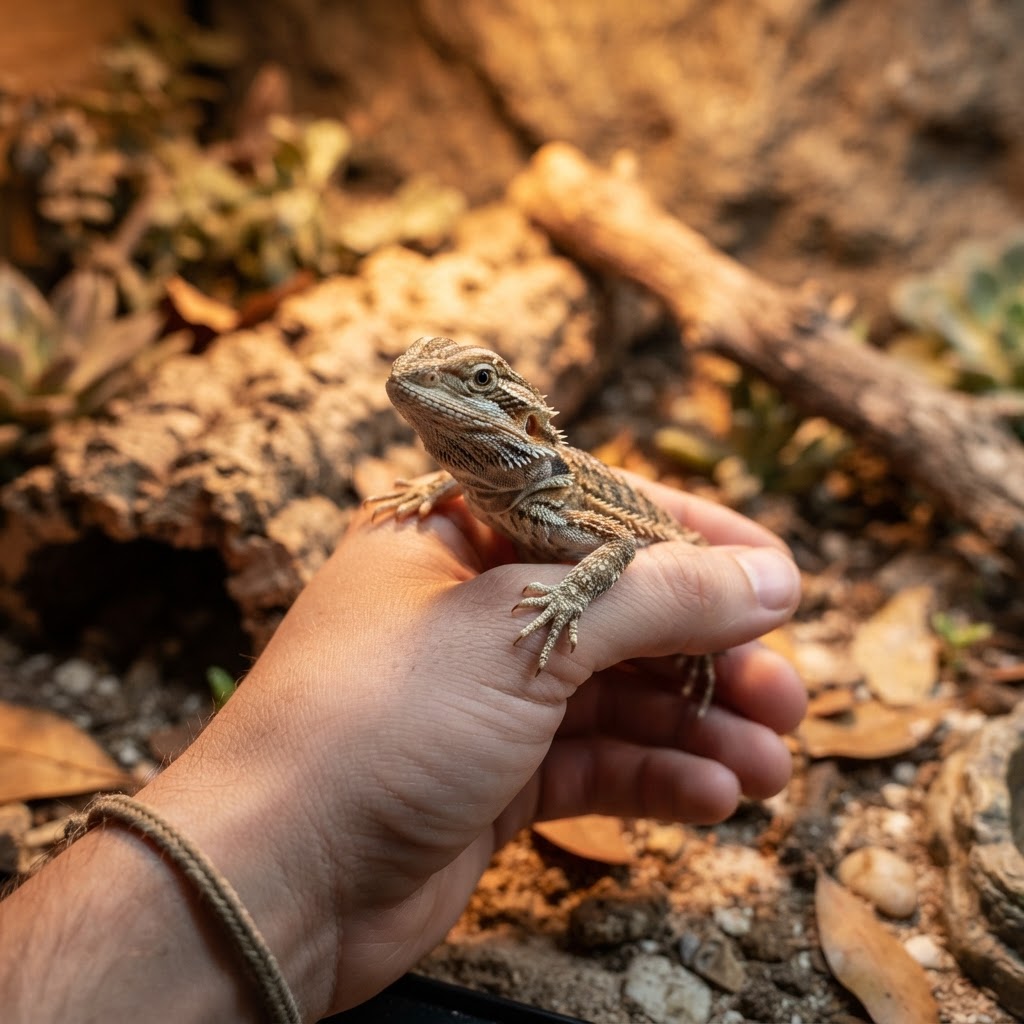
One of the best trust signals is a baby that does not panic when your hand enters the tank. Even better is a dragon that steps onto your hand or arm on its own. That does not mean it wants endless cuddles, but it does show growing confidence.
If you are still working on trust, our article on baby bearded dragon handling explains how to make early sessions shorter and less stressful.
Stress and Fear Signals You Should Not Ignore
A baby dragon under stress usually becomes more defensive, more restless, or more withdrawn. The key is to spot the early signs before the situation escalates.
Dark beard or darker body color
Beardies often darken when stressed, cold, or trying to absorb more heat. In babies, the whole body may look grayer or darker than usual. That does not always mean severe fear, but it does mean you should check the situation.
Ask yourself:
- Is the tank too cool?
- Was the dragon just handled?
- Is there loud movement nearby?
- Is another pet visible?
Flattening, freezing, or sudden dashing
A frightened baby may flatten its body low, stay perfectly still, or suddenly sprint away. Freezing is common when a baby feels exposed. Dashing usually means the dragon wants distance immediately.
When this happens, stop what you are doing. Do not chase a baby around the tank to prove it is safe. Back off, let it settle, and try again later with a slower approach.
Hissing, open mouth, and defensive posture
A baby that puffs slightly, opens its mouth, or hisses is telling you very clearly that it feels threatened. This is not stubbornness. It is communication.
Open-mouth behavior can also happen during basking to regulate heat, so context matters. A relaxed dragon under the basking light may gape calmly. A tense dragon facing your hand with a rigid body is giving a warning.
Glass surfing and frantic scratching
Repeated pacing at the glass, scratching, or trying to climb the walls often points to stress, confusion, or poor setup. Babies may do this when they see reflections, want more cover, feel too hot, or are overstimulated by activity around the tank.
For a deeper look at warning behaviors, read signs of stress in baby bearded dragons.
Baby Behaviors That Are Easy to Misread
Some dragon behaviors look cute or dramatic but are often misunderstood.
Arm waving usually means uncertainty or submission
Many owners assume arm waving means a baby is saying hello. In reality, it more often means "I see you, and I do not want trouble." Babies may arm wave at people, reflections, larger dragons, or even moving shadows.
It is not necessarily a bad sign, but it does suggest your dragon feels socially unsure rather than fully relaxed. If you want to compare similar behaviors, see shadowing vs arm waving in baby bearded dragons.
Head bobbing is not always aggression
Head bobbing can be a display of excitement, alertness, or mild assertiveness. In babies, it is usually less intense than in adults. A few bobs by themselves are not a crisis. Look at the whole dragon. If the body is loose and the baby settles quickly, it may just be reacting to a reflection or a new sight.
Closing one eye can mean discomfort
If your baby closes one eye while you touch its head or approach from above, that often means it does not like what is happening. It can also happen with bright light, substrate irritation, or shed around the eye area.
One brief eye close is not automatically serious. Repeated eye closing during handling is a sign to change your approach.
Digging and restlessness have many causes
Baby beardies dig when they want to hide, cool down, settle for sleep, or escape something they do not like. A little digging is normal. Constant restless digging paired with dark color, glass surfing, or poor appetite deserves a closer look at temperatures and stressors.
How to Respond in the Moment
Learning how to understand baby bearded dragon body language is only half the job. The other half is responding well.
If your baby looks calm
- Move slowly.
- Support the full body when lifting.
- Keep early handling sessions short, around 5 to 10 minutes.
- End the session before the dragon becomes restless.
This teaches your baby that your hands do not lead to scary experiences.
If your baby looks stressed
- Pause and remove pressure.
- Avoid reaching from directly above.
- Return the dragon to a warm, secure spot.
- Give it time before trying again.
Do not force repeated handling when a baby is already defensive. Trust grows much faster when the dragon feels it has a chance to settle.
If the signal seems physical, not emotional
Sometimes the dragon is not upset with you at all. It may be too cold, too hot, thirsty, entering a shed, or feeling unwell. If behavior changes suddenly and stays that way, check husbandry and health rather than focusing only on taming.
What Body Language Can Reveal About Care Problems
Your baby dragon's posture and behavior often reflect the quality of its setup.
A dragon that stays dark and flattened under the basking light may be trying to warm up. One that avoids the basking area entirely may be too hot or uncomfortable. A baby that spends all day hiding could be stressed by bright exposure, noise, or a lack of secure cover.
Changes in appetite can also show up through body language first. A baby that seems weak, keeps its eyes half-closed, or stops showing interest in movement may need a closer health check. If you also notice weight loss, unusual stool, swelling, or lethargy, contact a reptile vet.
Remember that babies in shed often act different for a few days. They may look dull, rub against surfaces, eat less, and become less interested in handling. That is normal as long as the dragon is otherwise alert and returns to usual behavior soon after the shed passes.
How to Build Trust and Read Signals Better Over Time
The best way to improve how to understand baby bearded dragon body language is consistency. Babies are easier to read when their daily routine is predictable.
Here are simple ways to build trust:
- Feed, handle, and turn lights on and off at regular times.
- Approach from the front or side, not from above like a predator.
- Let your baby see your hand before you touch it.
- Scoop from underneath instead of grabbing.
- Support the chest, belly, and tail base.
- Keep the enclosure in a low-stress area away from constant commotion.
- Watch for patterns in a notebook or phone log.
Over time, you will learn your individual dragon's normal. That matters because some babies are naturally bolder, while others take weeks to relax. Progress is not measured by how still they sit on day one. It is measured by fewer fear signals, quicker recovery, and growing curiosity around you.
Key Takeaways
- Baby bearded dragons communicate through posture, color, movement, and behavior patterns.
- Always read body language in context, not as one isolated sign.
- Relaxed basking, curious watching, and willingly approaching your hand are good signs.
- Darkening, flattening, freezing, hissing, and frantic glass surfing often point to stress.
- Babies are more reactive than adults, so short handling sessions work best.
- Many behavior issues are really husbandry issues, especially heat, UVB, cover, and routine.
- Track repeated signals over several days so you can tell the difference between a passing mood and a real problem.
Frequently Asked Questions
Why does my baby bearded dragon wave at me?
Arm waving usually means your baby feels unsure and is trying to appear non-threatening. It is common in young dragons that are still getting used to people, reflections, or movement around the tank. It is not aggression, but it also does not necessarily mean the dragon is fully comfortable yet.
Is a black beard always a bad sign?
No. A darker beard or body can mean stress, but it can also happen when a dragon is cold or trying to absorb more heat. Look at the full picture: posture, activity level, tank temperature, and what just happened before the color change.
Why does my baby close one eye when I touch it?
That usually means your dragon does not like the touch, especially if you are approaching the head from above. It can also happen with bright light, irritation, or shed. Try a gentler side approach and avoid touching the face until trust is stronger.
How can I tell if my baby beardie is getting used to me?
Good signs include staying calm when you approach, not running from your hand, watching you curiously, and stepping onto you without panic. Babies do not have to sit perfectly still to trust you. Confidence often looks more like calm curiosity than cuddly behavior.
When should body language make me worry about illness?
Be concerned if unusual behavior lasts more than a couple of days or comes with other symptoms like not eating, weakness, swelling, abnormal stool, weight loss, or extreme lethargy. If you are unsure, learning how to understand baby bearded dragon body language should always go hand in hand with getting veterinary advice when something feels off.