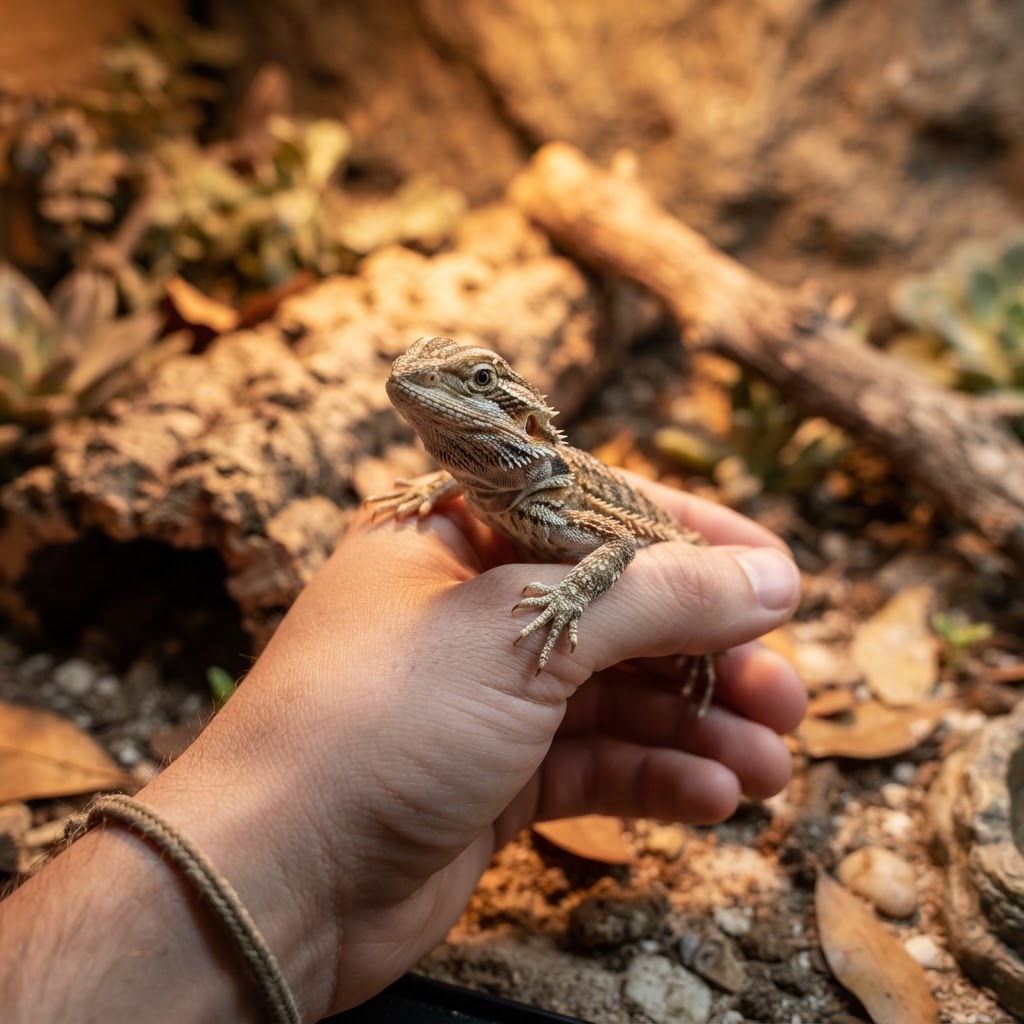
Introduction
If you are new to bearded dragons, their body language can feel confusing at first. One minute your baby beardie is staring at the floor and darting after moving shapes. The next, it slowly lifts one tiny arm and circles it like a wave. Both behaviors can look odd, and many beginners worry that something is wrong.
The good news is that these actions usually mean very different things. Understanding shadowing vs arm waving in baby bearded dragons can help you respond correctly, reduce stress, and build a healthier routine for your pet. Since babies from 0 to 12 months are still growing, learning, and adjusting to their environment, they often show these behaviors more clearly than adults.
In this guide, you will learn what shadowing and arm waving actually look like, why baby bearded dragons do them, how to tell them apart, and when either behavior may point to a husbandry problem or health concern.
BabyBeardedDragon.net is a participant in affiliate programs including Amazon Associates. We may earn a commission on qualifying purchases at no extra cost to you.
Key Takeaways
- Shadowing usually involves tracking or reacting to moving shadows, light changes, or fast motion.
- Arm waving is a slow, circular foreleg motion that is usually social or submissive communication.
- Baby bearded dragons are more reactive than adults, so both behaviors may appear more often in young dragons.
- Brief, occasional shadowing or arm waving can be normal.
- Frequent behavior paired with hiding, dark beard, glass surfing, poor appetite, or lethargy deserves closer attention.
- Good lighting, correct temperatures, reduced reflections, and a calm setup can lower stress-related behaviors.
- If the behavior is persistent or comes with other symptoms, contact a reptile vet.
What Is Shadowing in a Baby Bearded Dragon?
Shadowing is when a baby bearded dragon notices and reacts to shadows, flickering light, or movement across its enclosure. Some babies will stare intensely at the ground, walls, or ceiling. Others may jerk their head, chase a shifting shape, freeze, or suddenly run when a shadow passes overhead.
This behavior is common in young beardies because they are naturally alert. In the wild, a fast-moving shadow could mean prey, a threat, or simply something worth investigating. Inside a tank, however, those shadows may come from ceiling fans, people walking by, window light, other pets, or even reflections from bright decor.
Shadowing is usually more about environmental stimulation than social communication. Your baby is reacting to what it sees, not trying to send a message.
What Is Arm Waving?
Arm waving is a very specific body-language signal. A baby bearded dragon slowly lifts one front leg and makes a circular waving motion. It often looks gentle and deliberate rather than fast or frantic.
In most cases, arm waving is submissive or cautious communication. A baby may wave at a larger bearded dragon, at its own reflection, or even at you if it sees you as a big presence entering its space. Some babies also wave when they feel uncertain but are trying to avoid conflict.
Unlike shadowing, arm waving is not a reaction to a moving patch of light. It is a social display, even if the other animal is only a reflection in the glass.
Shadowing vs Arm Waving in Baby Bearded Dragons
When people compare shadowing vs arm waving in baby bearded dragons, the biggest difference is simple: shadowing is a response to visual movement, while arm waving is a communication signal.
| Behavior | What it looks like | Common trigger | What it usually means | |---|---|---|---| | Shadowing | Staring, tracking, darting, flinching, chasing moving shapes | Shadows, overhead motion, reflections, flickering light | Alertness, prey response, or environmental stress | | Arm waving | Slow circular motion with one front leg | Larger dragon, reflection, person approaching | Submission, caution, or social acknowledgment |
A baby that is shadowing may look tense and hyper-focused on the environment. A baby that is arm waving usually looks more still, with the motion centered in one foreleg.
How to Tell Which Behavior You Are Seeing
Sometimes the difference is obvious. Other times, especially with a very young or skittish beardie, you need to watch the whole situation.
Look at the speed of the movement
Shadowing is usually quick or reactive. Your baby may snap its attention toward a moving shape, shift its body suddenly, or run a short distance. The behavior often starts and stops depending on the light or motion.
Arm waving is slow. The leg lifts, circles, and lowers in a controlled motion. It does not look like chasing, hunting, or startling.
Look at the whole body posture
A shadowing baby may flatten slightly, turn its head repeatedly, or keep scanning the enclosure. Some babies even pause basking because they are too busy watching movement.
An arm-waving baby is often more stationary. You may notice it facing the perceived rival or larger presence while keeping most of its body still.
Look at the trigger
If the behavior happens when someone walks past the tank, sunlight shifts, or a bird flies by the window, shadowing is more likely. If it happens when your beardie sees another dragon, its own reflection, or a hand entering the enclosure, arm waving is more likely.
If you are unsure, record a short video and replay it slowly. With practice, shadowing vs arm waving in baby bearded dragons becomes much easier to recognize.
When Shadowing Is Normal and When It Is a Warning Sign
Mild shadowing can be normal, especially in babies that are active, curious, and food-motivated. A young dragon may notice feeder insects, track your hand at feeding time, or react to changing daylight near the enclosure. Brief attention to moving shadows is not automatically a problem.
It becomes more concerning when shadowing is constant or intense. Watch more closely if your baby:
- stops basking to monitor movement all day
- bolts around the tank repeatedly
- shows dark stress coloring or a black beard
- refuses food after visual disturbances
- glass surfs or hides excessively
If you are seeing several of those signs together, review your setup and compare them with these signs of stress in baby bearded dragons. A full complete baby bearded dragon care guide can also help you spot husbandry issues that make babies overly reactive.
When Arm Waving Is Normal and When It May Signal Stress
Occasional arm waving is often harmless. A baby beardie may wave when it notices a reflection, sees another dragon across the room, or feels cautious during a new interaction. One or two waves in a moment of uncertainty is not unusual.
Pay more attention if arm waving happens frequently and is paired with other stress behaviors, such as:
- hiding for long periods
- flattening the body often
- refusing to explore
- constant attempts to avoid visual contact
- poor appetite or slow growth
Arm waving by itself is usually not an emergency. But repeated waving in a bare, busy, or reflective setup can mean your baby does not feel secure.
What You Should Do as an Owner
The best response depends on which behavior you are seeing.
If your baby is shadowing
Start by reducing unnecessary visual stimulation.
- Move the tank away from heavy foot traffic if possible.
- Limit direct window glare and shifting sunlight.
- Check for overhead fan shadows or nearby pets staring into the enclosure.
- Remove shiny decor that creates moving reflections.
- Add a hide so your baby can retreat and feel safe.
Next, review your enclosure basics. Babies are much more likely to become jumpy when their environment is too bright in the wrong way, too exposed, or inconsistent. A proper baby bearded dragon tank setup should include a clear basking area, cooler retreat space, stable temperatures, and places to feel secure.
Also think about timing. If your baby only reacts strongly before meals, some of what you are seeing may be hunting excitement. That is very different from all-day nervous scanning.
If your baby is arm waving
Keep interactions calm and predictable.
- Approach from the front or side instead of from above.
- Move slowly when placing your hand into the enclosure.
- Avoid mirrors or reflective tank walls.
- Never house baby bearded dragons together, even if one seems submissive.
- Give your baby a few days of quiet after coming home or after a tank change.
If your beardie waves at you often, do not assume it likes being handled yet. Many babies need time to learn that your presence is safe. Short, gentle sessions are better than frequent forced contact.
How Husbandry Influences Both Behaviors
Many behavior problems are really setup problems in disguise. Babies are especially sensitive because they are growing fast and relying on their environment for warmth, digestion, and security.
Lighting is a major factor. Poor UVB placement, dim basking areas, harsh glare, or flickering bulbs can make a baby restless or visually stressed. Make sure you are using appropriate UVB lighting for baby bearded dragons and that your basking zone is bright, warm, and easy to access.
Tank layout matters too. A very open enclosure with no cover can make a baby feel exposed all day. On the other hand, a cluttered tank with reflective surfaces can create confusing movement and false visual signals. Aim for a setup with one secure hide, one solid basking platform, and enough open space for easy feeding and movement.
Routine matters as well. Babies do better when feeding, lights, and handling happen on a predictable schedule. Sudden changes can make normal alertness look much worse. If your dragon is also acting off in other ways, review appetite, stool, hydration, and activity level alongside behavior rather than focusing on one motion alone.
When to Call a Reptile Vet
Call a reptile vet if shadowing or arm waving is frequent and your baby also has symptoms like weight loss, not eating, persistent dark coloring, weakness, eye problems, tremors, poor coordination, or unusual lethargy.
Behavior changes can sometimes be linked to stress, but they can also appear with illness, vision issues, pain, or neurological problems. Because babies are small and can decline quickly, it is better to ask early than wait too long.
If you are still unsure about shadowing vs arm waving in baby bearded dragons, bring a short video to your appointment. Video clips often help a vet identify whether the behavior is environmental, social, or medical.
Frequently Asked Questions
Is shadowing the same as hunting feeder insects?
Not exactly. Hunting is focused on actual prey, while shadowing is a reaction to moving light, dark shapes, or environmental motion. A baby may look similar during both, but hunting usually happens around real food and ends once the prey is gone.
Why does my baby bearded dragon wave at me?
Your baby may see you as a large presence entering its space. The wave is often a cautious, submissive signal rather than a sign of aggression. Move slowly, keep sessions short, and let your beardie build trust over time.
Can poor lighting make shadowing worse?
Yes. Flickering bulbs, strong glare, inconsistent daylight, and bad enclosure placement can all increase reactive behavior. Stable basking heat and proper UVB usually help babies feel more settled.
Should I stop my baby from arm waving?
No. Arm waving itself is not harmful. Instead of trying to stop the motion, look at the trigger. If reflections, another dragon, or stressful handling are causing repeated waving, address those factors.
Can two baby bearded dragons live together if one is arm waving?
No. Arm waving can be a sign of submission, and cohabitation often leads to stress, bullying, poor feeding, and injury. Baby bearded dragons should be housed separately.
What if I still cannot tell the difference?
If shadowing vs arm waving in baby bearded dragons still feels hard to judge, watch for three clues: speed, trigger, and posture. Shadowing is quick and reactive to moving visuals. Arm waving is slow and directed toward a perceived animal or larger presence. Recording a video usually makes the difference much clearer.