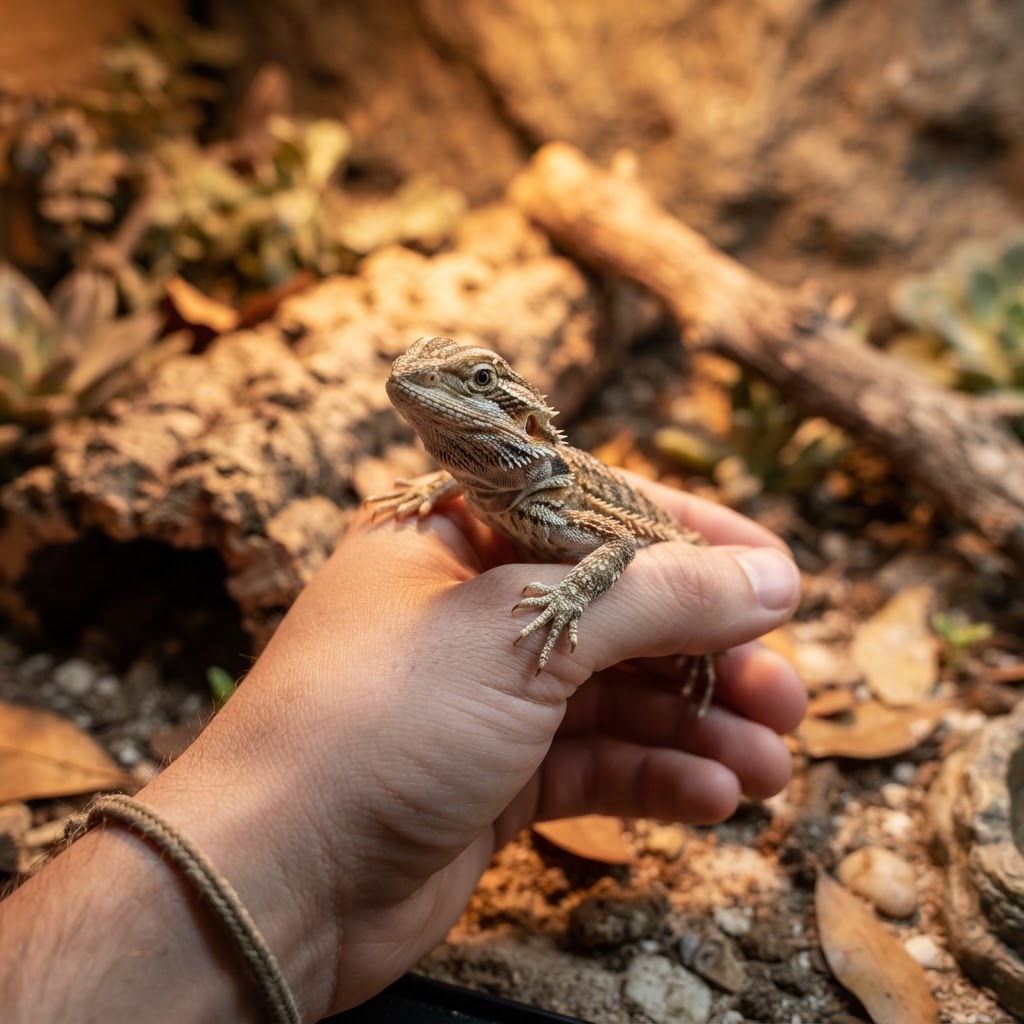
Introduction
Bringing home a baby bearded dragon is exciting, but many new owners feel nervous the first time they try to pick one up. That is completely normal. Baby beardies are small, quick, and often a little suspicious of giant human hands. Even a healthy, well-set-up young dragon may act skittish at first, especially during the first days in a new home.
The best baby bearded dragon handling tips focus on patience, safety, and trust rather than speed. Instead of forcing interaction, you want to show your baby dragon that your hands are warm, steady, and not a threat. With the right approach, most babies become much more comfortable over time. In this guide, you will learn when to start handling, how to pick up a baby beardie correctly, how long sessions should last, and what stress signals mean you should pause and try again later.
Why Gentle Handling Matters for Baby Beardies
Baby bearded dragons from 0 to 12 months old are still learning about their environment. In the wild, small reptiles are prey animals, so sudden movement from above can feel dangerous. That instinct does not disappear just because your pet lives in a terrarium.
At their core, baby bearded dragon handling tips are about helping a young reptile feel secure. Gentle handling can support socialization, reduce fear over time, and make daily care easier. A beardie that trusts you is usually easier to move for tank cleaning, health checks, or veterinary visits.
That said, handling should never come before proper husbandry. A baby that is too cold, stressed, dehydrated, or unsettled in its enclosure may resist handling more strongly. If you are still working on basics like temperatures, lighting, and setup, review this baby bearded dragon care guide and this baby bearded dragon tank setup article first. Good care creates the foundation for calm behavior.
Prepare Before the First Handling Session
Give your baby time to settle in
If you just brought your beardie home, do not rush into frequent handling. Most babies benefit from a short adjustment period of about 3 to 7 days. During that time, focus on food, heat, UVB, hydration, and a predictable routine.
Some babies will tolerate brief contact right away, but many are less stressed if you let them observe you first. Sit near the enclosure, speak softly, and move slowly when doing daily care. This helps your dragon learn that your presence does not always mean danger.
Make the enclosure feel safe
A baby that lacks hiding spots or feels exposed is more likely to panic during interaction. Make sure the enclosure includes a warm basking area, a cooler retreat, and at least one place to hide. If your beardie never seems relaxed in the tank, work on that first before increasing handling.
Pick the right time of day
Handle your baby only when it is awake, alert, and warmed up. A cold beardie is often stiff, uncomfortable, and more reactive. Mid-morning or early afternoon is usually best, after the dragon has had time to bask.
Avoid handling right after lights turn on, right before bedtime, or immediately after a meal. Give your beardie time to digest and settle. If your baby just ate a large number of insects, waiting at least 30 to 60 minutes is a good rule.
Wash your hands and remove hazards
Always wash your hands before and after handling. Before handling, remove strong-smelling residues like soap, lotion, food oils, or insect scent from your fingers. After handling, handwashing helps reduce the spread of bacteria.
Set yourself up in a safe space too. Sit on the floor, a low couch, or next to a bed with close supervision. Babies can be fast and may leap unexpectedly, so avoid standing over hard flooring during early sessions.
Step-by-Step: How to Pick Up a Baby Bearded Dragon Safely
Start by letting your dragon notice you
Move your hand into the enclosure slowly from the front or side, not directly from above. Pause for a moment so your beardie can see you. If it freezes, puffs up, or darts away, stop and try again later rather than chasing it around the enclosure.
A good first goal is simply getting your baby comfortable with your hand nearby. You can rest your hand in the tank for a minute without touching the dragon. Over several sessions, many babies become less defensive.
Scoop, do not grab
If you remember only one of these baby bearded dragon handling tips, let it be this: scoop from underneath rather than pinching from above. Slide one hand gently under the chest and front legs while supporting the belly. Use your other hand, if needed, to support the back legs and tail base.
Never grab a baby beardie by the tail, limbs, or midsection. Never pinch behind the shoulders like you might with another small pet. Bearded dragons need full-body support to feel secure.
Support the whole body
A baby bearded dragon should feel like it is resting on a stable platform. Keep your palm flat and allow all four feet to make contact if possible. You can cup your second hand lightly around the sides without squeezing. This gives a nervous baby a sense of security.
When the body is supported, many beardies relax much more quickly. When they feel like they are dangling, they often start to struggle.
Lift slowly and stay low
Raise your hands only a short distance at first. Keep the dragon close to your lap, a table edge with supervision, or the floor. Fast upward motion can trigger fear.
If your baby begins to climb, let it move from one hand to the other in a controlled way. Many young beardies prefer to walk across hands rather than sit still. That is fine, as long as you keep the movement slow and safe.
Return your beardie calmly
When the session ends, lower your dragon back into the enclosure with the same slow, supportive movement. Do not drop it onto a branch or onto loose decor. Place it securely on a flat, familiar surface and let it move away on its own.
This calm return helps your baby learn that being handled does not end in a stressful scramble.
How Long Should Handling Sessions Be?
For very young or nervous beardies, short sessions work best. Start with about 3 to 5 minutes once a day, or even every other day if your dragon is especially timid. The goal is to end before your baby becomes overwhelmed.
After a week or two of calm, successful sessions, you can gradually increase to 10 to 15 minutes. Some older babies can handle longer periods, but more is not always better. Quality matters more than duration.
A useful routine looks like this:
- Let the dragon warm up under the basking light
- Handle for a few calm minutes
- Return it before it becomes frantic or chilled
- Repeat consistently over time
Try not to handle multiple times a day in the beginning. Young dragons need plenty of uninterrupted time for basking, eating, and resting.
When You Should Wait Instead of Handle
Even tame babies have off days. Skip handling if your beardie is:
- New to the home and still highly unsettled
- In the middle of a meal or digesting
- Very dark in color and clearly stressed
- Actively shedding around sensitive areas
- Cold and not fully warmed up
- Showing signs of illness, dehydration, or weakness
If your dragon is not eating well or seems lethargic, handling should take a back seat to health and husbandry. These guides on baby bearded dragon not eating and signs of stress in baby bearded dragons can help you tell the difference between normal adjustment and a real problem.
Read Your Baby's Body Language
Learning beardie body language will make handling much easier. A relaxed baby often has a flat beard, steady breathing, bright eyes, and slow, curious movement. It may sit calmly in your palm or gently explore your hands.
A stressed baby may show:
- Sudden sprinting or repeated escape attempts
- Puffing up the beard or body
- Opening the mouth in warning
- Darkening of the beard or body
- Flattening defensively
- Quick, jerky movements
- Biting or whipping around
Not every sign means panic, but several signs together usually mean your dragon has had enough. End the session calmly and try again another day.
If you want to get better at reading behavior, this guide to understand baby bearded dragon body language is worth bookmarking. Body language often tells you more than the handling session itself.
Common Handling Mistakes to Avoid
Handling too soon, too often
New owners sometimes assume frequent handling will force a beardie to get used to them faster. Usually, the opposite happens. Too much interaction too early can make a baby more defensive.
Reaching from above
Hands coming down from above look like predators. Approach from the front or side whenever possible.
Grabbing instead of supporting
A secure scoop feels much safer than a quick snatch. Always support the chest, belly, and back end.
Chasing around the enclosure
If your baby runs every time you try to pick it up, chasing will damage trust. Pause, slow down, and work on hand presence first.
Handling in a loud or busy room
Babies startle easily. Keep early sessions quiet and calm, away from barking dogs, excited children, or sudden TV noise.
Letting a baby sit high up
A baby beardie may seem calm on your shoulder until it suddenly jumps. Early handling is safest close to the ground and with full attention.
Ignoring husbandry problems
Poor temperatures, weak UVB, or a stressful setup can make handling much harder. If your beardie always seems uncomfortable, look at the enclosure and routine as well as the handling method.
How to Build Trust Over Time
Trust is built through repetition and predictability. Consistent baby bearded dragon handling tips work better than occasional long sessions. Your baby should learn that your hand enters the enclosure gently, lifts carefully, and returns it safely every time.
Here are simple trust-building habits that help:
- Keep a regular daily schedule for lights, food, and interaction
- Move slowly whenever you open the enclosure
- Let your beardie walk onto your hand when possible
- End sessions while things are still going well
- Handle in the same calm area until your dragon gains confidence
You can also spend time near the enclosure without picking your beardie up. Talking softly, offering greens by hand, or resting your hand inside the tank for a minute can all reduce fear. If you are interested in more confidence-building routines, this article on how to train a baby bearded dragon is a helpful next step.
Most importantly, judge progress in weeks, not days. Some babies become comfortable quickly, while others need more time. Slow progress is still progress.
Key Takeaways
- Let a new baby beardie settle in before starting regular handling
- Always approach from the front or side, not from above
- Scoop from underneath and support the full body
- Start with short 3 to 5 minute sessions
- Handle only when your dragon is awake, warm, and calm
- Stop if you see strong stress signals like puffing, darkening, or frantic escape attempts
- Build trust with consistency, gentle movements, and patience
Frequently Asked Questions
How long should I wait to handle a new baby bearded dragon?
Most babies do best with a settling-in period of around 3 to 7 days. During that time, focus on food, heat, UVB, hydration, and a stable routine. If your beardie is eating, basking, and acting alert, you can begin very short, gentle sessions. If it still seems highly stressed, wait a little longer.
Is it normal for a baby bearded dragon to run away from my hand?
Yes, especially in the beginning. Baby beardies are naturally cautious, and your hand may look like a predator at first. Do not chase your dragon around the enclosure. Instead, slow down, approach from the side, and spend a few sessions just letting your baby see your hand without being picked up.
Can I handle my baby bearded dragon every day?
Usually yes, but only if your baby is tolerating it well. Short daily sessions are often better than long sessions. Start with 3 to 5 minutes and watch body language closely. If your beardie becomes more fearful, skip a day and reduce the session length the next time.
Why does my baby bearded dragon puff up during handling?
Puffing is often a defensive response. Your beardie may feel unsure, threatened, or overstimulated. It can happen if you move too fast, approach from above, or try to handle for too long. Pause, return your dragon calmly, and adjust your method the next time. Repeated puffing means you should slow the process down.
Should I handle my baby bearded dragon during shedding?
Light handling is sometimes okay, but many babies are more sensitive during sheds, especially around the face, legs, and tail. If your beardie seems irritable or uncomfortable, give it extra space until the shed loosens. Gentle, minimal interaction is usually the better choice during sensitive shed periods.
What if my baby bearded dragon tries to bite me?
Do not jerk your hand back suddenly or punish the behavior. Biting usually means fear, stress, or feeling cornered. Review your timing, body position, and pickup method. Make sure the enclosure conditions are correct and shorten future sessions. If biting continues along with poor appetite or lethargy, consider a health check.
When will my baby bearded dragon start enjoying handling?
There is no exact timeline. Some babies settle within a week or two, while others need a month or more of steady, gentle interaction. Age, temperament, previous care, and enclosure setup all matter. Stay patient and consistent. A baby that feels safe with you today is much more likely to become a calm adult later.