Introduction
Bringing home a baby bearded dragon is exciting, but it can also feel a little intimidating. Young beardies are small, sensitive, and still adjusting to the world around them. Because of that, even minor problems in temperature, lighting, handling, or routine can affect how secure they feel. Knowing the signs of stress in baby bearded dragons helps you catch problems early, before stress starts affecting appetite, growth, or overall health.
The good news is that stress in a baby beardie is often manageable once you understand what to look for. A stressed baby dragon may act differently than a relaxed one: it might hide more, darken in color, refuse food, or become extra jumpy. These changes do not always mean your pet is seriously ill, but they do mean something in its environment or routine needs attention.
In this guide, you will learn the most common stress signals in bearded dragons from 0 to 12 months old, what causes them, how to tell stress apart from illness, and what to do next. If you are new to reptile keeping, do not worry—this article is written to help you make calm, practical decisions.
Affiliate disclosure: BabyBeardedDragon.net is a participant in affiliate programs including Amazon Associates. We may earn a commission on qualifying purchases at no extra cost to you.
Key Takeaways
- Baby bearded dragons are more sensitive to stress than adults because they are still growing and adjusting.
- Common stress signs include dark coloring, hiding, loss of appetite, glass surfing, frantic behavior, and flattening the body.
- The most common causes are relocation, incorrect temperatures, poor UVB, overhandling, dehydration, and a lack of hiding spots.
- Stress and illness can look similar, so watch for patterns and check husbandry first.
- If stress signs last more than a few days, or your baby beardie becomes weak or stops eating completely, contact a reptile vet.
Why Baby Bearded Dragons Stress More Easily
Baby bearded dragons are naturally alert animals. In the wild, small dragons are prey for larger animals, so they are wired to react quickly to anything unfamiliar. A move to a new enclosure, loud noises, frequent reaching from above, or inconsistent lighting can all make a young beardie feel unsafe.
Their age matters too. Babies grow fast, need steady heat and UVB, and burn a lot of energy. If their setup is slightly off, they may show stress sooner than an adult. That is why a proper habitat is so important. If you are still building your enclosure, review this guide to a proper baby bearded dragon tank setup and make sure the basics are covered.
Common Signs of Stress in Baby Bearded Dragons
Recognizing behavior changes early is the best way to protect your pet. Some babies show only one sign, while others show several at once.
Darker color or a dark beard
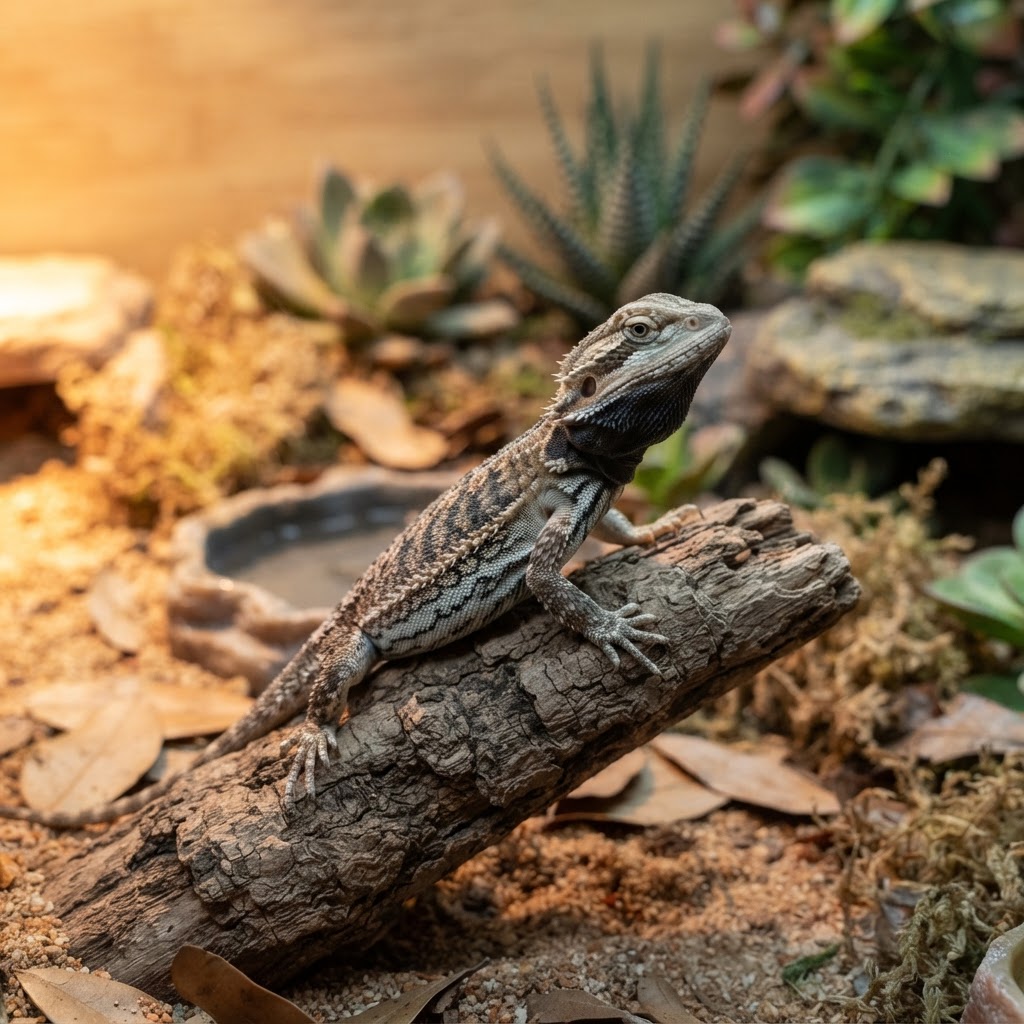
A baby beardie that suddenly looks darker than usual may be stressed, cold, uncomfortable, or trying to absorb more heat. You may notice dark bands on the belly, a darkened beard area, or an overall dull, grayish tone.
A brief darkening after lights turn on or during handling is not always alarming. But if your beardie stays dark for long periods, check temperatures, basking access, and whether the enclosure feels too open or exposed.
Hiding more than usual
Baby bearded dragons often appreciate a secure hide, especially when settling in. However, if your baby is constantly hiding and rarely comes out to bask, explore, or eat, stress may be involved.
Common reasons include:
- Too much activity around the enclosure
- Bright lights without enough shade
- Feeling exposed with no cover
- Being housed in a busy room
- Overhandling too soon
A new baby may hide on and off for a few days, but persistent hiding means it is time to review the environment.
Glass surfing or frantic movement
Glass surfing is when a bearded dragon repeatedly runs along the tank walls, scratches at the glass, or tries to climb out. In babies, this often happens when they are frightened, can see reflections, are too warm, or feel crowded.
Occasional glass surfing is not unusual during adjustment. Constant frantic movement is different. It usually means your dragon is uncomfortable and unable to settle.
Loss of appetite
Appetite is one of the clearest windows into a baby beardie’s well-being. A stressed young dragon may eat fewer insects, ignore greens, or stop showing interest in food altogether.
That said, appetite changes can also point to illness or setup problems, especially poor heating or weak UVB. If your dragon is refusing food, compare what you are seeing with this article on a baby bearded dragon not eating.
Flattening the body
A stressed baby may press its body low and flat against the ground. This posture can happen when the dragon feels threatened or is trying to appear less noticeable. Some babies also puff up slightly or angle their body away from perceived danger.
If this happens mostly when you approach the enclosure or reach in from above, the dragon likely sees you as a potential predator.
Running away or acting extra jumpy
Young beardies are naturally faster and more skittish than adults. Still, a baby that bolts every time you move nearby, leaps suddenly, or panics during simple enclosure maintenance may be feeling unsafe.
This is especially common in the first one to two weeks after coming home. Slow, predictable movement and a consistent daily routine usually help.
Frequent arm waving or defensive postures
Arm waving can be normal social behavior, especially in younger dragons, but when paired with flattening, freezing, or hiding, it can reflect insecurity. Some babies also open their mouths defensively, puff their beard slightly, or try to look larger.
These behaviors usually mean: “I am uncomfortable, please give me space.”
Staying off the basking area
A healthy baby bearded dragon spends a lot of time basking. If your pet avoids the basking spot entirely, it could be due to stress, overly hot temperatures, an unsafe perch, or poor placement of the light.
Check that the basking platform is easy to climb, stable, and not too exposed. Babies prefer feeling secure while warming up.
Irregular sleeping patterns
A stressed baby dragon may try to sleep earlier than usual, nap more than expected, or appear restless at bedtime. Stress alone can do this, but so can incorrect lighting or temperature drops that are too sharp.
Because the signs of stress in baby bearded dragons can overlap with husbandry issues, always look at the full picture rather than one symptom alone.
Most Common Causes of Stress
Once you identify the behavior, the next step is finding the trigger. In many cases, stress improves quickly when the cause is fixed.
Relocation stress
Moving into a new home is one of the biggest stressors for a baby bearded dragon. New smells, new people, new sounds, and a new enclosure are a lot to process.
Relocation stress often causes:
- Hiding
- Dark stress marks
- Reduced appetite
- Avoiding interaction
- Temporary glass surfing
Give your baby time. Limit handling for several days, keep the room calm, and stick to a routine.
Incorrect temperatures
A baby beardie that is too cold cannot digest food well and may become sluggish, dark, or uninterested in eating. One that is too hot may gape constantly, avoid basking, or act frantic.
Use reliable thermometers to verify the basking spot and cool side. Guessing often leads to problems.
Poor UVB exposure
UVB is essential for calcium metabolism, growth, and normal function. Weak, old, blocked, or incorrectly placed UVB can lead to lethargy, poor appetite, and ongoing discomfort.
If you are unsure whether your lighting is correct, read this guide to UVB lighting for baby bearded dragons. Lighting errors are one of the most common reasons beginners mistake stress for a mystery problem.
Too much handling, too soon
Baby beardies need time to learn that you are safe. Frequent grabbing, especially from above, can feel threatening. Long handling sessions, passing the dragon between multiple people, or handling right after meals can all create unnecessary stress.
Short, gentle sessions work better than forcing interaction.
Enclosure feels too exposed
A bare tank with no hiding places can make a baby feel vulnerable. Young dragons do best when they have:
- A secure hide
- A stable basking spot
- Some visual cover
- Enough open space to move
- A quiet area away from constant traffic
Dehydration and diet problems
Dehydration can make a baby beardie act weak, irritable, or reluctant to eat. Poor diet variety or feeding prey that is too large can also add physical stress.
If you suspect fluid loss, compare your observations with this guide on how to spot dehydration in baby bearded dragons.
Shedding discomfort
Shedding is normal, but some babies become more withdrawn or irritable during the process. If your dragon looks dull, rubs against decor, or seems less social during a shed cycle, that may be temporary.
Still, shedding should not cause severe lethargy, prolonged refusal to eat, or major weight loss.
Stress vs. Illness: How to Tell the Difference
One of the hardest parts of reptile care is that stress and illness can look similar at first. A stressed baby may hide, darken, and eat less. A sick baby may do the same.
Here are clues that point more toward stress:
- Symptoms began soon after coming home or after a setup change
- The dragon is still alert when disturbed
- Appetite is reduced but not completely gone
- Behavior improves when the environment is corrected
- There are no obvious physical symptoms such as discharge or swelling
Here are signs that suggest illness may be involved instead:
- Weight loss
- Extreme weakness
- Sunken eyes
- Swelling of limbs or jaw
- Wheezing, clicking, or mucus
- Diarrhea that continues
- Refusal to bask
- Not eating for several days in a very young dragon
If you are unsure, review these signs of illness in baby bearded dragons. It is always better to act early than wait too long.
What to Do If Your Baby Beardie Is Stressed
If you notice the signs of stress in baby bearded dragons, focus on simple fixes first. Avoid making too many changes at once, because that can create even more stress.
1. Check heat and lighting immediately
Verify basking temperatures, cool-side temperatures, and UVB placement. Make sure the baby can get close enough to the UVB source safely and has a clear basking area.
2. Reduce handling for a few days
If your baby is new or acting fearful, pause unnecessary handling. Limit contact to feeding, spot cleaning, and quick health checks until the dragon settles.
3. Add security to the enclosure
Provide at least one hide and make sure decor is stable. Even a confident baby often relaxes more when it knows there is a safe place to retreat.
4. Keep the environment calm
Avoid loud music, tapping on the glass, frequent rearranging, or placing the tank where dogs, cats, or children constantly pass by. A predictable routine helps young dragons feel secure.
5. Watch eating, poop, and activity
Track what your dragon eats each day, whether it is basking normally, and how its stool looks. Small changes matter more in babies because they grow so fast.
6. Offer proper hydration and diet
Make sure feeders are appropriately sized and fresh greens are available as recommended for your dragon’s age. Hydration and nutrition support recovery from stress.
7. Give adjustment time
A baby that has just moved home may need several days to settle and up to two weeks to show fully normal behavior. Improvement should be gradual, not instant.
When to Call a Reptile Vet
Call a reptile veterinarian if stress signs are severe, getting worse, or lasting longer than a few days without improvement. Babies can decline faster than adults, so do not wait if your dragon stops eating completely, appears weak, loses weight, or shows breathing issues.
The signs of stress in baby bearded dragons should improve when husbandry is corrected. If they do not, a medical issue may be hiding underneath.
Frequently Asked Questions
How long does relocation stress last in a baby bearded dragon?
Many babies show relocation stress for a few days, while some need one to two weeks to fully settle. During that time, keep handling light, maintain a consistent routine, and avoid changing the enclosure too much.
Can a baby bearded dragon stop eating because of stress?
Yes. Stress commonly reduces appetite, especially after moving to a new home or after major changes to heat, light, or handling. However, because babies need frequent nutrition, a prolonged refusal to eat should be taken seriously.
Is dark coloring always a sign of stress?
No. Darkening can also happen when a dragon is cold, basking, shedding, or trying to absorb more heat. Look at the full situation, including body language, appetite, and enclosure conditions.
Can shedding cause signs of stress in baby bearded dragons?
Yes, mild changes in behavior can happen during a shed. Some babies become less active, slightly more defensive, or less interested in food for a short time. If the behavior is extreme or continues well beyond the shed, look for another cause.
Should I keep handling my baby beardie if it seems stressed?
Usually, less is better for a few days. Let your dragon feel safe in its enclosure first. Once it is eating, basking, and acting more relaxed, begin with short, gentle handling sessions.
What is the biggest cause of stress in baby beardies?
For new owners, the most common causes are relocation stress, incorrect temperatures, poor UVB, and overhandling. Husbandry mistakes often create stress without the owner realizing it, which is why setup checks are so important.
When should I worry that stress is actually illness?
Worry sooner if your baby is losing weight, acting weak, not basking, having trouble breathing, or refusing food for several days. Stress should improve with environmental fixes; illness usually does not.
Final Thoughts
Learning your pet’s normal behavior is the best defense against bigger problems. Once you know how your baby acts when relaxed—how it basks, explores, eats, and rests—you will notice changes sooner. That makes it much easier to respond quickly and confidently.
Most stress triggers are fixable. With correct heat, strong UVB, a secure enclosure, gentle handling, and patience, most babies settle in well and go on to thrive. If you stay observant and act early, you will be in a great position to support your beardie through the normal ups and downs of growth.