Introduction
Bringing home a baby bearded dragon is exciting, but it can also feel a little intimidating when your new pet seems nervous, skittish, or unsure of you. That is completely normal. Baby beardies are still learning what is safe in their environment, and your job is to teach them that your presence, your hands, and daily care routines are nothing to fear.
If you're wondering how to train a baby bearded dragon, the short answer is this: training starts with trust, not tricks. A baby bearded dragon can learn to stay calm during handling, climb onto your hand, come to you for food, and follow a predictable routine. With patience and consistency, even a shy juvenile can become much more relaxed and confident over time.
As an Amazon Associate I earn from qualifying purchases. BabyBeardedDragon.net is a participant in affiliate programs including Amazon Associates. We may earn a commission on qualifying purchases at no extra cost to you.
Key Takeaways
- Baby bearded dragon training is really about taming, trust, and routine.
- Start slowly and let your dragon settle in before handling too much.
- A proper enclosure, correct temperatures, and strong UVB lighting make training much easier.
- Keep sessions short, calm, and positive.
- Use food rewards carefully, but do not overfeed just for training.
- Watch body language closely so you know when to continue and when to stop.
- Progress may take days for some babies and weeks for others.
Can You Really Train a Baby Bearded Dragon?
Yes, but it helps to understand what training means for this species. Bearded dragons are not trained the same way as dogs. You are not teaching complex obedience. Instead, you are teaching your baby dragon to:
- recognize you as safe
- tolerate touch and handling
- move toward your hand willingly
- stay calm during short routines
- associate your presence with food, warmth, and security
That is a big deal for a young reptile. A baby between 0 and 12 months old is still developing confidence, and that early trust can shape how easy your dragon is to handle as it grows. Babies are often more alert and more reactive than adults, so gentle repetition matters more than speed.
Set Up Success Before You Start
Before you begin any taming sessions, make sure your dragon's basic care is correct. A beardie that is too cold, stressed, or uncomfortable will be much harder to work with.
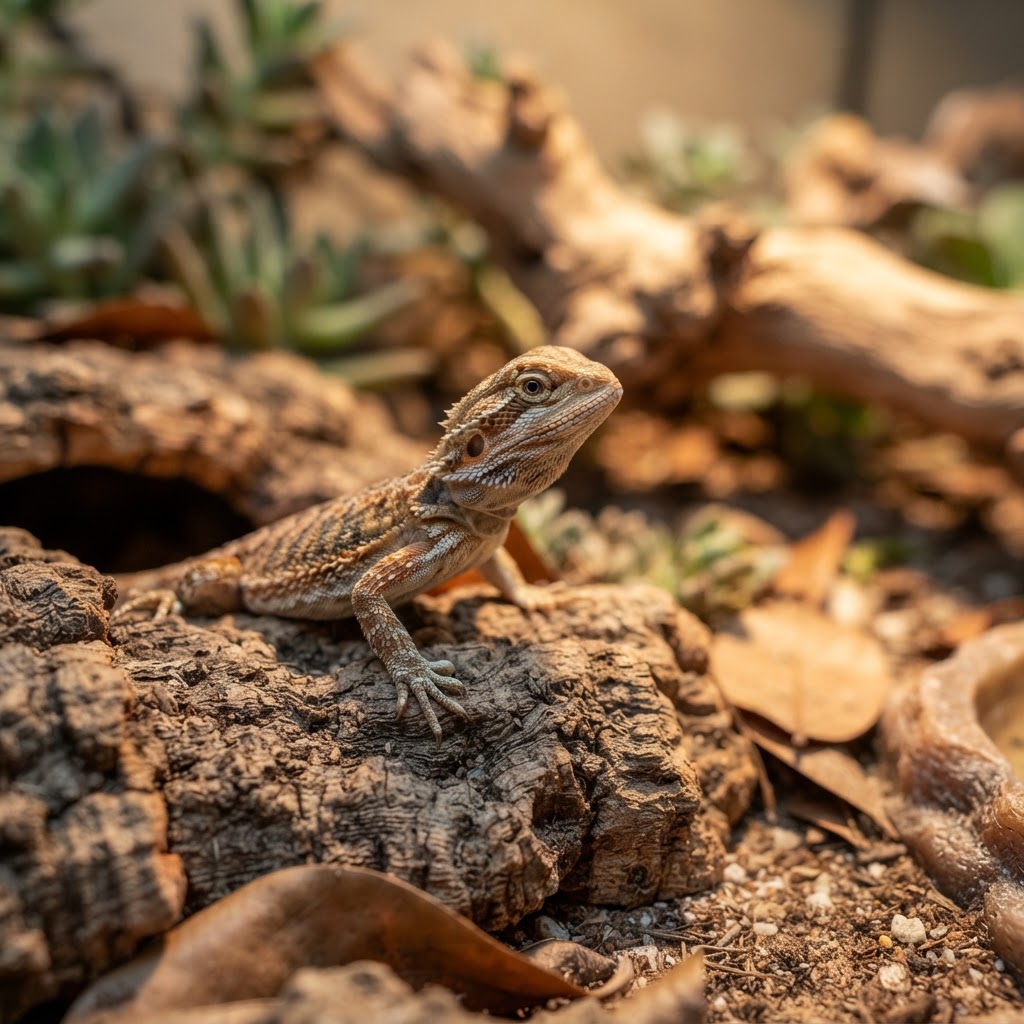
Make the enclosure feel safe
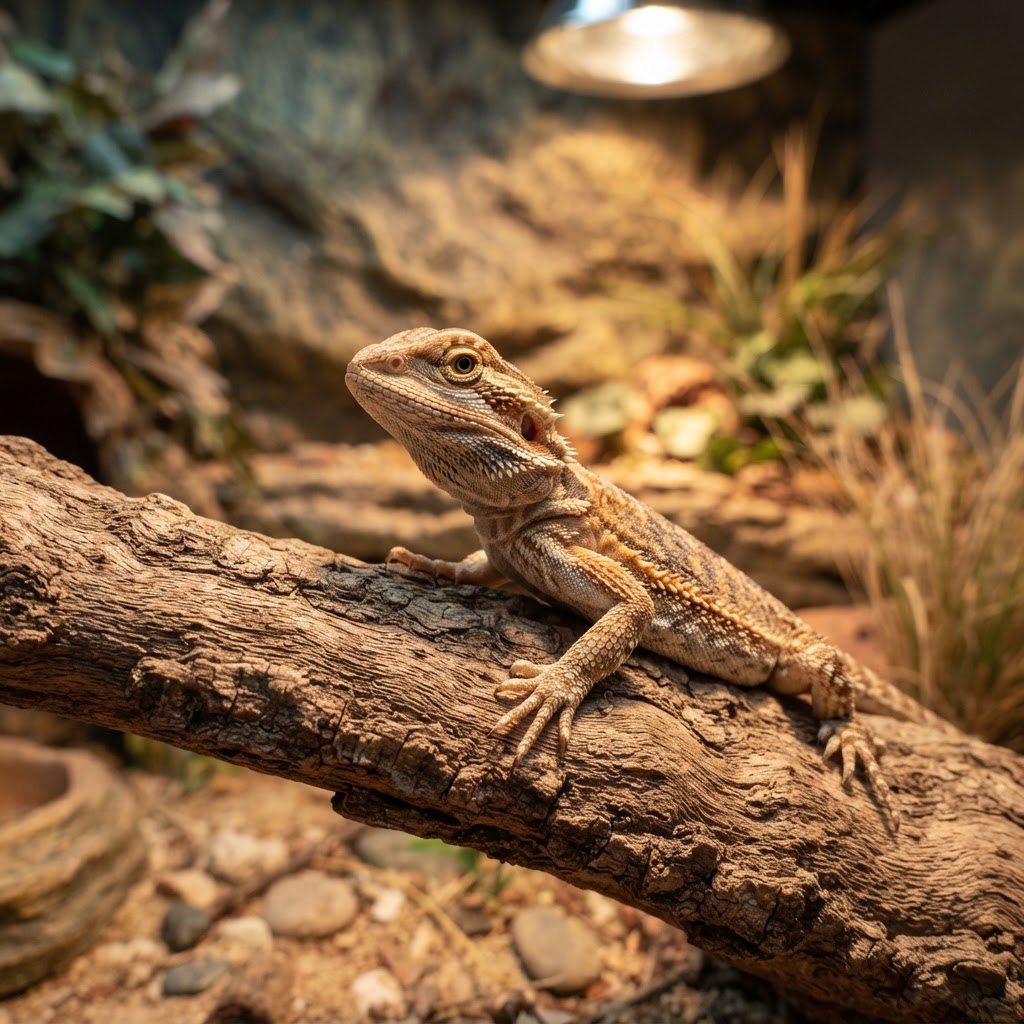
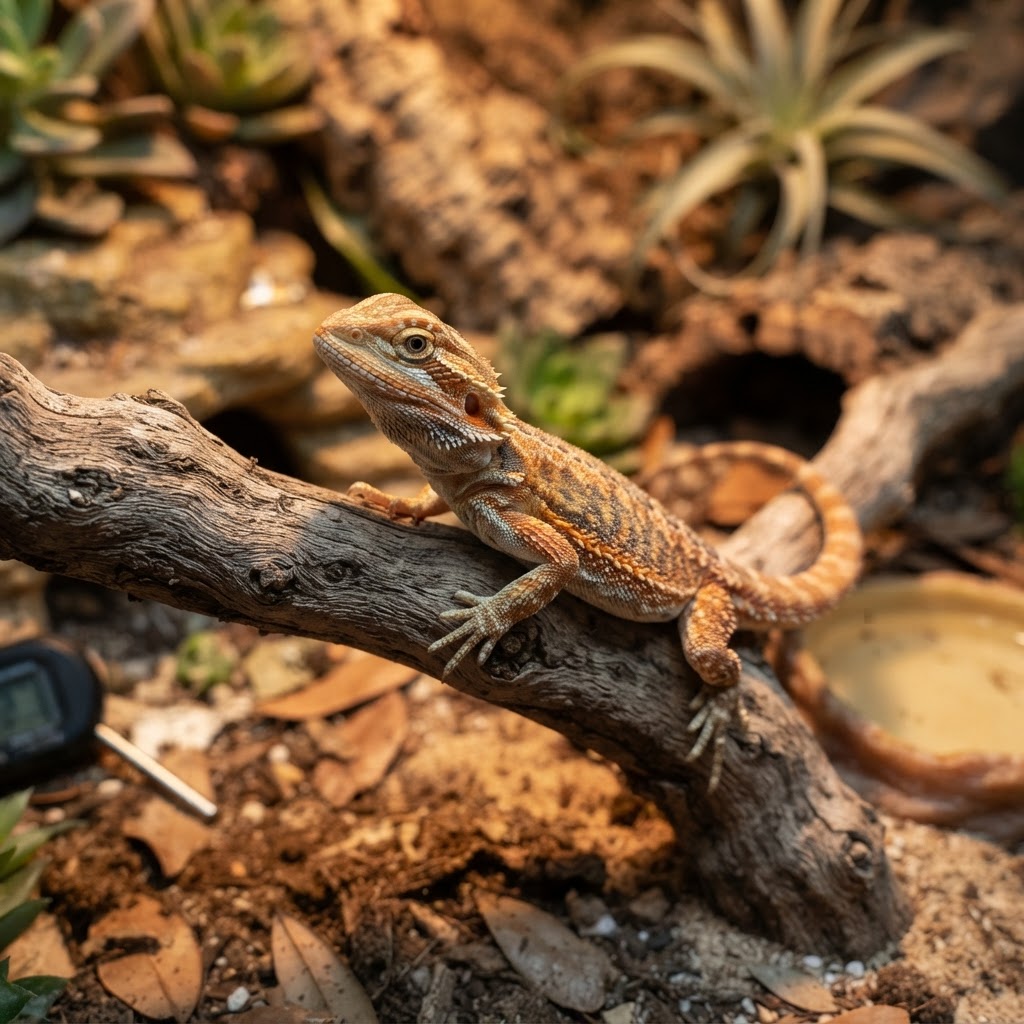
Your dragon should have a secure enclosure with a basking area, cooler zone, hiding space, and enough room to move without feeling exposed all the time. If your setup still needs work, review this guide to a proper baby bearded dragon tank setup.
A baby that never feels safe in its enclosure may stay defensive outside of it too. Hides, visual security, and a stable routine all help lower stress.
Check heat and UVB first
Good training starts with a healthy, alert dragon. If basking temperatures are off or UVB exposure is poor, your beardie may be lethargic, irritable, or less interested in food rewards. Make sure you understand the basics of UVB lighting for baby bearded dragons before expecting consistent behavior.
A comfortable baby dragon is more likely to explore, eat well, and respond calmly to your presence.
Choose the right time of day
Do not try to train first thing in the morning before your dragon has warmed up. Let your baby bask for at least 30 to 60 minutes so its body is active and ready. Avoid training late in the evening when your beardie is winding down.
Wait a few days after bringing your dragon home
Most babies need a short adjustment period. During the first 3 to 7 days, keep handling light and focus on feeding, cleaning, and quiet observation. This gives your dragon time to learn its new environment before you ask it to interact.
Learn Your Baby Beardie's Body Language
A big part of success is reading your dragon correctly. Many beginners mistake stillness for calm, when the dragon is actually frozen with stress.
Signs your baby is relaxed enough to continue
Look for these good signs:
- bright, alert eyes
- normal basking and exploring
- eating regularly
- slow, curious movements
- willingly watching you without puffing up
- climbing onto decor or toward your hand
Signs your baby is stressed
Pause or back up if you notice:
- dark stress marks on the belly
- flattening the body
- running away repeatedly
- gaping when not basking
- puffing the beard
- frantic glass surfing
- trying to leap from your hands
If you are unsure what stress looks like, this article on signs of stress in baby bearded dragons can help you tell the difference between caution and real discomfort.
A simple rule
If your beardie stays alert but curious, continue gently. If it looks panicked or defensive, stop and try again later. Training works best when your dragon stays under its stress threshold.
How to Train a Baby Bearded Dragon Step by Step
The best way to learn how to train a baby bearded dragon is to break it into small stages. Do not rush from a brand-new arrival to long handling sessions. Build trust in layers.
Step 1: Get your dragon used to your presence
For the first few days, sit near the enclosure for 5 to 10 minutes once or twice a day. Talk softly. Move slowly. Place your hand near the glass without tapping or looming overhead.
This teaches your baby that you are part of the environment, not a predator.
Tips for this stage:
- approach from the front when possible
- avoid sudden shadows over the tank
- do not stare intensely for long periods
- keep household noise low during sessions
Step 2: Put your hand in the enclosure without touching
Once your dragon no longer bolts when you approach, rest your hand inside the enclosure for a minute or two. Keep it still. Let the beardie look, sniff, or ignore it.
This is one of the most effective early exercises because it removes pressure. Your baby gets to investigate on its own terms.
Do this once or twice daily for several days. The goal is simple: your hand becomes boring, familiar, and safe.
Step 3: Use food to build positive associations
Food is your best training tool, but it should be used carefully. Offer a favored feeder insect only when your dragon is calm and alert. Hold it where your baby can clearly see it, and let your hand stay visible during the reward.
You can also pair training sessions with your normal baby bearded dragon feeding schedule so your dragon learns that calm interaction leads to something good.
A few tips:
- train when your dragon is interested in eating, not overly full
- keep rewards small
- never tease with food or make the dragon chase excessively
- do not overuse treats that throw off the diet balance
Step 4: Introduce gentle touch
After your dragon is calm around your hand, begin with brief touch sessions. Lightly touch the side of the body or chest for one or two seconds, then stop. Avoid grabbing from above, which can trigger a prey response.
At this stage, less is more. You are teaching your dragon that touch happens, nothing bad follows, and it can stay relaxed.
Good first-touch areas:
- side of the chest
- front of the shoulders
- under the chin if your dragon tolerates it
Avoid:
- fast reaches from above
- squeezing the torso
- touching the tail repeatedly
- chasing the dragon around the enclosure
Step 5: Encourage stepping onto your hand
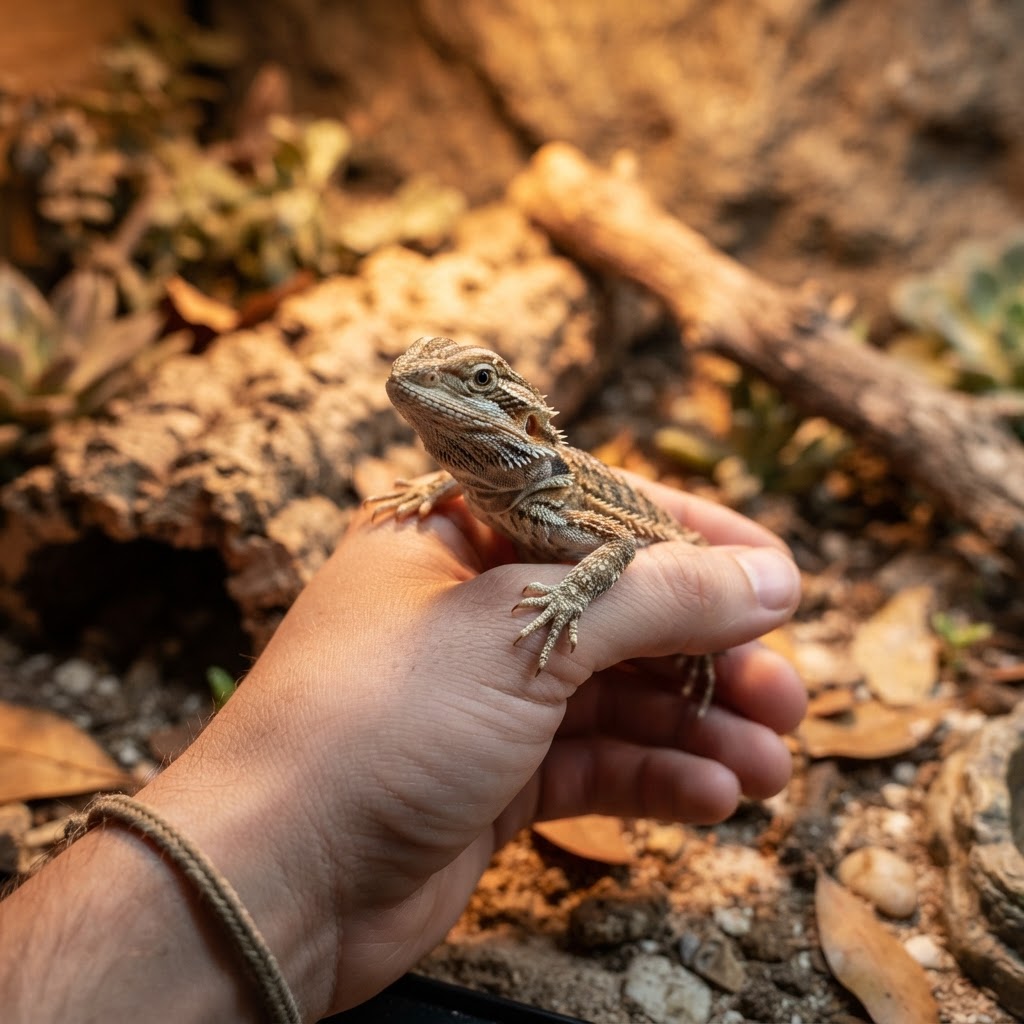
Once brief touch is tolerated, slide your hand under the chest from the front or side. Gently support the front feet and let your dragon decide whether to climb on. Some babies step up quickly. Others need repeated practice.
You can lure forward with a feeder insect, but keep the movement slow and controlled. The goal is not to snatch the dragon up. The goal is to teach it that your hand is a stable perch.
When your baby puts even one foot on your hand, that is progress.
Step 6: Start very short handling sessions
Lift only a few inches at first, and keep the session under 2 to 5 minutes. Sit on the floor or over a bed so there is less risk if the dragon squirms.
Support the whole body:
- one hand under the chest and belly
- fingers supporting the feet
- tail resting naturally, not dangling
If the dragon stays calm, return it to the enclosure before it gets panicky. Ending on a good note builds confidence for next time.
Step 7: Build a predictable routine
Routine is one of the most underrated training tools. Handle at roughly the same time each day, after basking and before your dragon gets too tired.
A steady pattern teaches your baby what to expect:
- you approach calmly
- your hand enters the enclosure
- the dragon steps up or is gently supported
- brief handling happens
- the dragon returns safely
- a small reward may follow
This repetition is exactly how trust grows.
Step 8: Teach simple behaviors
As your dragon becomes comfortable, you can encourage a few practical behaviors that make daily care easier.
Stepping onto your hand
This is the most useful skill. Practice a gentle hand-under-chest motion and reward calm participation.
Moving into a travel container
Let your baby walk into a small container or carrier on its own when possible. This helps for tank cleaning or vet visits.
Following a visual cue for food
Some babies learn to move toward a slow finger cue or visible feeder. Keep it simple and never overdo it.
For most owners, this is the stage where they feel they truly understand how to train a baby bearded dragon in a safe, realistic way.
Best Rewards for Training
Baby beardies usually respond best to things they already love. Safe food-based rewards are often enough.
Good reward ideas include:
- one small feeder insect during or after a calm session
- favorite greens offered by hand
- being returned to a preferred basking spot
- quiet chest support if your dragon enjoys being still and warm
Do not make every training session only about food. Some dragons become so excited by prey that they stop focusing. Calm handling, consistency, and timing matter just as much as rewards.
Common Mistakes That Slow Progress
Training setbacks are usually caused by moving too fast, not by having a difficult dragon.
Handling too soon after coming home
A stressed new arrival needs time to settle. If you push interaction immediately, you can create fear that takes longer to undo.
Grabbing from above
Birds attack from above in the wild, so an overhead grab often feels threatening. Scoop from the front or side whenever possible.
Making sessions too long
A 3-minute calm session is better than a 15-minute stressful one. Always stop before your dragon becomes overwhelmed.
Training during shedding or stress
Babies can be more irritable when shedding or adjusting to growth spurts. If your beardie suddenly becomes less tolerant, slow down and check whether it is entering shed, stressed, or simply having an off day.
Ignoring husbandry problems
If a baby is cold, dehydrated, or not eating well, behavior training should not be the priority. Fix care issues first.
Being inconsistent
One calm session every day works better than one long session once a week. Regular, predictable contact helps your dragon remember that you are safe.
A Simple 10-Minute Daily Training Routine
If you want structure, try this beginner routine:
- Let your dragon bask first.
- Approach the enclosure slowly.
- Rest your hand inside for 1 to 2 minutes.
- Offer a small food reward if your dragon stays calm.
- Gently touch or support the chest.
- Encourage one step onto your hand.
- Handle for 2 to 3 minutes if relaxed.
- Return your dragon to the enclosure calmly.
- End with a positive, low-stress finish.
Doing this daily for a couple of weeks often creates noticeable improvement.
When to Pause Training and Focus on Health
Not every behavior problem is a training problem. If your baby suddenly becomes withdrawn, weak, unusually dark, or refuses food, pause training and look at health and husbandry.
Watch for issues such as:
- poor appetite
- weight loss
- lethargy
- loose stools
- dehydration
- trouble shedding
- persistent stress marks
A baby that does not feel well cannot learn effectively. If something seems off, correct the setup, monitor closely, and contact a qualified reptile vet when needed.
Final Thoughts
Once you understand how to train a baby bearded dragon, the process becomes much less mysterious. You are not forcing behavior. You are building trust through calm repetition, good timing, and respect for your dragon's limits.
Some baby beardies tame down in a week, while others need a month or more. That is normal. Stay patient, keep sessions short, and celebrate small wins. A dragon that stops running away, accepts your hand, or calmly sits for a few minutes is already making real progress.
Frequently Asked Questions
How long does it take to tame a baby bearded dragon?
It depends on the individual dragon, its age, past handling, and how consistent you are. Some babies begin relaxing within a few days, while shy dragons may need several weeks of daily trust-building. Focus on steady progress rather than speed.
When should I start handling my baby bearded dragon?
Most babies benefit from 3 to 7 days of adjustment after arriving home. During that time, keep contact minimal and let your dragon settle into its enclosure. After that, begin with short, low-pressure sessions.
Can I use food every time I train?
You can use food often, but not excessively. Food helps create positive associations, especially in the early stages. Just make sure rewards fit into your dragon's normal diet and do not lead to overfeeding.
Why does my baby bearded dragon run away from my hand?
That usually means your dragon still sees your hand as unfamiliar or threatening. Move more slowly, approach from the side, keep your hand still inside the enclosure, and spend more time building comfort before trying to lift.
Is it okay if my baby bearded dragon puffs up during training?
A single puff-up can mean surprise or caution, but repeated puffing, dark stress marks, flattening, or frantic escape attempts mean you should stop. Go back a step and make the next session shorter and easier.
Can baby bearded dragons learn their names?
Some may learn to associate a certain sound or your voice with feeding or interaction, but they do not understand names in the same way dogs do. They are more likely to learn routines, cues, and repeated patterns.
What if my baby bearded dragon was calm at first and is now resisting handling?
Check for common causes such as shedding, growth-related stress, enclosure changes, poor temperatures, or a health issue. Babies can go through phases. If nothing seems medically wrong, reduce session length and rebuild confidence gradually.