Introduction
Feeding a baby bearded dragon can feel a little overwhelming at first. New owners quickly discover that babies eat differently than adults, need more frequent meals, and rely on a careful balance of protein, greens, calcium, and proper husbandry to grow well. If you have ever wondered whether you are feeding enough, offering the right insects, or choosing safe vegetables, you are not alone.
The good news is that a healthy diet does not have to be complicated once you understand the basics. In this guide, you will get practical baby bearded dragon diet tips you can use right away, whether your dragon is a tiny hatchling or approaching its first birthday. We will cover staple feeders, salad choices, supplement routines, feeding frequency, and the common mistakes that trip up beginners.
Good nutrition also works hand in hand with lighting, heat, and enclosure setup. A perfectly planned meal will not help much if your baby dragon cannot digest food properly under the right basking temperatures and UVB.
BabyBeardedDragon.net is a participant in affiliate programs including Amazon Associates. We may earn a commission on qualifying purchases at no extra cost to you.
Why Diet Is Different for Baby Bearded Dragons
Baby bearded dragons grow fast. During the first 12 months of life, they need more protein and more frequent meals than adult dragons. Their bodies are building bone, muscle, and tissue at a rapid pace, so diet mistakes show up sooner and matter more.
Most babies do best on a diet that is heavily insect-based at first, with fresh greens offered daily from the beginning. As they get older, the balance gradually shifts. Young babies may eat mostly insects, while older juveniles start taking more salad and a little less live prey.
This is why it helps to think in stages:
- 0-3 months: fast growth, high insect intake
- 4-6 months: still protein-heavy, but salads become more important
- 7-12 months: gradual transition toward a more balanced juvenile diet
If you are still learning the basics, our guide to what baby bearded dragons eat is a helpful companion to this article.
Core of a Healthy Baby Bearded Dragon Diet
A good baby diet has three foundations: appropriately sized insects, nutrient-rich greens, and the right supplements.
Insects should be the main calorie source
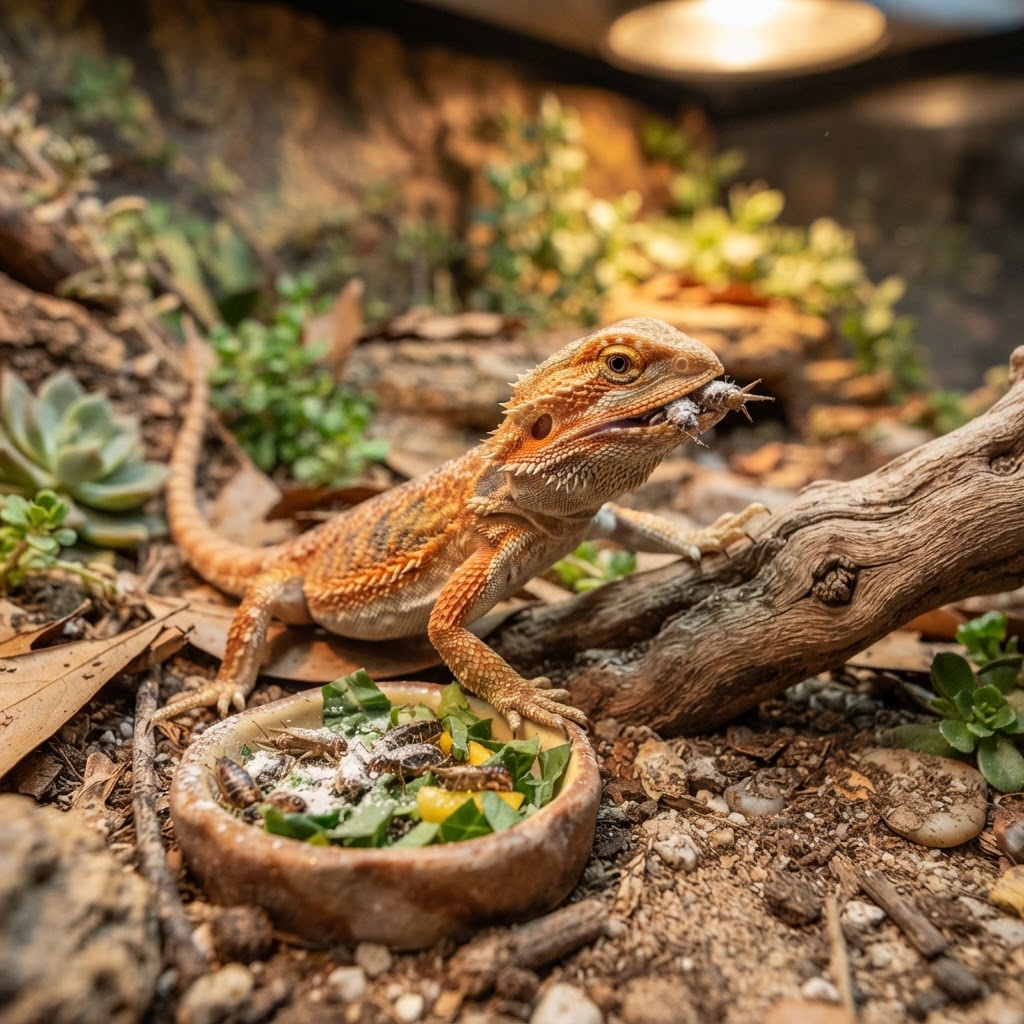
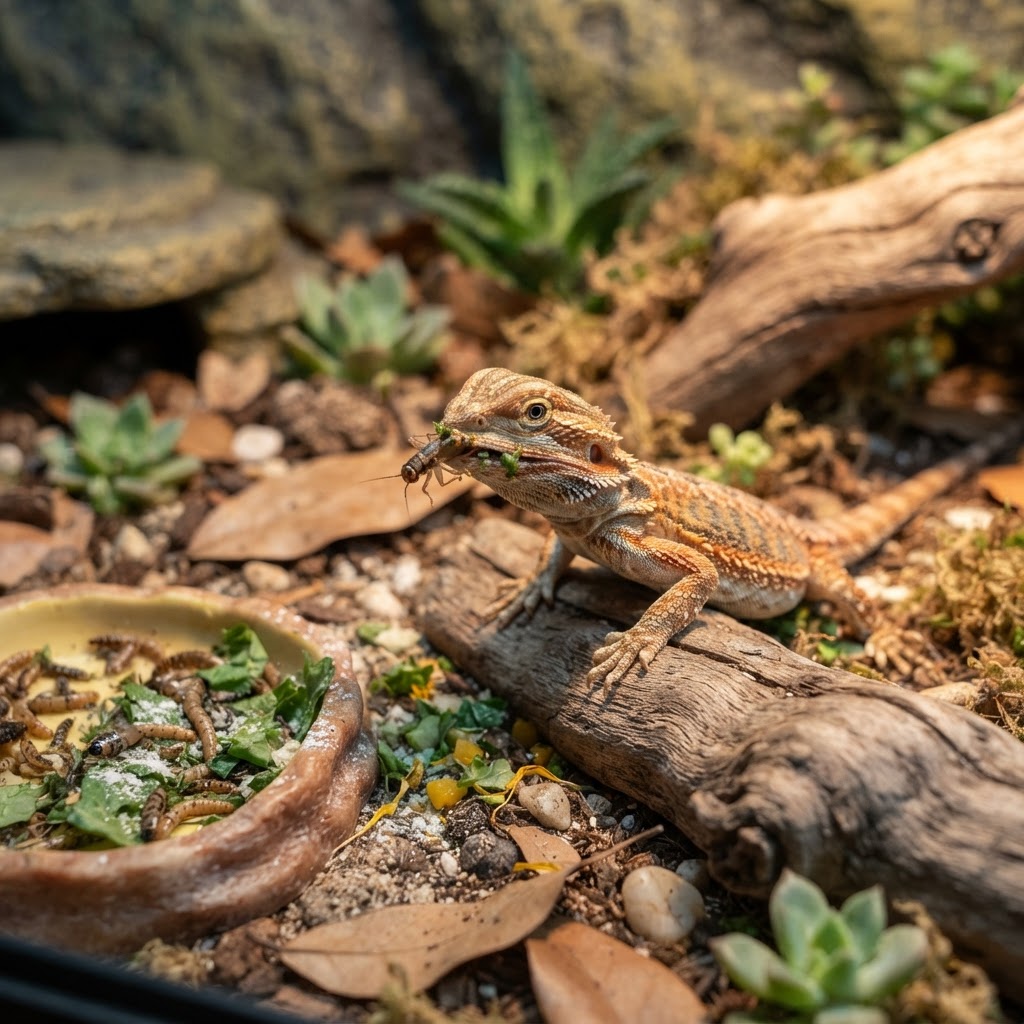
For most babies, live insects are the core of the diet. Good staple feeders include:
- Dubia roaches
- Crickets
- Black soldier fly larvae
- Silkworms
These feeders provide protein and encourage natural hunting behavior. Rotating between two or more staple insects is a smart way to add variety and improve nutrition.
A very important rule: never feed insects larger than the space between your baby dragon's eyes. Oversized feeders can increase the risk of choking, digestive trouble, or impaction.
Before feeding, gut-load insects for 24-48 hours with quality greens and vegetables. A well-fed insect is more nutritious than a poorly fed one.
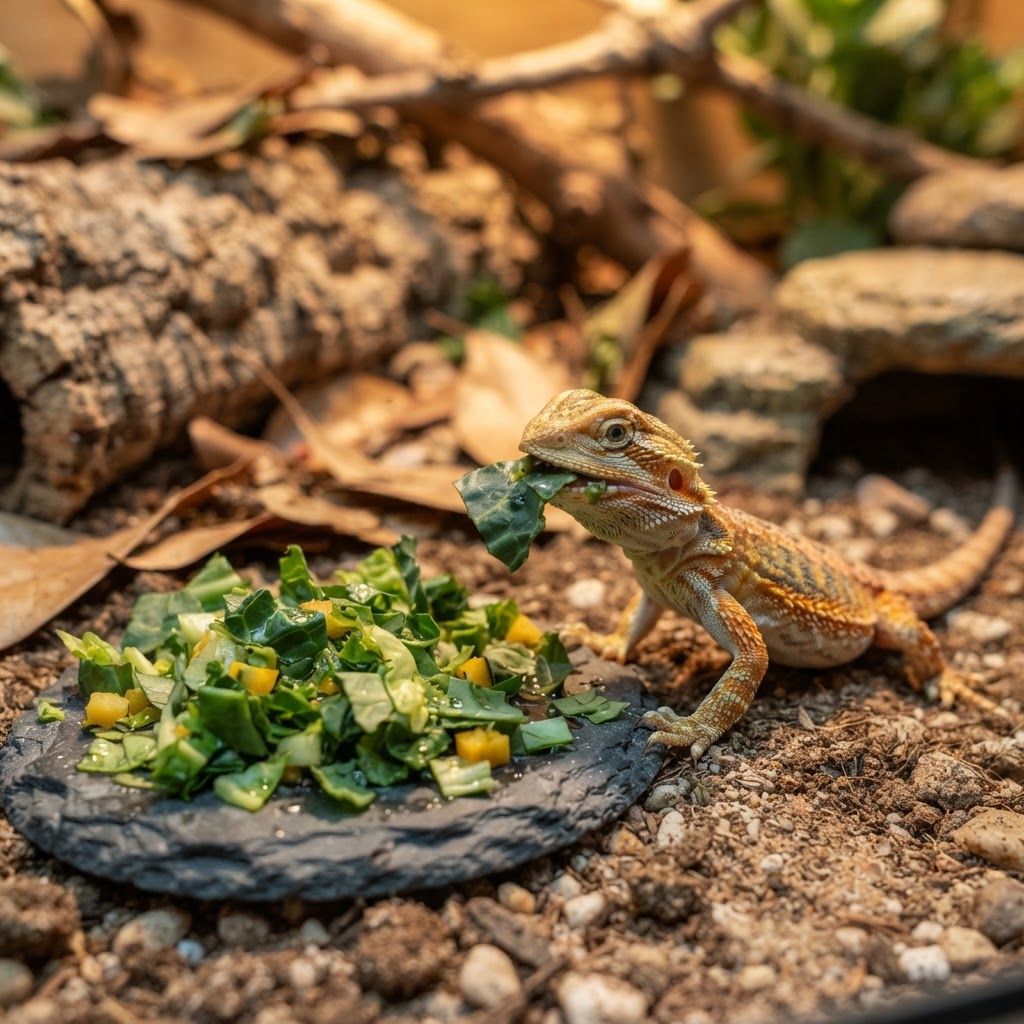
Offer greens every day, even if your baby ignores them at first
Many babies are insect-crazy and seem unimpressed by salad. That is normal, but you should still offer greens daily so they learn early that plant matter is food.
Good daily greens and vegetables include:
- Collard greens
- Mustard greens
- Turnip greens
- Dandelion greens
- Endive
- Escarole
- Butternut squash
- Yellow squash
Chop everything into small, bite-sized pieces. For tiny babies, finely shredded greens are often easier to eat.
If you want a deeper list of safe options, see our article on healthy vegetables for baby bearded dragons.
Fruit should stay occasional
Fruit is not toxic in small amounts, but it is not a dietary staple. Because it is sugary and can upset digestion if overfed, treat fruit as a rare extra rather than a regular menu item.
Safe occasional fruits include:
- Blueberry pieces
- Strawberry pieces
- Mango bits
- Papaya bits
For babies, once every week or two in very small amounts is plenty.
Feeding by Age: 0 to 12 Months
One of the most useful baby bearded dragon diet tips is to match feeding frequency to age. Babies need more opportunities to eat than older juveniles, but that does not mean unlimited food all day.
Simple age-based feeding guide
| Age | Insect feedings | Greens | Notes | | --- | --- | --- | --- | | 0-3 months | 2-3 times daily | Offer daily | Focus on tiny staple feeders and close supervision | | 4-6 months | 2 times daily | Offer daily | Begin encouraging more salad intake | | 7-12 months | 1-2 times daily | Offer daily | Gradually shift toward a more balanced juvenile diet |
At each insect meal, offer appropriately sized feeders for about 5-10 minutes. Let your baby eat actively, but do not leave a tank full of insects unattended for hours.
What a typical day can look like
A practical routine for many baby dragons looks like this:
- Morning: lights and heat on, allow time to warm up
- Mid-morning: first insect feeding
- Afternoon: second insect feeding
- Throughout the day: fresh salad available
- Evening: remove leftovers before lights out
Babies digest best when fully warmed up. Feed after your dragon has had time to bask, not immediately after the lights come on.
If you want a more detailed routine, our baby bearded dragon feeding schedule breaks it down by age and daily timing.
Calcium, Vitamins, and Why UVB Matters
Fast growth means babies need steady calcium support. Without enough calcium and proper UVB exposure, a young dragon can develop serious bone problems.
Calcium dusting basics
A common starting point for baby bearded dragons is:
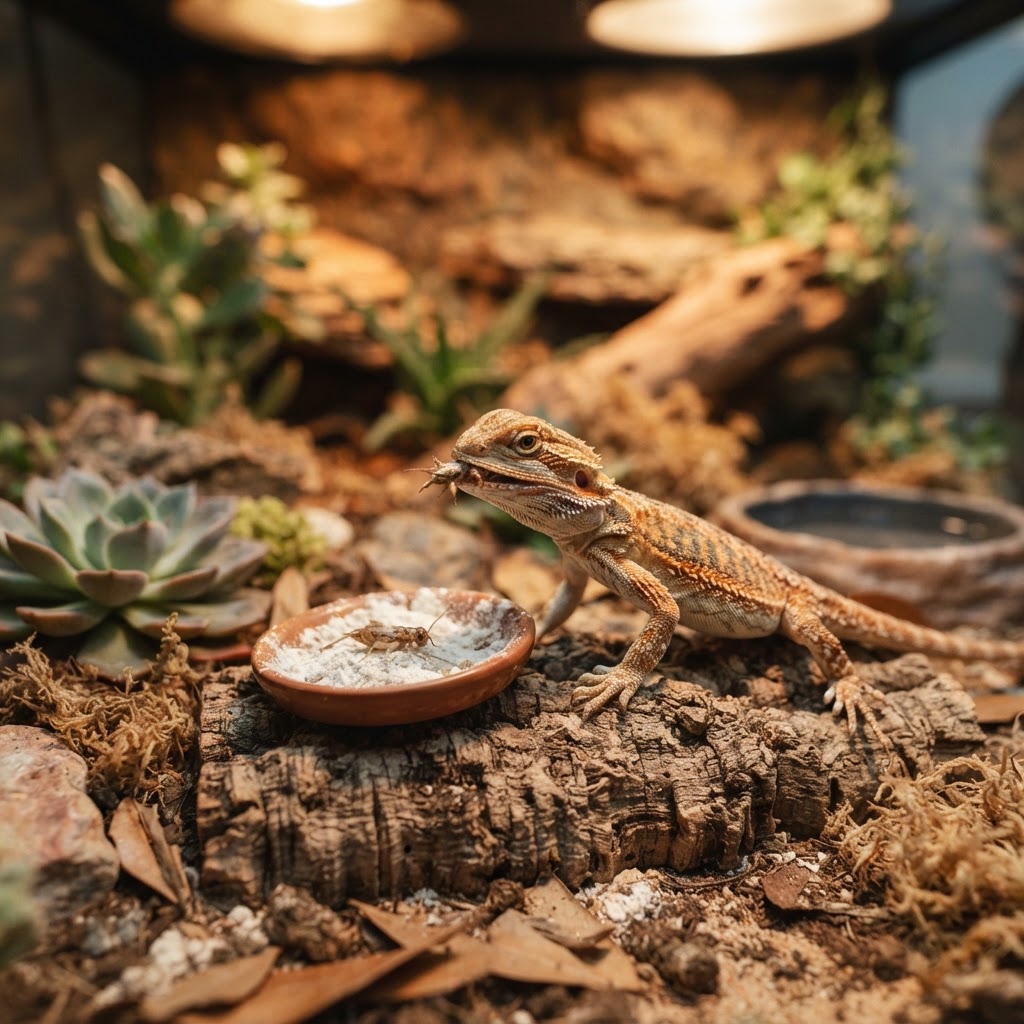
- Calcium powder on insects about 4-5 feedings per week
- Multivitamin powder on insects 1-2 feedings per week
If your dragon has strong, appropriate UVB lighting, many keepers use calcium without D3 more often and reserve D3 more sparingly. Exact routines can vary based on your setup, the supplement used, and veterinary guidance, so always read product directions and ask an experienced reptile vet if you are unsure.
UVB is part of nutrition, not just lighting
Even the best diet can fall short if your baby dragon lacks proper UVB. UVB helps them use calcium effectively, which supports healthy bones, muscle function, and growth.
If you have not reviewed your lighting yet, take a look at our guide to baby bearded dragon lighting and UVB. Many feeding problems are actually husbandry problems in disguise.
Hydration and Safe Feeding Practices
Diet is not only about what goes into the bowl. How you feed matters too.
Help your baby stay hydrated
Baby bearded dragons get moisture from food as well as direct drinking. To support hydration:
- Offer fresh greens daily
- Rinse vegetables before serving so they hold a little moisture
- Provide a shallow water dish if your dragon uses one
- Watch for dehydration signs like wrinkled skin, tacky saliva, or sunken eyes
Some babies will lick droplets from greens or their snout. That is normal. Baths can help some dragons hydrate a little, but they should not replace a good diet and proper daily care.
Keep feeding sessions safe
A few simple habits go a long way:
- Remove uneaten insects after feeding time
- Do not leave crickets in the tank overnight
- Use clean feeding dishes for salads and worms
- Feed on a safe surface that reduces accidental substrate swallowing
- Supervise active feeders with small babies
It is also smart to avoid wild-caught insects. They may carry parasites, pesticides, or unknown toxins.
Foods to Avoid or Limit
Knowing what not to feed is just as important as knowing what is safe.
Never feed these
Avoid these completely:
- Fireflies or lightning bugs
- Wild-caught insects
- Avocado
- Rhubarb
- Onion
- Garlic
These can be dangerous or toxic.
Use caution with these
Some foods are not ideal for babies and should be limited or skipped:
- Mealworms for tiny babies: their harder shells can be harder to digest
- Superworms for young babies: usually too large and rich
- Spinach: can bind calcium if fed often
- Iceberg lettuce: mostly water, very low nutrition
- Too much fruit: high in sugar and can loosen stools
When in doubt, think nutrient density. A small salad packed with dark leafy greens is much better than a large bowl of watery lettuce.
Signs Your Baby's Diet Is Working
A well-fed baby bearded dragon usually shows it in clear, visible ways.
Positive signs
Look for:
- Steady growth over time
- Bright eyes and alert behavior
- Strong appetite
- Regular bowel movements
- Good body condition without looking thin
- Successful sheds as growth continues
It is normal for appetite to vary a little during shedding or routine changes, but your dragon should generally stay active and interested in food.
Signs something may be off
Watch closely if you notice:
- Ongoing refusal to eat
- Weakness or lethargy
- Tremors or soft jaw
- Frequent loose stools
- Obvious weight loss
- Constipation or straining
If these issues persist, review husbandry first, then contact a reptile-savvy vet. Low basking temperatures, weak UVB, stress, parasites, or poor feeder choices can all affect eating.
Common Feeding Mistakes Beginners Make
Among the most important baby bearded dragon diet tips is this: small daily mistakes add up quickly in a growing dragon.
Here are some of the most common problems to avoid.
Feeding insects that are too large
This is one of the biggest beginner mistakes. Always follow the eye-spacing rule and choose feeder sizes conservatively, especially for hatchlings.
Offering too much fruit or too little salad
Babies may prefer insects, but that does not mean they should skip greens entirely. Keep offering salad every day, even if they only nibble at first.
Forgetting supplementation
A plain insect diet is not enough. Without calcium and vitamin support, nutritional deficiencies can develop surprisingly fast.
Ignoring heat and UVB
A dragon that is too cool may stop eating or fail to digest properly. Appetite, digestion, and calcium use all depend on correct lighting and temperatures.
Leaving live insects in the enclosure
Loose crickets can bite, stress your dragon, and create a mess. Feed intentionally, then remove leftovers.
Relying heavily on pellets
Pellets can be used by some keepers as a backup or supplement, but they should not replace fresh live feeders and greens for a baby. Babies thrive best on fresh, varied foods.
Key Takeaways
If you remember only a few baby bearded dragon diet tips, make them these:
- Baby dragons need more insects and more frequent meals than adults
- Offer fresh greens every day, even when your baby prefers bugs
- Use staple feeders like dubia roaches, crickets, and black soldier fly larvae
- Never feed insects larger than the space between the eyes
- Dust feeders with calcium regularly and use a multivitamin on a routine schedule
- Proper UVB and basking temperatures are essential for digestion and calcium use
- Avoid toxic foods, wild-caught insects, and oversized or hard-to-digest feeders
- Remove uneaten insects and keep feeding areas clean
Frequently Asked Questions
How many insects should a baby bearded dragon eat per day?
There is no perfect single number because appetite changes with age, size, and metabolism. A common approach is 2-3 insect meals daily for younger babies and 1-2 meals daily for older juveniles, with each meal lasting about 5-10 minutes.
Can baby bearded dragons eat mealworms?
Very small babies are usually better off with softer-bodied staple feeders like dubia roaches, small crickets, black soldier fly larvae, or silkworms. Mealworms are often limited because their tougher outer shell can be harder for tiny dragons to digest.
When should I start feeding vegetables?
Start right away. Even if your baby mostly ignores greens at first, daily exposure helps them recognize plant foods early and makes the later transition much easier.
How often should I dust insects with calcium?
Many keepers start with calcium on insects 4-5 times per week and a multivitamin 1-2 times per week. The exact plan can vary depending on your UVB setup and supplement type, so check labels and ask a reptile vet if needed.
Why is my baby bearded dragon eating insects but not salad?
That is very common. Babies are naturally more insect-focused because they are growing quickly. Keep offering finely chopped greens every day, rotate options, and serve salad earlier in the day when your dragon is hungriest.
Do baby bearded dragons need a water bowl?
Some do well with a shallow water dish, while others rarely use it. Babies often get a good amount of moisture from fresh greens and occasional drinking droplets, but you should still monitor hydration closely.
What should I do if my baby bearded dragon suddenly stops eating?
First, check husbandry: basking temperature, UVB, stress, shedding, and feeder size. A short appetite dip can happen, but if your baby stays off food, becomes lethargic, or loses weight, contact a reptile-savvy veterinarian.