Introduction
If you just brought home a baby bearded dragon, it is completely normal to focus on insects first. Young beardies grow fast, burn a lot of energy, and often seem interested only in moving prey. But that does not mean vegetables can wait. The first year is the perfect time to build good salad habits, support healthy bones, and offer the vitamins, minerals, and moisture babies need alongside protein.
Knowing which healthy vegetables for baby bearded dragons are worth offering can save you a lot of guesswork. Some greens are excellent daily staples, some are fine only once in a while, and a few are best avoided altogether. The goal is not to make your baby eat a huge salad overnight. It is to introduce safe plant foods early, keep portions age-appropriate, and rotate choices so your dragon gets balanced nutrition.
In this guide, I will walk you through the best vegetables to offer, how to prepare them, how much to feed at each stage from hatchling to juvenile, and the most common mistakes new owners make. If you are still learning the basics, these guides on what baby bearded dragons eat and a baby bearded dragon feeding schedule are helpful next reads.
Why Vegetables Matter for Babies
Insects come first, but vegetables still belong on the menu
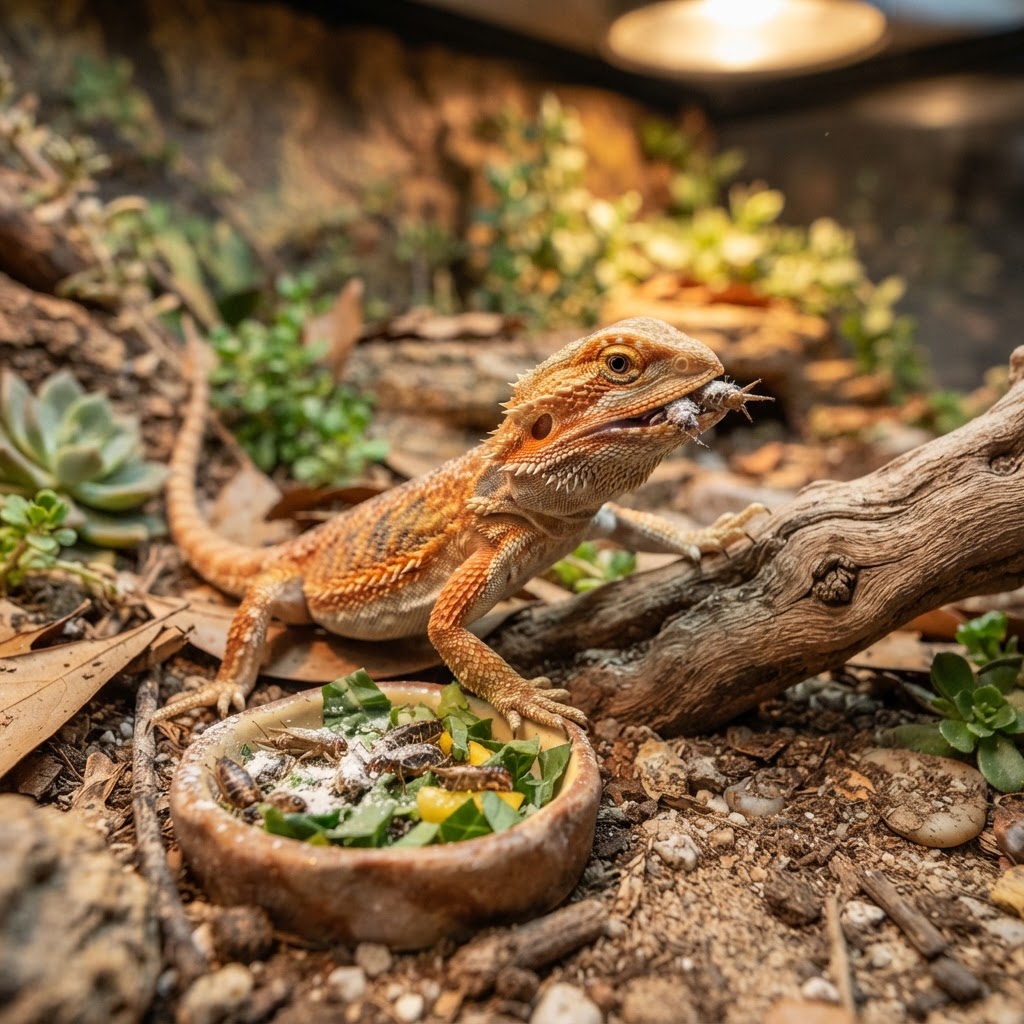
From 0 to about 6 months, baby bearded dragons usually eat a diet that is heavily insect-based. Many keepers aim for roughly 70 to 80 percent insects and 20 to 30 percent plant matter during the earliest months, then gradually increase vegetables as the dragon approaches 12 months. That shift happens faster and more smoothly when salad is offered consistently from the start.
Think of vegetables as a daily training tool as much as a food source. A baby that sees fresh greens every morning is more likely to accept them later than a dragon that only gets bugs for months and suddenly has to change its diet.
What vegetables add to a growing dragon's diet
Good vegetables provide calcium, vitamin A precursors, fiber, and hydration. They also add texture and variety, which can help prevent picky eating. Dark leafy greens are especially valuable because they tend to offer a better calcium-to-phosphorus balance than watery lettuces or starchy vegetables.
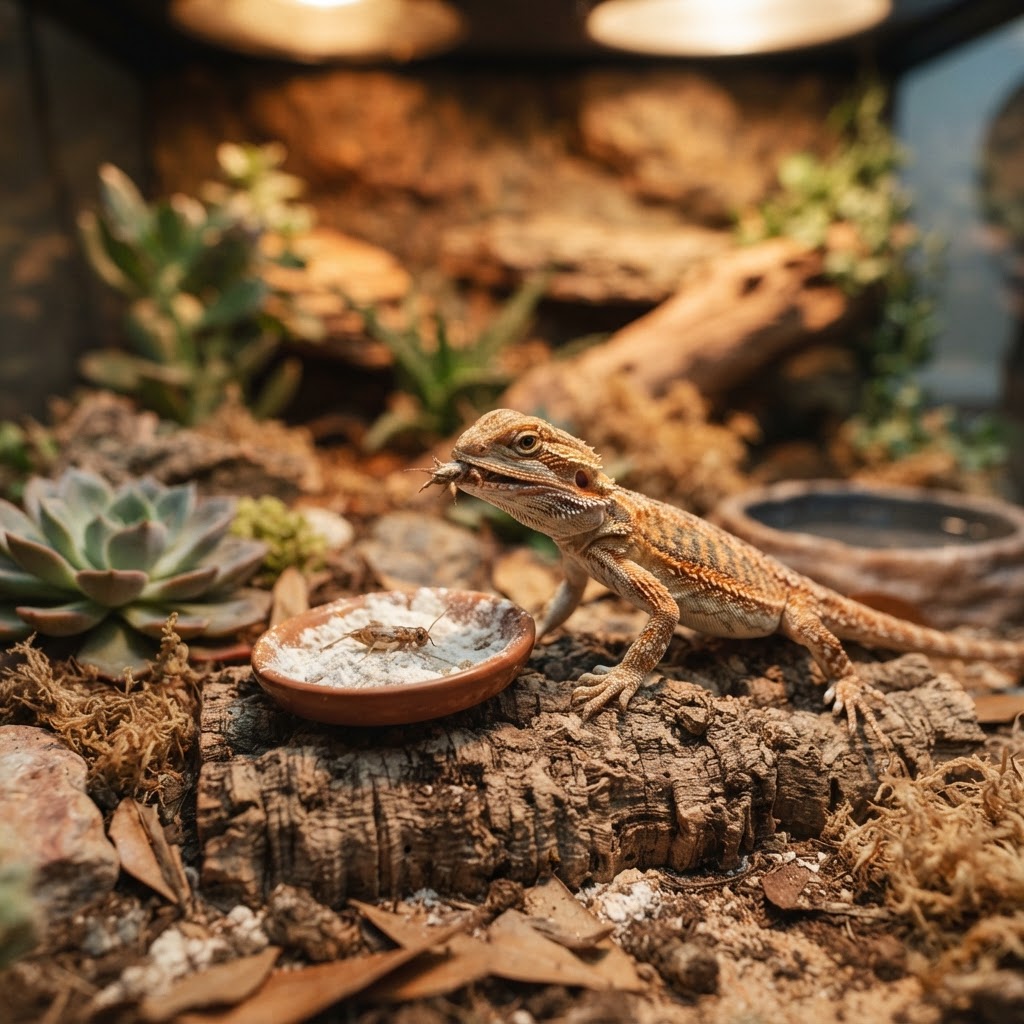
Vegetables do not replace live feeders, calcium dusting, or proper husbandry. Your baby still needs strong UVB to use calcium effectively, so be sure your setup supports healthy growth. If you need a refresher, read our guide to baby bearded dragon lighting and UVB.
Best Healthy Vegetables for Baby Bearded Dragons
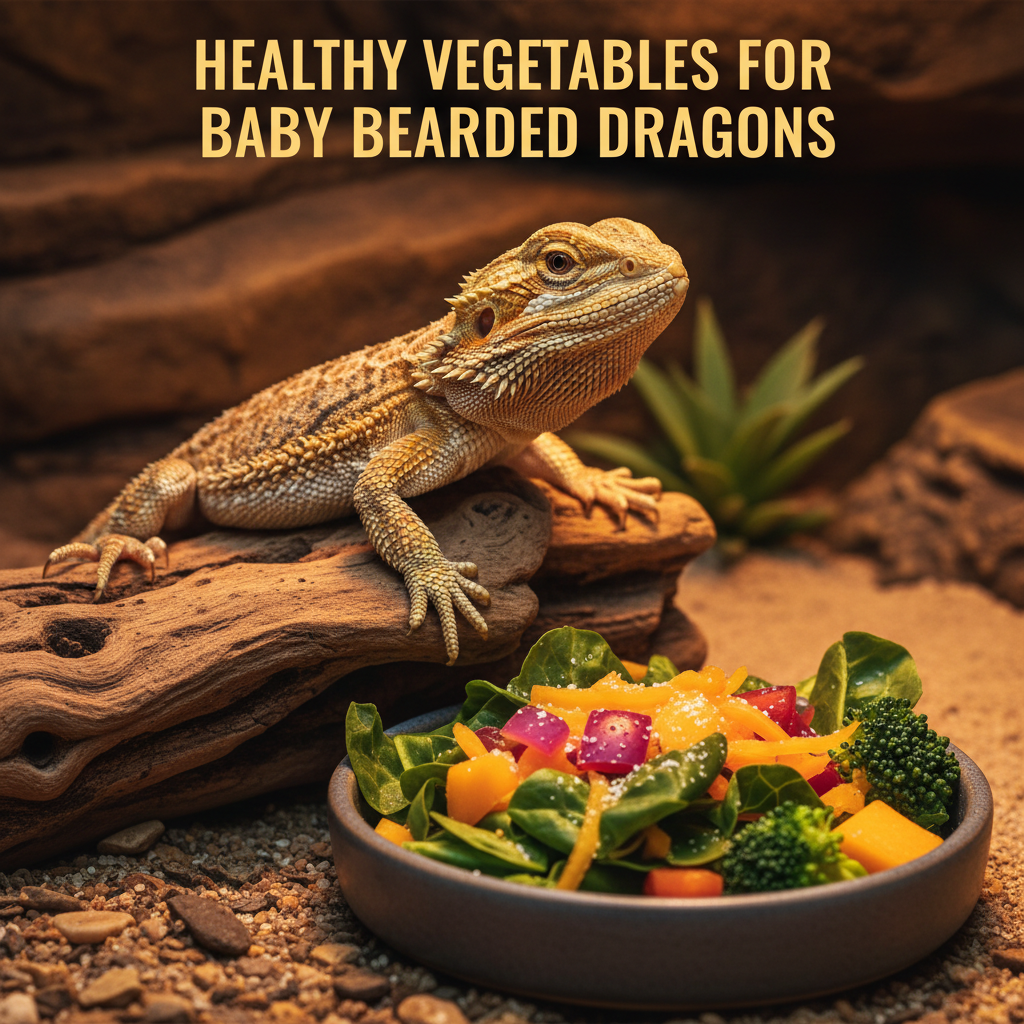
The best healthy vegetables for baby bearded dragons are nutrient-dense, easy to digest, and simple to chop into tiny pieces. In practice, that usually means dark leafy greens plus a small amount of colorful vegetables for variety.
Top vegetables to rotate regularly
| Vegetable | Why it is a good choice | How to serve it | Frequency | |---|---|---|---| | Collard greens | High in calcium, low in oxalates, sturdy and nutritious | Finely shred leaves, remove thick stems | Daily staple | | Mustard greens | Good calcium content and strong nutrition | Chop into thin strips | Daily staple | | Turnip greens | Excellent leafy green for rotation | Offer finely chopped | Daily staple | | Dandelion greens | Rich in nutrients and very popular with many dragons | Wash well and chop small | Daily staple | | Escarole or endive | Soft texture, useful for variety | Tear or chop into bite-size pieces | Frequent rotation | | Butternut squash | Adds color, fiber, and beta-carotene | Grate or mince raw into tiny pieces | Several times per week | | Acorn squash | Similar benefits to butternut | Finely grated or minced | Several times per week |
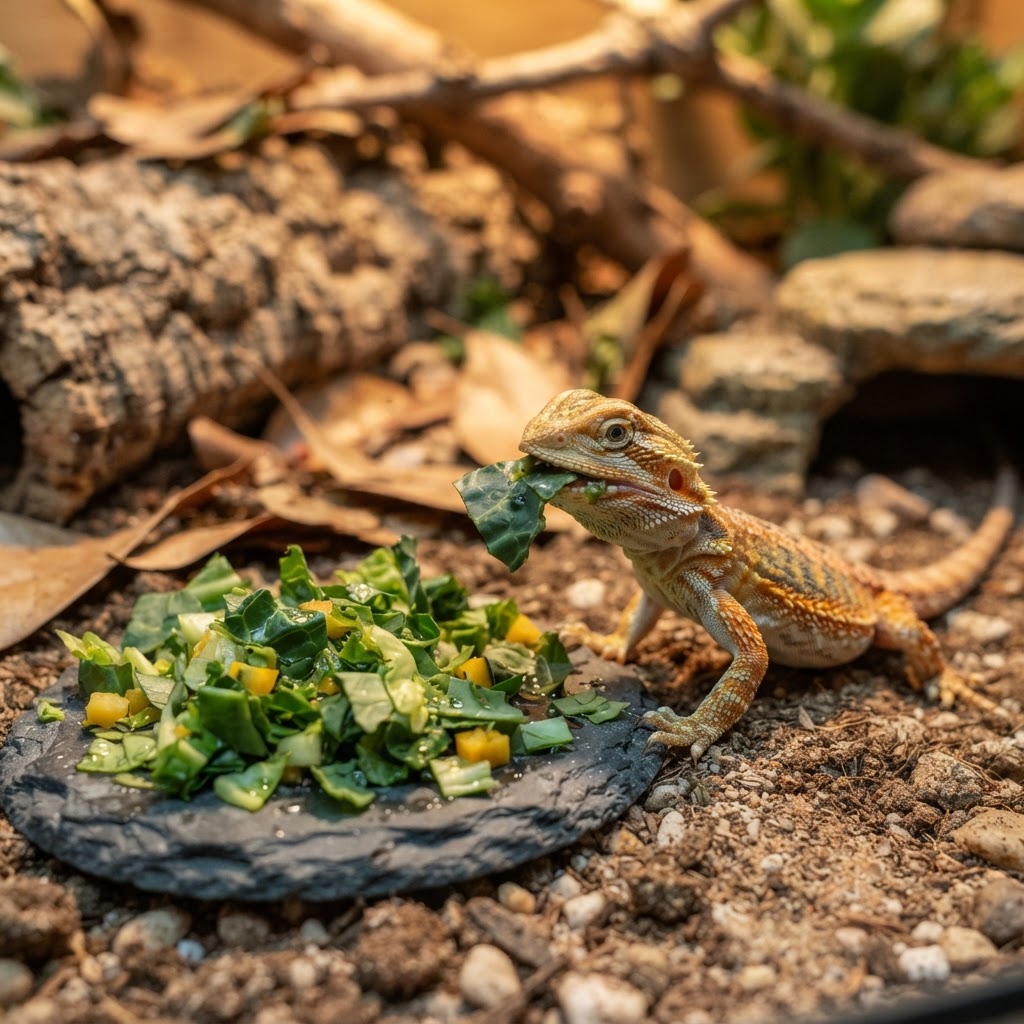
If your baby readily eats greens, you can build most salads around collard, mustard, turnip, and dandelion greens. Then add a little squash to make the bowl brighter and more interesting. Many baby beardies respond better when vegetables are mixed rather than served as one large leaf.
A simple salad formula for beginners
A good starter salad is:
- 2 parts dark leafy greens
- 1 part second leafy green for rotation
- A small sprinkle of grated squash
For example, you might use collard greens as the base, mix in a little dandelion or mustard green, and top it with finely grated butternut squash. This keeps the salad balanced without becoming complicated.
Rotation matters more than finding one perfect vegetable
No single vegetable covers everything. Rotating greens through the week helps prevent overdoing one nutrient or compound. It also keeps your dragon interested. A baby that ignores collards one day may eat a blend of mustard greens and squash the next.
Aim to keep at least three staple greens in your weekly rotation. If you shop once a week, prepare small containers of chopped greens ahead of time so offering salad becomes quick and consistent.
Vegetables to Offer in Moderation
Not every safe vegetable should be a daily staple. Some are perfectly fine in small amounts but work better as occasional add-ins than as the base of the salad.
Good occasional choices
- Carrot: Fine in tiny amounts, especially grated, but best as a topper rather than a main vegetable.
- Bell pepper: Safe and colorful, but use small amounts because it is not as nutrient-dense as dark greens.
- Bok choy: Can be part of a rotation, but do not rely on it every day.
- Kale: Safe for occasional use and better rotated than fed as the only green.
- Parsley: Nutritious but strong, so use lightly.
- Romaine or green leaf lettuce: Better than iceberg, but still not ideal as a staple because it is mostly water.
These vegetables are useful for variety, scent, and color. If your baby is reluctant to try greens, a small amount of grated carrot or finely diced bell pepper can make the salad more attractive without taking over the bowl.
Vegetables to Avoid or Rarely Feed
Some vegetables are poor choices because they interfere with calcium balance, offer very little nutrition, or are simply unsafe.
Best avoided
- Spinach: High in oxalates, which can bind calcium.
- Swiss chard and beet greens: Also high in oxalates, so better skipped for babies.
- Iceberg lettuce: Not toxic, but nutritionally weak and too watery to be useful.
- Onion, garlic, and chives: Not appropriate for bearded dragons.
- Rhubarb: Toxic and should never be fed.
- Avocado: Commonly considered unsafe for reptiles and best avoided completely.
- Mushrooms and raw potato: Not suitable choices for a baby dragon salad.
When in doubt, stick with proven greens. New owners sometimes get into trouble by assuming any human salad ingredient is reptile-safe. It is much safer to repeat a few reliable staples than to experiment too widely.
How to Prepare Vegetables Safely
Choosing healthy vegetables for baby bearded dragons is only half the job; how you prepare them matters just as much.
Wash, trim, and chop very small
Always rinse vegetables thoroughly, even if they look clean. Remove thick stems, wilted edges, and anything slimy. Then chop or shred everything into pieces small enough for a baby to eat easily. A good rule is to make pieces smaller than the space between your dragon's eyes.
Large pieces can be intimidating, especially for very young dragons. Fine shreds, tiny ribbons, and grated vegetables are much easier for beginners to accept.
Serve them raw and plain
Most vegetables should be served raw, fresh, and unseasoned. Do not cook them in oil, add salt, or use canned or seasoned frozen vegetables. Baby beardies do best with simple, natural foods.
Offer salad at the right time
Put fresh vegetables in the enclosure in the morning, ideally after the lights have been on and your dragon has had time to warm up under the basking area. A cold baby often ignores food. Remove uneaten salad later in the day before it dries out or becomes soiled.
If you want to increase interest, lightly mist the greens so they glisten. Some babies are attracted to the extra moisture and movement.
How Much to Feed at Each Age
A baby's appetite changes quickly during the first year, so the amount of salad that works at 2 months may be very different from what works at 10 months.
0 to 3 months
At this stage, insects are clearly the priority. Offer a small daily salad anyway, even if your baby only nibbles at it. A tablespoon or two of finely chopped greens is enough. The goal is exposure and habit-building.
4 to 6 months
Most babies are still eating mostly insects, but many begin sampling vegetables more consistently. Offer a larger salad each morning and keep rotating greens. If your dragon is eating some plant matter daily, you are on the right track.
7 to 12 months
As your dragon moves toward the juvenile stage, vegetables should take up more space in the diet. Many keepers gradually move toward a more balanced split by the end of the first year. This is a great time to make salads broader and more varied, while still keeping the main ingredients simple and nutritious.
Common Feeding Mistakes to Avoid
Offering only one green
Even excellent greens like collards should not be the only vegetable your baby sees. Rotation helps cover nutritional gaps and keeps meals interesting.
Making pieces too big
A bowl full of large leaves may look healthy to you, but it can be hard for a baby to bite. Finely chopping vegetables often improves acceptance right away.
Expecting instant success
Some babies ignore greens for days or weeks before they begin eating them regularly. Keep offering fresh salad daily. Consistency usually works better than constantly switching foods.
Forgetting the bigger husbandry picture
Poor temperatures, weak UVB, stress, or incorrect enclosure setup can reduce appetite. If your baby refuses both vegetables and insects for more than a short period, review your care basics and see our guide on baby bearded dragon not eating.
Key Takeaways
- Baby bearded dragons still need vegetables, even though insects make up most of the diet early on.
- The best daily staples are dark leafy greens such as collard, mustard, turnip, and dandelion greens.
- Squash is a great add-in for color, fiber, and variety.
- Offer vegetables every day from the start, even if your baby only takes a few bites.
- Chop all food very small and serve it raw, fresh, and plain.
- Avoid spinach, beet greens, Swiss chard, iceberg lettuce, avocado, onion, garlic, and rhubarb.
- Appetite for vegetables usually improves as babies grow, especially when lighting, heat, and feeding routines are correct.
When you focus on healthy vegetables for baby bearded dragons and offer them consistently, you make the transition to a balanced juvenile diet much easier. Start simple, rotate a few excellent greens, and let steady routine do the work.
Frequently Asked Questions
What are the best daily vegetables for a baby bearded dragon?
The list of healthy vegetables for baby bearded dragons should start with collard greens, mustard greens, turnip greens, and dandelion greens. These are the most reliable daily staples for calcium, fiber, and overall nutrition.
Can baby bearded dragons eat spinach?
It is best not to use spinach as a regular food for babies. Spinach is high in oxalates, which can interfere with calcium availability. Since young dragons need strong calcium support for bone growth, safer greens are a better choice.
Why is my baby bearded dragon ignoring vegetables?
This is common, especially in very young dragons that are strongly focused on insects. Keep offering a small fresh salad every morning, chop it very fine, and try mixing staple greens with a little grated squash. Also check basking temperatures and UVB, because a baby that is not warm enough may not want to eat.
Is lettuce safe for baby bearded dragons?
Romaine and green leaf lettuce are safer than iceberg, but they should not be the base of the diet. They contain a lot of water and not enough nutrition compared with dark leafy greens. Iceberg lettuce is best skipped.
Should I cook vegetables before feeding them?
No. Most vegetables should be fed raw, plain, and fresh. Cooking can change texture and reduce the crispness that encourages natural feeding behavior. Always avoid oils, salt, sauces, or seasoning.
How much salad should a 3-month-old baby eat?
A small bowl or about 1 to 2 tablespoons of finely chopped greens is plenty for daily offering at that age. Do not worry if your baby eats only a little. At 3 months, insects are still doing most of the nutritional heavy lifting, but daily salad exposure is important.