Introduction
Bringing home a baby beardie is exciting, but feeding can feel confusing at first. New owners often ask, when do baby bearded dragons eat and how often should food be offered during the day? The short answer is that babies usually eat during daylight hours, after they have had time to warm up under their basking light.
That timing matters more than many beginners realize. Baby bearded dragons do not digest food well when they are still cool, sleepy, or close to lights-out. Because they grow quickly during the first year, a consistent routine helps support healthy appetite, digestion, bone growth, and energy levels.
In this guide, you'll learn the best times to feed baby bearded dragons from 0 to 12 months old, how feeding changes with age, what each meal should include, and when a missed meal may be a sign that something is wrong.
Key Takeaways
- Feed baby bearded dragons after they have warmed up under heat and UVB for about 30 to 60 minutes.
- Most babies need 2 to 3 insect meals per day, while older juveniles often do well with 1 to 2 meals.
- Offer fresh greens daily, even if very young dragons eat mostly insects at first.
- Stop feeding at least 2 hours before lights out so food can digest properly.
- Use only prey that is smaller than the space between your dragon's eyes.
- Poor appetite is often linked to incorrect temperatures, weak UVB, stress, shedding, or illness.
Why Feeding Time Matters for Baby Beardies
Baby bearded dragons are ectothermic, which means they rely on outside heat to power digestion. If they eat too early in the morning before basking, food may sit in the stomach longer than it should. That can lead to discomfort, poor digestion, and reduced appetite later in the day.
Lighting is just as important as food. Heat helps your baby process meals, while UVB supports calcium use and healthy growth. If your setup is off, even the perfect feeding schedule may not work well. For a better look at this connection, read our guide to baby bearded dragon lighting and UVB.
Meal timing also supports routine. Baby beardies often thrive when lights, basking, feeding, and rest happen on a predictable schedule every day.
When Do Baby Bearded Dragons Eat During the Day?
So, when do baby bearded dragons eat during a normal day? In most homes, the best feeding window starts about 30 to 60 minutes after the lights turn on. That gives your dragon time to wake up, bask, and raise its body temperature.
A simple rule is this:
- Morning: let your dragon warm up first
- Late morning to early afternoon: best time for the first main insect meal
- Midday or afternoon: second meal for younger babies
- Late afternoon: optional small meal for very young, fast-growing babies
- Evening: no food close to bedtime
Try to avoid feeding right after lights come on or right before they turn off. A good cutoff is at least 2 hours before bedtime, and 3 hours is even better for larger meals.
Fresh greens can be placed in the enclosure earlier in the day, often soon after lights-on. Some babies ignore salad at first, but offering it daily helps build the habit.
Feeding Schedule by Age
A baby bearded dragon's schedule should change as it grows. A 7-week-old dragon does not eat like a 10-month-old juvenile, even though both are often called babies by new keepers.
0 to 3 Months
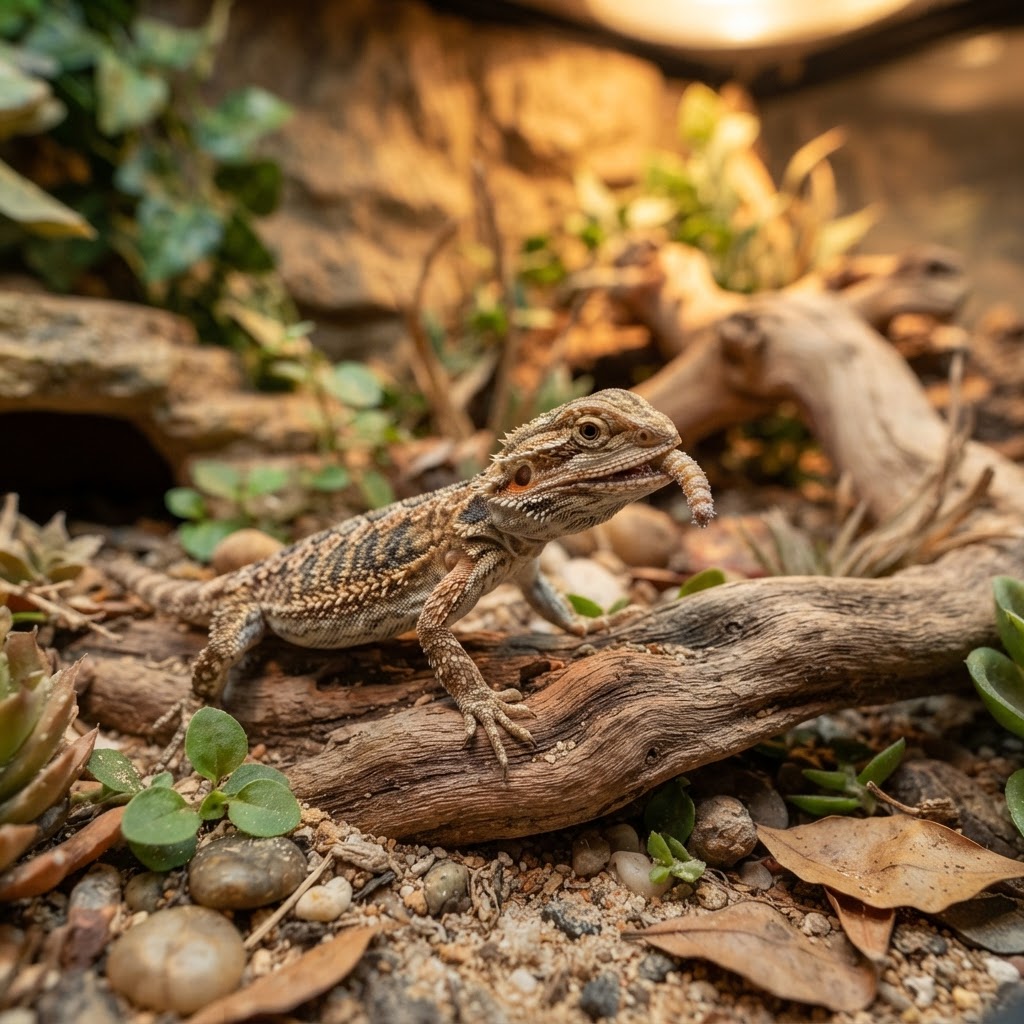
During the youngest stage, growth is rapid and appetite is usually strongest. Most baby beardies in this age range do best with 2 to 3 live insect feedings per day, plus a small dish of finely chopped greens offered daily.
Practical tips for this age:
- Feed after the morning warm-up period
- Offer insects in short sessions of about 5 to 10 minutes
- Remove uneaten insects after the meal
- Keep greens finely chopped so they are easy to bite
- Watch closely to make sure every feeder is an appropriate size
At this age, many dragons prefer moving prey over vegetables, which is normal. Keep offering greens anyway. Early exposure makes the shift to a more balanced juvenile diet much easier later.
3 to 6 Months
Most dragons in this stage still need a lot of protein, but their schedule often becomes a little easier to manage. Two insect meals per day is common, along with fresh greens available daily.
This is also a good time to increase feeder variety. Rotating insects helps improve nutrition and keeps picky eating from becoming a habit. If you're unsure which foods are best, see our full article on what baby bearded dragons eat.
As your dragon grows, do not assume it should eat endlessly just because it seems eager. Focus on body condition, activity, and growth instead of overfeeding.
6 to 12 Months
From 6 to 12 months, your dragon is moving into the juvenile stage. Many keepers gradually reduce insect meals to 1 to 2 times per day, while increasing the importance of vegetables and leafy greens.
By the later part of this age range, some juveniles do very well with:
- One main insect feeding daily
- A second smaller feeding if needed based on age and growth
- Fresh greens every morning
This transition should be gradual, not sudden. If your dragon is active, growing, and maintaining a healthy body shape, you are likely on the right track. If you want a more detailed routine by age, our baby bearded dragon feeding schedule breaks it down further.
What Should Each Meal Include?
Feeding time is not just about when food is offered. It is also about what goes into the bowl or feeder cup.
Live Insects for Growth
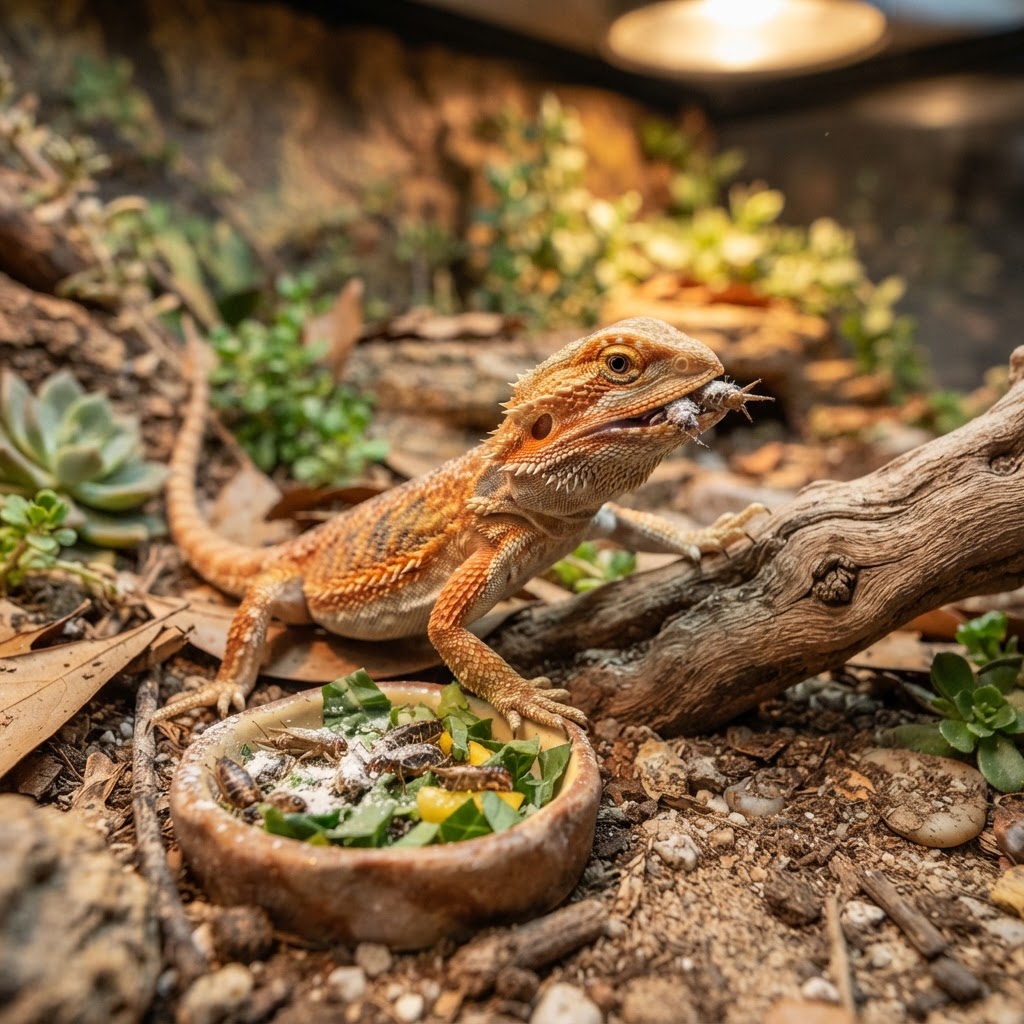
For most baby beardies, live insects are the main calorie source during early growth. Good staple options often include dubia roaches, crickets, black soldier fly larvae, and silkworms.
Keep these rules in mind:
- Choose prey smaller than the space between your dragon's eyes
- Offer active, healthy insects
- Rotate feeders instead of relying on only one type
- Avoid making fatty treats the main diet
A baby that eats quickly and hunts eagerly is usually healthy, warm enough, and comfortable in its setup.
Greens Every Day
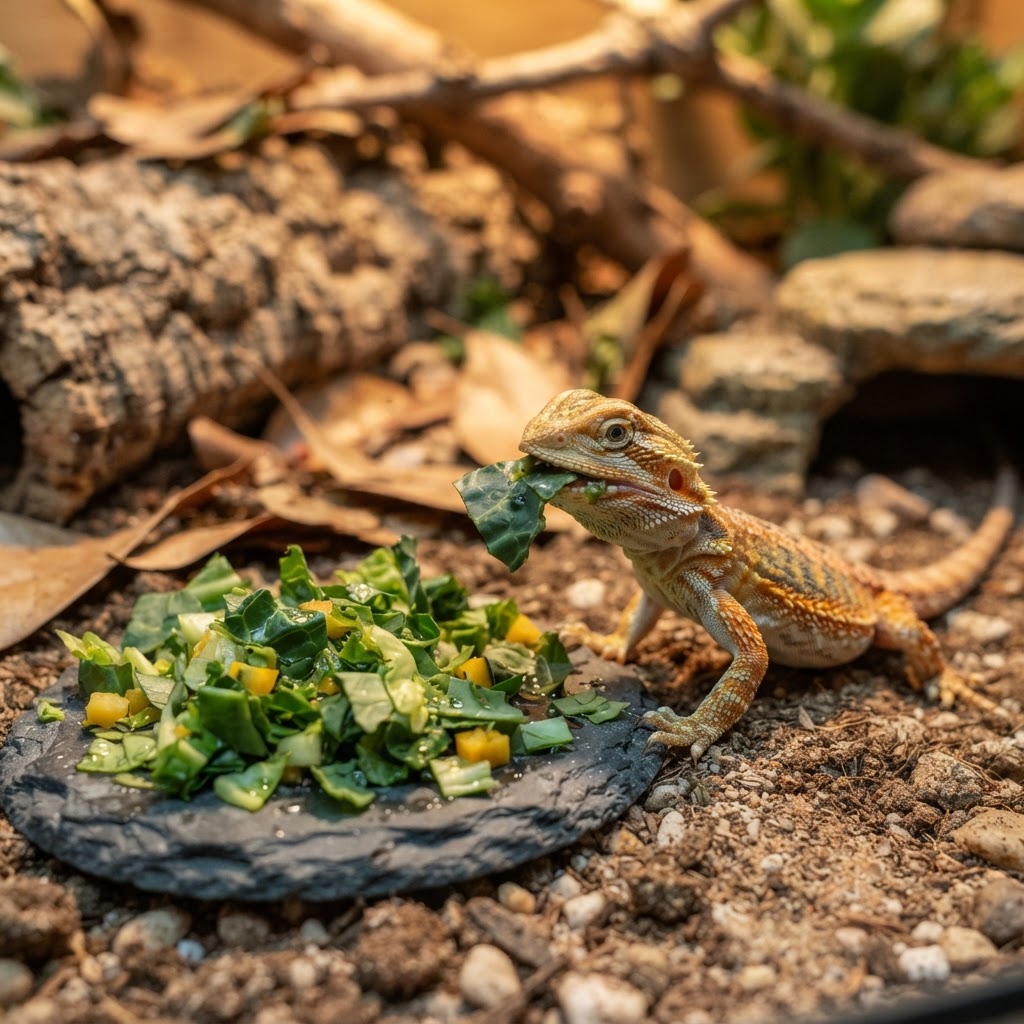
Even very young dragons should see greens daily. Good beginner-friendly choices include collard greens, mustard greens, turnip greens, dandelion greens, and small amounts of squash.
Offer salad in the morning when the enclosure is clean and your dragon is alert. Replace wilted greens later in the day if needed. Avoid relying on watery, low-nutrition choices like iceberg lettuce.
Calcium and Vitamins
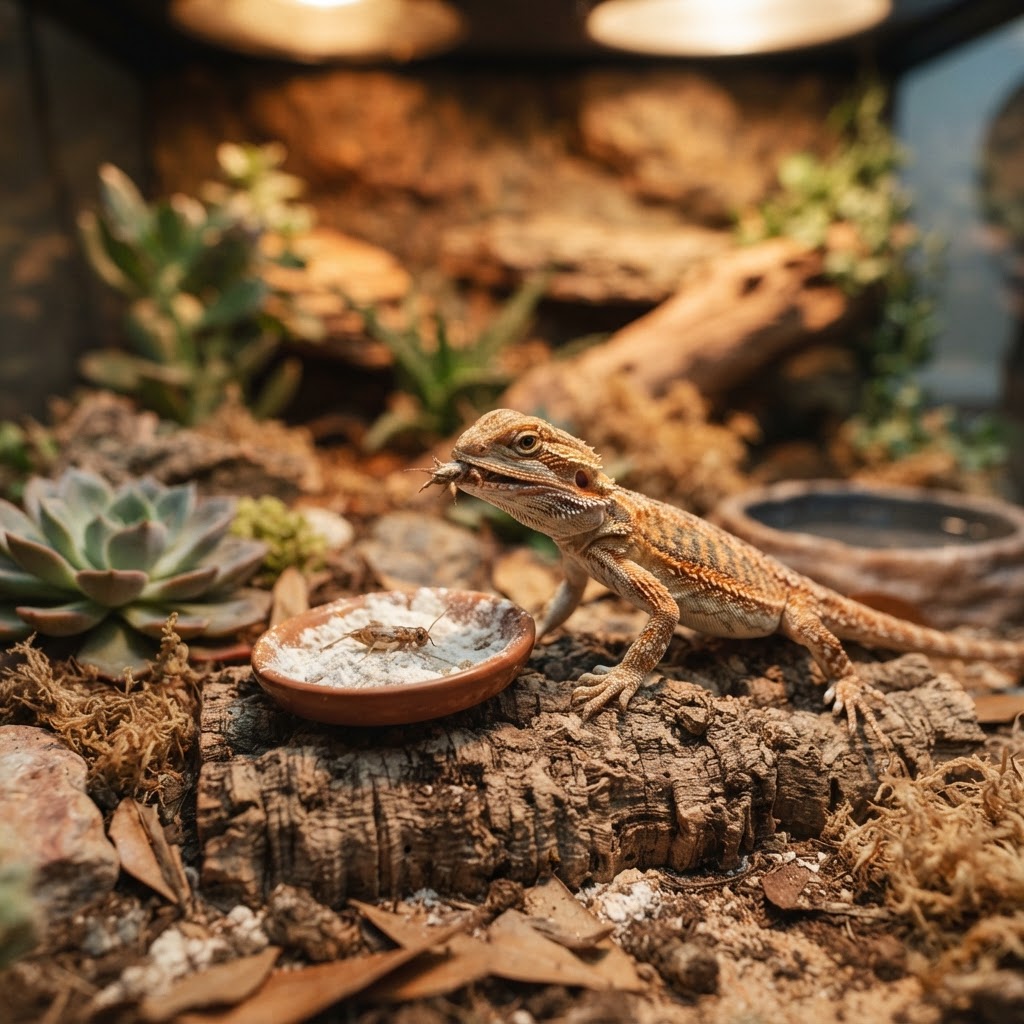
Because babies grow fast, supplementation matters. Most young dragons need calcium regularly and a reptile multivitamin on a limited schedule, but the exact routine depends on your UVB strength, feeder variety, and veterinary guidance.
If you are ever unsure, ask an experienced reptile vet rather than guessing. Over-supplementing is not better than under-supplementing.
A Simple Daily Feeding Routine
If you like having a clear plan, this sample routine is a good starting point.
| Age | Lights On | First Meal | Second Meal | Last Food Cutoff | | --- | --- | --- | --- | --- | | 0 to 3 months | 7:00 AM | 7:45 to 8:30 AM | 12:00 to 1:00 PM | 4:00 to 5:00 PM | | 3 to 6 months | 7:00 AM | 8:00 AM | 1:00 PM | 4:30 to 5:00 PM | | 6 to 12 months | 7:00 AM | 8:00 to 9:00 AM | Optional small meal at 1:00 to 2:00 PM | 4:30 to 5:00 PM |
These times can shift based on your household schedule. The big idea stays the same: warm first, feed during the active daytime window, and leave enough time for digestion before bed.
Signs Your Baby Beardie Is Ready to Eat
Healthy babies often show a few clear feeding cues:
- Basking with alert eyes open
- Watching movement outside the tank
- Tongue flicking or tracking insects
- Moving quickly toward the feeding area
- Hunting eagerly once prey is offered
Signs your dragon may be finished include walking away from prey, ignoring insects it normally likes, or settling down to bask without showing interest in the food.
Common Feeding Mistakes to Avoid
Even loving owners can make small mistakes that affect appetite.
Feeding Too Early
A dragon that has not warmed up yet is not ready to digest. Always allow basking time first.
Feeding Too Late in the Day
Late meals can sit too heavily overnight. Keep the last feeding well before lights-out.
Offering Prey That Is Too Large
Oversized insects increase the risk of choking, impaction, and refusal. Small, manageable prey is safer.
Depending on One Food Only
A cricket-only diet or treat-heavy diet can create nutrition gaps. Variety matters.
Ignoring Setup Problems
Many appetite issues are not food problems at all. They are enclosure problems, especially incorrect basking temperatures or poor UVB.
Leaving Live Insects in the Tank
Crickets and other feeders can stress your dragon and may even nip at it. Remove leftovers after each meal.
What If Your Baby Bearded Dragon Is Not Eating?
Sometimes a missed meal is not an emergency. A baby may eat less during relocation stress, shedding, or a minor schedule change. But if appetite drops for more than a short period, check the basics first:
- Is the basking area hot enough?
- Is the UVB bulb strong, properly placed, and not expired?
- Is your dragon dehydrated?
- Has it started shedding?
- Are the feeders too large or unappealing?
If your dragon is losing weight, acting weak, staying dark in color, closing its eyes often, or refusing multiple meals, dig deeper right away. Our article on baby bearded dragon not eating can help you troubleshoot the most common causes.
Frequently Asked Questions
How soon after lights turn on should I feed my baby bearded dragon?
Wait about 30 to 60 minutes after lights-on. Your dragon should have time to bask, warm up, and become fully alert before eating. Feeding too early can reduce digestion efficiency.
Can baby bearded dragons eat at night?
No. Bearded dragons should eat during the daytime only, when their heat and UVB are on. Night feeding is not natural for them and can interfere with digestion.
If I'm still wondering when do baby bearded dragons eat after waking up, what is the safest rule?
Use this simple rule: warm first, feed second. If your baby has been basking for at least 30 minutes and is bright, active, and alert, it is usually ready for food.
How many insects should a baby bearded dragon eat per meal?
There is no perfect number for every dragon. Offer appropriately sized insects during a short feeding session, usually 5 to 10 minutes, and monitor body condition, growth, and stool quality instead of chasing a fixed count.
Should I leave greens in the enclosure all day?
You can offer greens in the morning and leave them available for several hours if they stay fresh and clean. Remove wilted or soiled vegetables later in the day and replace them as needed.
Is it normal for a baby bearded dragon to eat less while shedding?
Yes, some babies become less interested in food during shedding. A mild appetite dip can be normal. As long as your dragon stays alert, hydrated, and resumes eating soon, it usually is not a major concern.
When should I worry about a baby beardie not eating?
You should be concerned if refusal lasts more than a day or two in a very young dragon, or if it comes with lethargy, weight loss, diarrhea, sunken eyes, weakness, or a dark beard. In those cases, review the setup and contact a reptile vet.