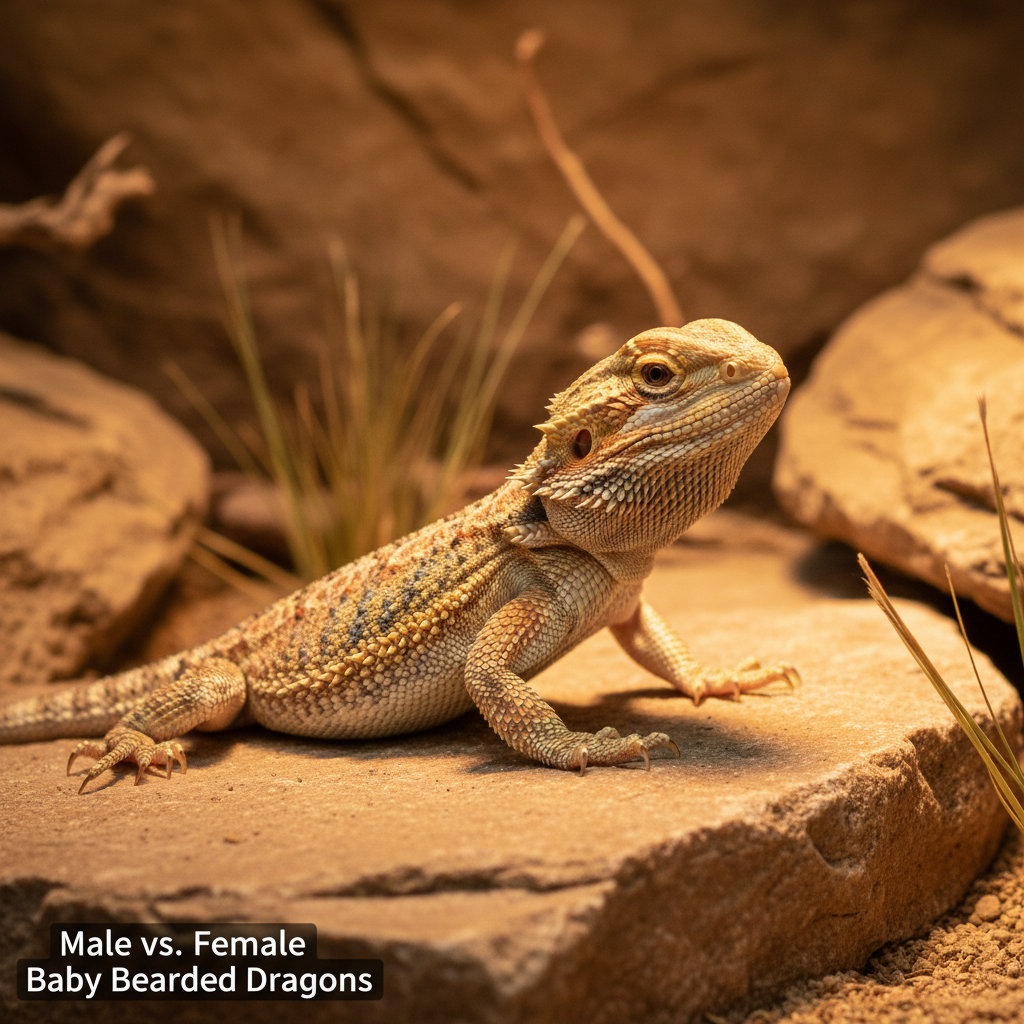
Introduction
If you have a young beardie at home, it is completely normal to wonder about the difference between male and female baby bearded dragons. New owners often want to know as early as possible, especially when choosing a name, planning housing, or trying to understand future behavior. The tricky part is that baby bearded dragons can be surprisingly hard to sex accurately, and many of the signs people rely on are not dependable in very young dragons.
The good news is that you do not need to guess blindly. With a gentle approach and realistic expectations, you can learn which clues are useful, which ones are often misleading, and when it makes sense to ask a breeder or reptile vet for help. In this guide, I will walk you through the most reliable ways to tell males from females in the 0 to 12 month age range, plus explain what those differences mean for everyday care.
BabyBeardedDragon.net is a participant in affiliate programs including Amazon Associates. We may earn a commission on qualifying purchases at no extra cost to you.
Key Takeaways
- Sexing very young bearded dragons is difficult, and results are often uncertain before about 3 to 4 months of age.
- The most reliable at-home clue is the shape of the bulges at the base of the tail, not head size, color, or attitude.
- Males usually show two bulges on either side of the tail base, while females usually show one central bulge or a flatter area.
- Femoral pores, beard size, and behavior are less useful in babies because these traits become clearer with age.
- Male and female babies need the same core setup: proper heat, strong UVB, safe substrate, good nutrition, and low stress.
- Never house baby bearded dragons together just because you think they are both female. Babies can bully, outcompete, or injure each other.
- If you are unsure, it is better to wait and recheck later than to handle the tail too often or force a decision too early.
Why Sex Matters in Baby Bearded Dragons
For a baby beardie, sex matters less than many beginners expect. A healthy enclosure, correct temperatures, strong UVB, and a proper feeding routine are far more important than whether your dragon is male or female. If you are still working on the basics, start with this baby bearded dragon care guide so your setup supports healthy growth from day one.
Still, sex can matter in a few practical ways. It helps you:
- choose a name with more confidence
- avoid incorrect advice from pet stores or online forums
- plan ahead for adult behavior and body shape
- understand future risks like egg laying in females
- prevent housing mistakes if you own more than one dragon
In short, sex is helpful to know, but it is not something to stress over in the first weeks of ownership. For babies, your goal is not perfection. Your goal is a careful, informed estimate that becomes more accurate as your dragon matures.
How to Tell the Difference Between Male and Female Baby Bearded Dragons
If you are trying to figure out the difference between male and female baby bearded dragons, the best place to look is the base of the tail. This area can reveal whether the hemipenes are present, but you need to check gently and with patience.
Start with realistic expectations
The younger the dragon, the harder it is to sex. Many beardies under 8 to 10 weeks old are simply too small to judge confidently. At that stage, even experienced keepers can be wrong. In most cases, sexing becomes easier somewhere between 3 and 6 months, and clearer still by 6 to 12 months.
That means the answer may honestly be: too early to tell. That is not a failure. It is the normal reality of baby reptile development.
Check the tail base safely
The most common method is to look at the underside of the tail base, just above the vent. Hold your baby dragon calmly and support the whole body. Then lift the tail only slightly upward. Do not bend it sharply or pull it back too far.
Here is a safe step-by-step method:
- Wait until your dragon is calm and warm, not sleepy or actively struggling.
- Place the dragon on your hand or a soft towel.
- Support the chest and belly so the body feels secure.
- Gently lift the tail at a slight angle.
- Look at the area just above the vent under bright light.
A relaxed dragon gives you the best chance of seeing the tail base correctly. If your beardie squirms, stop and try another day.
Look for one bulge or two
This is the classic visual clue:
- Male babies usually show two elongated bulges, one on each side of the tail base, with a slight dip in the center.
- Female babies usually show one softer central bulge or a flatter shape overall.
On tiny babies, these shapes can be very subtle. You may need to compare photos over time instead of relying on one quick look.
Use the flashlight method carefully
Another popular trick is shining a small flashlight through the tail base from above or behind. The light can make the bulges easier to see. If you try this, keep it brief and gentle. You are not trying to press or stretch the tail. You are simply improving visibility.
This method can help, but it is not magic. A blurry flashlight view can still be misread, especially in very small dragons.
Signs that are less reliable in babies
Beginners often hear that males have bigger heads, wider tails, larger femoral pores, or more dominant behavior. Those clues can become more noticeable later, but they are often unreliable in babies.
Be cautious with these signs:
- Femoral pores: often too small in babies to judge accurately
- Head shape: varies by genetics, nutrition, and growth rate
- Beard size: changes with age and individual body type
- Temperament: stress, handling history, and personality matter more than sex in babies
- Color: does not indicate sex
So while people may guess based on body shape, the tail base remains your best at-home clue.
Male vs Female Baby Bearded Dragons: Main Differences
When people compare males and females, they often expect obvious differences right away. In babies, the differences are usually subtle.
Physical differences
The biggest physical difference is still the tail base. Young males may gradually develop a slightly thicker tail base and clearer paired bulges. Young females usually keep a smoother look there.
As they get older, males may also develop broader heads and a more robust build, but this is not a dependable baby trait. Growth can vary a lot depending on feeding, lighting, genetics, and stress. If you want a realistic idea of normal size changes, follow this baby bearded dragon growth rate resource as your dragon matures.
Behavior differences
In the baby stage, behavior tells you very little. Some baby males are calm. Some baby females are feisty. Some babies of either sex are shy, glass surf, or puff their beard when nervous.
What beginners often interpret as male behavior is usually one of these instead:
- stress from a new home
- incorrect temperatures
- poor UVB exposure
- hunger or feeding competition
- handling too soon or too often
That is why setup matters more than sex during the first year.
When Can You Reliably Sex a Baby Bearded Dragon?
Most owners get the most accurate results between 3 and 6 months, though some dragons are still difficult until later. By 6 to 12 months, the difference between male and female baby bearded dragons is usually easier to confirm because the tail base, body shape, and secondary features are more developed.
A good rule is this:
- 0 to 2 months: usually too early for confidence
- 3 to 4 months: possible, but still easy to misread
- 5 to 6 months: often much more reliable
- 6 to 12 months: usually easier to confirm
If a pet store labels a very young beardie as definitely male or definitely female, take that claim with caution. Some stores are correct, but many are guessing.
Care Differences for Male and Female Babies
The care needs of male and female babies are almost identical. Both need a secure enclosure, strong UVB, proper basking temperatures, fresh greens, appropriately sized insects, hydration support, and regular observation.
Housing and cohabitation
Never rely on early sexing to decide whether babies can live together. Even if two young dragons turn out to be female, cohabitation is risky. One can dominate food, basking spots, and hiding areas long before serious fighting is obvious.
For a safe enclosure foundation, review this baby bearded dragon tank setup. Proper space, heat gradient, and basking structure matter much more than sex.
Lighting and growth
Healthy development depends on quality UVB and heat. Weak lighting can lead to poor growth, weakness, and metabolic bone problems in both sexes. If your dragon seems unusually small or inactive, check husbandry before blaming sex-related differences.
This guide to baby bearded dragon lighting and UVB can help you confirm that your dragon is getting the right support.
Feeding and body condition
Male and female babies both need heavy insect intake and daily access to fresh plant foods, but individuals grow at different speeds. Some owners assume a smaller baby must be female, but slower growth is often linked to appetite, husbandry, parasite load, or previous care instead.
Focus on these practical habits:
- weigh your dragon weekly if possible
- monitor appetite and stool quality
- keep basking temperatures in the correct range
- offer varied, appropriately sized feeders
- check hydration, activity, and shedding progress
Do not reduce feeding just because you suspect your beardie is female. Baby females still need robust nutrition for healthy bone and muscle development.
Handling and stress
There is no special handling style for male or female babies. What matters is consistency and gentleness. Support the body, keep sessions short, and avoid repeated sex checks that make the dragon defensive.
If your baby is still adjusting, prioritize trust-building over frequent inspections. A calm, confident beardie is easier to assess later.
Planning for maturity
As your dragon approaches the later part of the first year, sex becomes more relevant. Males may become more visibly territorial. Females may eventually produce infertile eggs as adults, even without a male present. That does not affect daily baby care right now, but it is helpful to know for future planning.
Common Mistakes When Sexing Baby Bearded Dragons
Many wrong sex identifications happen because owners are using adult traits on baby animals. Here are the mistakes I see most often:
- Checking too early. Tiny hatchlings are hard to sex, even for experienced keepers.
- Lifting the tail too far. This can stress or injure the dragon.
- Using behavior as proof. Bold does not mean male, and calm does not mean female.
- Trusting head size alone. Growth patterns vary too much in babies.
- Assuming pet store labels are final. Early labels are sometimes guesses.
- Handling too often just to recheck. Repeated stress is not worth it.
- Cohabbing based on a guess. This is one of the most dangerous errors.
If you avoid those mistakes, you will already be ahead of many new owners.
What If You Still Cannot Tell?
If you have looked carefully and still feel unsure, that is completely fine. Take a clear photo of the tail base every few weeks under the same lighting and compare changes over time. You can also ask a reputable breeder, experienced reptile veterinarian, or qualified rescue worker for help.
Do not force a verdict just to settle curiosity. In most cases, waiting a little longer leads to a much better answer with much less stress for your dragon.
Final Thoughts
For most new keepers, the biggest lesson is this: sexing a baby beardie is useful, but excellent husbandry matters far more. A well-fed, well-lit, properly housed baby will show clearer physical signs as it grows. Until then, be patient, handle gently, and treat every early guess as temporary.
Frequently Asked Questions
Can a pet store accurately sex a 2 month old bearded dragon?
Sometimes, yes, but not always. At 2 months old, many baby beardies are still difficult to sex with confidence. Treat store labels as a helpful estimate, not a guarantee.
Are male baby bearded dragons more aggressive?
Not usually. Baby behavior is influenced more by stress, temperature, lighting, feeding, and personality than sex. A nervous baby is not automatically male.
Do female baby bearded dragons need different care?
No. Female babies need the same core care as males: correct basking heat, strong UVB, a nutritious diet, proper hydration, and gentle handling. Any major care differences matter later, not during early babyhood.
Can two baby bearded dragons live together if they are both female?
It is still not recommended. Even two females can compete for food, basking spots, and space. Separate housing is the safest option for healthy growth and stress reduction.
What is the safest way to check sex at home?
The safest way to assess the difference between male and female baby bearded dragons at home is to gently support the body, slightly lift the tail, and inspect the tail base under bright light. Stop immediately if your dragon struggles.
Does color tell you whether a baby beardie is male or female?
No. Color and pattern do not reliably indicate sex in bearded dragons. Focus on the tail base instead of body color.
When should I ask a reptile vet for help?
Ask for help if you are unsure after several months, if your dragon is very small and fragile, or if you are worried about handling the tail incorrectly. A reptile-savvy vet can check safely and reduce guesswork.