Introduction
Feeding a baby bearded dragon can feel confusing at first. New owners quickly hear different advice about crickets, greens, calcium, and meal timing, and it is hard to know what is actually right for a fast-growing baby. The good news is that once you understand the basic pattern, feeding becomes much simpler.
If you are wondering how often to feed baby bearded dragons, the short answer is that babies need to eat more often than older juveniles and adults. During the first year, their bodies are growing quickly, so they need regular access to protein-rich insects, fresh greens, and proper supplements.
Just remember that appetite is not only about food. Heat, UVB, hydration, stress, and enclosure setup all affect how well a baby beardie eats and digests. For a full beginner overview, start with this baby bearded dragon care guide, then use this article as your practical feeding reference.
BabyBeardedDragon.net is a participant in affiliate programs including Amazon Associates. We may earn a commission on qualifying purchases at no extra cost to you.
Key Takeaways
- Baby bearded dragons from 0 to 3 months usually need 2 to 3 insect meals per day plus fresh greens.
- From 4 to 6 months, most do well with 2 insect meals daily and a larger daily salad.
- From 7 to 12 months, many shift to 1 to 2 insect meals daily with more vegetables.
- Offer insects that are no larger than the space between your dragon's eyes.
- Feed during the daytime only, after the enclosure has warmed up.
- Dust feeder insects with calcium regularly and provide a multivitamin on a schedule.
- If appetite suddenly drops, check basking temperatures and UVB before assuming it is a food issue.
How Often Should Baby Bearded Dragons Eat?
In general, how often to feed baby bearded dragons depends on age, size, and growth stage. Younger babies need more frequent insect meals, while older babies and juveniles gradually shift toward fewer insect feedings and more plant matter.
Here is a simple age-based guide:
| Age | Insect meals per day | Greens | Notes | |---|---:|---|---| | 0-3 months | 2-3 | Offer daily | Fastest growth stage | | 4-6 months | 2 | Offer daily | Strong appetite, start increasing greens | | 7-12 months | 1-2 | Offer daily | Transitioning toward juvenile diet |
This does not mean every baby eats exactly the same amount. Some are naturally bigger, more active, or growing faster than others. Use these guidelines as a starting point, then adjust based on body condition, activity level, and stool quality.
Feeding Frequency by Age
0 to 3 months
This is the most demanding stage. Very young baby bearded dragons usually need 2 to 3 small insect meals each day, along with a small fresh salad offered daily even if they mostly ignore it at first.
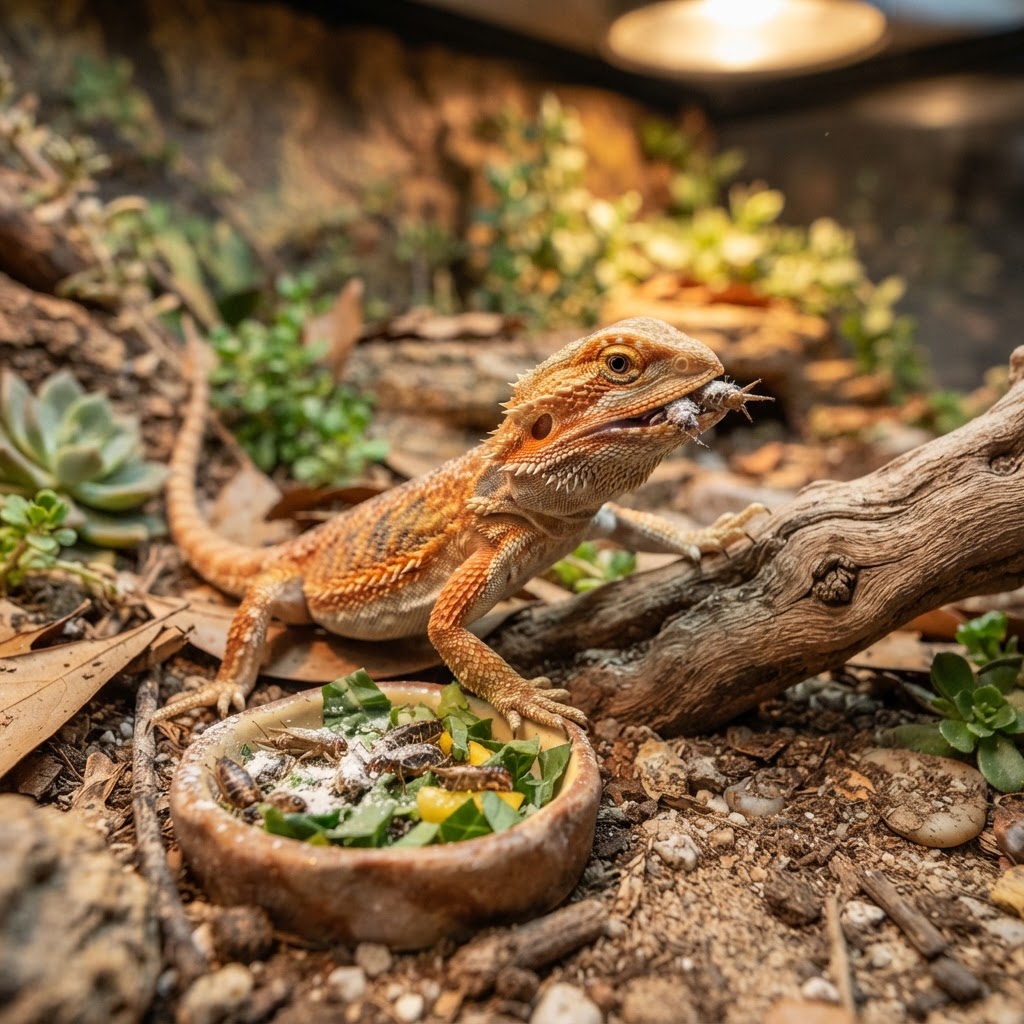
At this age, protein is especially important for muscle, bone, and overall development. Common feeder choices include tiny dubia roaches, small crickets, and black soldier fly larvae. Many babies in this stage eat somewhere around 20 to 50 small insects per day total, though some eat less and some eat more.
A good beginner routine is:
- Morning salad after lights have been on for a while
- First insect meal later in the morning
- Second insect meal in the afternoon
- Optional third insect meal for the youngest or hungriest babies
Avoid feeding right before lights out. They need heat to digest properly.
4 to 6 months
By this stage, most baby beardies still need 2 insect meals per day, but you may notice they become more interested in greens. They are still growing quickly, but not quite as explosively as tiny hatchlings.
Many keepers offer:
- A fresh salad every morning
- One insect meal before midday
- One insect meal in the afternoon
Portion sizes may increase even if the number of meals stays the same. This is also a good time to build better vegetable habits, since some dragons get picky if they are raised on too many insects without consistent greens.
7 to 12 months
From about 7 months onward, many bearded dragons can move toward 1 to 2 insect meals daily, depending on size and growth rate. Greens should now make up a more noticeable part of the diet.
Some dragons closer to 12 months do well with:
- A larger daily salad
- One main insect feeding
- A second insect feeding only if needed for growth or body condition
This is the transition phase between a baby-heavy protein diet and a more balanced juvenile diet. Do not rush it, but do not keep them on an all-insect routine longer than necessary.
What Should Baby Bearded Dragons Eat?
Feeding frequency matters, but food quality matters just as much. A healthy baby beardie diet includes three parts: live insects, leafy greens and vegetables, and supplements.
Best insect feeders for babies
Good staple feeders include:
- Small dubia roaches
- Small crickets
- Black soldier fly larvae
- Small silkworms
Use variety when possible. Different feeders provide slightly different nutrition, and variety helps reduce picky eating.
For very young babies, be careful with hard-shelled or overly fatty feeders. Mealworms and superworms are usually not ideal staples for tiny dragons because they can be harder to digest and are easy to overuse.
Best greens and vegetables
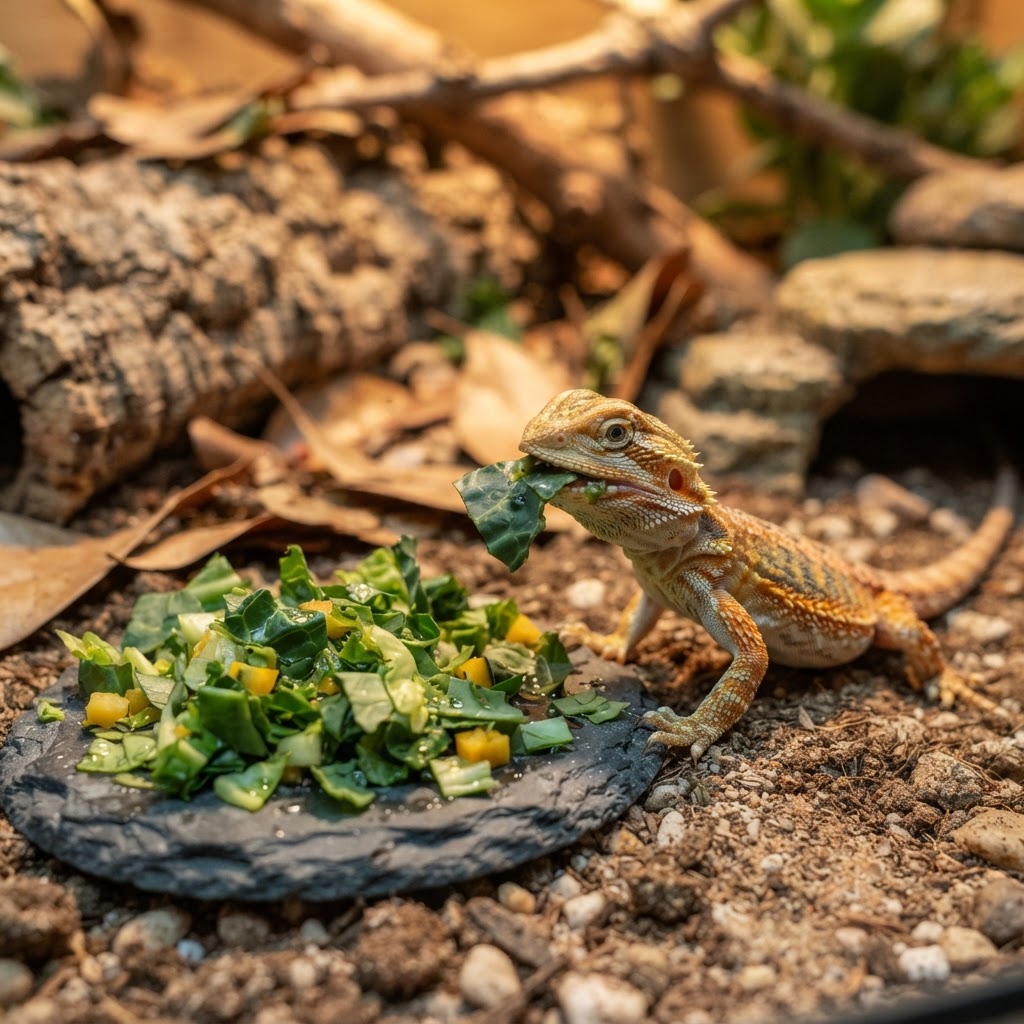
Offer a fresh salad every day, even for babies that prefer insects. Good options include:
- Collard greens
- Mustard greens
- Turnip greens
- Dandelion greens
- Endive
- Escarole
- Finely shredded squash
Chop food into bite-sized pieces to make it easy to eat. If you want a more complete food list, read what baby bearded dragons eat.
Foods to avoid
Avoid these common mistakes:
- Feeding insects that are too large
- Relying heavily on lettuce with little nutrition
- Offering wild-caught insects
- Feeding fireflies or other unknown bugs
- Using fruit too often
Fruit should only be an occasional treat, not a daily food.
How Much to Feed at Each Meal
A common beginner question is not just frequency, but quantity. The safest approach is to offer appropriately sized feeders and watch how your baby responds.
Use the size rule: the insect should be no larger than the space between your dragon's eyes. Oversized prey can increase the risk of choking, impaction, or poor digestion.
As a rough guide:
- Very young babies may eat 10 to 20 tiny insects per meal
- Mid-stage babies may eat 8 to 15 small to medium insects per meal
- Older babies may eat fewer meals but larger total portions across the day
Instead of aiming for one perfect number, watch for these signs of a good meal size:
- They eat eagerly but do not look bloated afterward
- They stay active and alert after basking
- Stools remain regular and well-formed
- Growth is steady over time
Remove uneaten live insects after feeding. Loose crickets can stress your dragon and may nibble at them.
A Simple Daily Feeding Schedule
If you are still asking how often to feed baby bearded dragons in practical terms, think of it as building a daytime routine around heat and digestion.
A simple schedule looks like this:
- Lights on and enclosure warms up
- Fresh salad offered in the morning
- First insect meal 1 to 2 hours after lights come on
- Second insect meal in the afternoon
- Optional third meal for very young babies
- No food for the last 2 hours before lights out
This schedule works because bearded dragons need to be fully warmed up before eating. A cold dragon often eats poorly, digests slowly, or refuses food entirely.
If you want a more detailed routine, see this baby bearded dragon feeding schedule.
Supplements: Calcium, Vitamins, and Water
A baby beardie can eat often and still fall behind if supplements are missing. Growing dragons need enough calcium, and they also need proper UVB exposure to use it effectively.
A simple beginner schedule is:
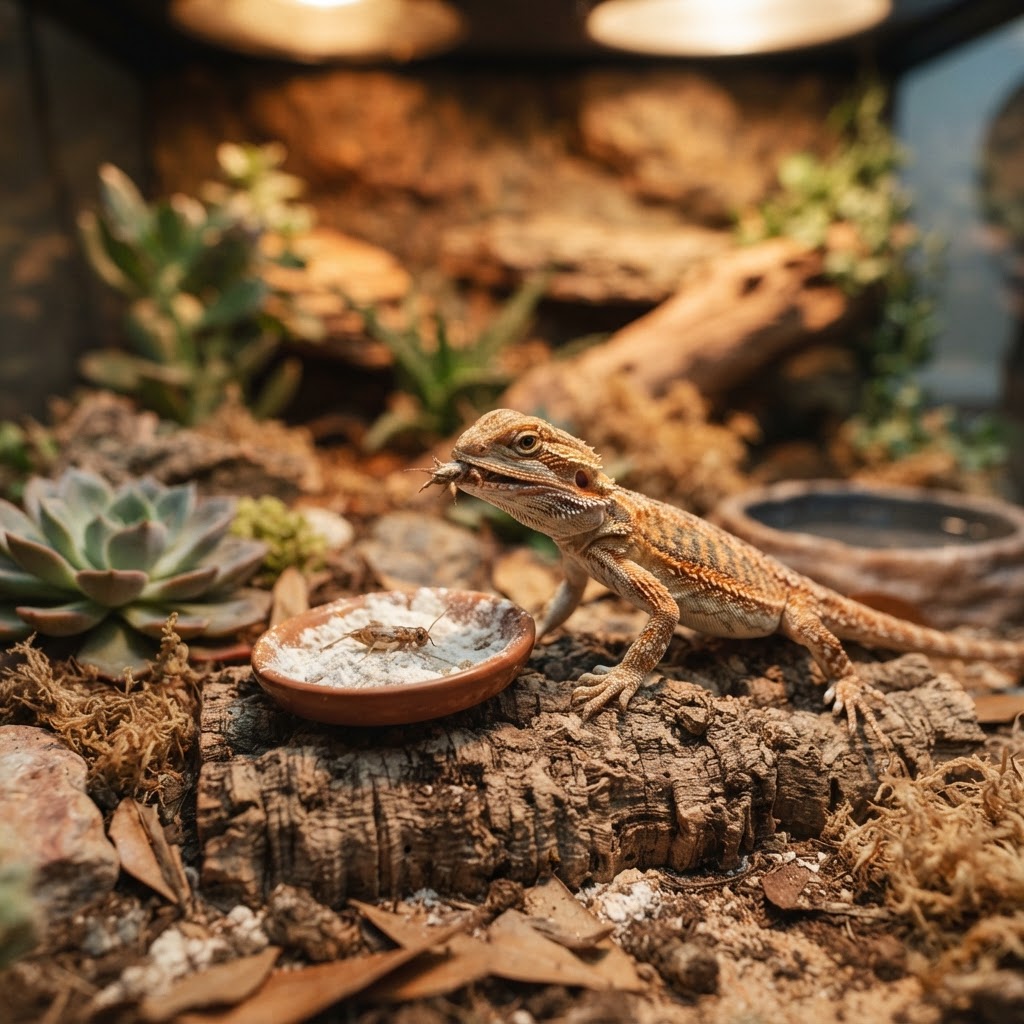
- Plain calcium powder on feeder insects about 4 to 5 times per week
- Reptile multivitamin 1 to 2 times per week
If your UVB setup is weak or incorrect, supplements alone will not fix the problem. Proper lighting is essential for healthy bones, appetite, and growth. If you are unsure about your setup, read baby bearded dragon lighting and UVB.
For hydration:
- Offer fresh greens daily
- Mist greens lightly if needed
- Provide water in a shallow dish if your dragon uses one
- You can also offer a few drops of water on the snout occasionally
Do not soak your dragon constantly just to make them drink. Most babies get much of their hydration from food and regular husbandry.
Common Feeding Mistakes to Avoid
Even caring owners make feeding mistakes in the beginning. Here are the most common ones:
Feeding too few times for a young baby
Tiny dragons burn energy fast. A once-a-day routine is usually not enough for a very young baby.
Feeding in a cold enclosure
If basking temperatures are too low, appetite and digestion suffer. Food and husbandry always work together.
Overfeeding fatty treats
Waxworms and similar treats can make a dragon picky and unbalance the diet if used too often.
Skipping greens because the baby ignores them
Keep offering greens anyway. Early exposure helps babies accept vegetables as they grow.
Using insects that are too large
This is one of the biggest avoidable risks for beginners.
Ignoring a sudden appetite drop
If a normally hungry baby stops eating, investigate quickly. Stress, shedding, incorrect heat, poor UVB, or illness may be involved. If this is happening now, read baby bearded dragon not eating.
Signs Your Baby Beardie Is Eating the Right Amount
You do not need to guess if your feeding routine is working. Healthy baby bearded dragons usually show clear signs.
Look for:
- Steady growth over the first year
- Bright, alert behavior during the day
- Strong basking habits
- A healthy interest in food
- Regular bowel movements
- A body that looks filled out, but not overly chunky
On the other hand, review your feeding plan if your baby seems unusually thin, weak, lethargic, or consistently uninterested in food.
Keep in mind that shedding can temporarily reduce appetite. Short dips are normal, but long-term poor eating is not.
Final Thoughts
Learning how often to feed baby bearded dragons gets much easier once you break it down by age. Younger babies need more frequent insect meals, older babies gradually need fewer, and daily greens should be part of the routine the whole time.
Focus on consistency rather than perfection. Feed during the day, use proper prey size, offer quality greens, dust with supplements, and make sure your dragon has correct heat and UVB. With that foundation in place, most babies grow well and develop a strong, healthy appetite.
Frequently Asked Questions
Can I feed my baby bearded dragon once a day?
For very young babies, once a day is usually not enough. Most babies under 6 months need 2 to 3 insect meals or at least 2 insect meals daily, depending on age and growth. Older babies nearing 12 months may do fine with 1 to 2 insect meals plus a daily salad.
How many crickets should a baby bearded dragon eat per day?
There is no perfect number, but many babies eat anywhere from 20 to 50 small insects per day total, split across meals. The exact amount depends on age, size, feeder type, and appetite.
Should baby bearded dragons eat more insects or more greens?
Young babies need a diet that is more insect-heavy because they are growing rapidly. However, greens should still be offered every day so they learn to recognize plant foods early.
Do baby bearded dragons need food every day?
Yes. Babies should be offered food daily. Even older babies in the 7 to 12 month range still need daily access to greens and regular insect meals.
What time of day should I feed my baby beardie?
Feed after the enclosure has warmed up for the day. Morning to late afternoon is ideal. Avoid feeding right before lights out because they need heat to digest properly.
Why is my baby bearded dragon suddenly eating less?
Common reasons include shedding, stress from a new home, low basking temperatures, poor UVB, dehydration, or illness. If the appetite drop lasts more than a couple of days, review husbandry and consider a reptile vet visit.
When should I worry about my baby not eating?
Worry sooner with babies than with adults. If a baby refuses food for more than a day or two, seems weak, loses weight, has abnormal stool, or shows other signs of illness, check temperatures and UVB immediately and contact an experienced reptile veterinarian if needed.