## Introduction

Bringing home a baby bearded dragon is exciting, but the enclosure you build on day one has a huge impact on your pet's health, stress level, appetite, and growth. A baby beardie is not just a tiny adult. Young dragons from 0 to 12 months need a safe layout, stronger attention to heating and UVB, and simple furnishings that make eating, basking, and hiding easy.

If you are wondering **how to set up a bearded dragon tank**, the good news is that it does not have to be complicated. Once you understand the basics, you can create a habitat that supports healthy bones, proper digestion, and normal behavior. The goal is simple: give your baby dragon a warm basking area, a cooler retreat, strong UVB exposure, safe substrate, and a clean routine.

In this guide, I will walk you through each step in a beginner-friendly way, with practical advice tailored specifically to baby bearded dragons. If you are brand new to reptile keeping, you may also want to read our [complete baby bearded dragon care guide](/blog/baby-bearded-dragon-care-guide) after finishing this setup article.

## Key Takeaways

- Start a baby bearded dragon in at least a 40-gallon breeder-style enclosure, but plan to upgrade to a 4x2x2 foot tank before adulthood.
- Use a strong basking light and a **linear UVB tube**, not just a heat bulb.
- Keep the basking surface around 105 to 110 degrees Fahrenheit for babies, with a cooler side around 75 to 85 degrees Fahrenheit.
- Choose a safe, solid substrate such as paper towels, tile, or non-adhesive shelf liner for young dragons.
- Create both a basking zone and a hiding zone so your baby can regulate body temperature and feel secure.
- Test the enclosure for 24 to 48 hours before your dragon arrives.
- Clean daily, monitor temperatures with digital probes, and avoid common beginner mistakes like weak UVB and loose substrate.

## Why Setup Matters More for Baby Bearded Dragons

Baby bearded dragons grow fast, eat often, and depend heavily on correct heat and lighting to stay healthy. A poor setup can quickly lead to problems such as low appetite, lethargy, stress, weak bones, slow growth, or trouble shedding. Because babies are smaller and more delicate, they have less room for error than older juveniles or adults.

A well-designed tank also helps your dragon settle in faster. When the basking spot is easy to reach, the hides feel secure, and the temperatures stay stable, babies are much more likely to eat confidently and behave normally. Learning **how to set up a bearded dragon tank** the right way from the start can save you a lot of worry later.

## Choose the Right Tank Size and Style

For a baby bearded dragon, a 40-gallon breeder enclosure is a strong minimum starting point. Many new owners assume babies need a tiny tank, but that often creates problems. Small tanks make it harder to create a proper heat gradient, and young dragons still need enough room to move between warm and cool areas.

If your budget allows, starting with a larger enclosure can be even better as long as it is furnished thoughtfully. Plenty of babies do well in larger tanks when they have clear basking spots, accessible food, and secure hiding places. Avoid leaving the enclosure too bare and open, which can make a small dragon feel exposed.

Front-opening enclosures are usually easier for beginners. They make feeding, cleaning, and handling less stressful because you approach your dragon from the side instead of from above. Since overhead movement can look like a predator, top-opening tanks sometimes make nervous babies more skittish.

Keep in mind that most bearded dragons will need an adult-sized 4x2x2 foot enclosure by the time they are around 8 to 12 months old, sometimes sooner depending on growth.

## Essential Equipment You Will Need

Before you set anything up, gather the main pieces of equipment so the tank can be assembled correctly in one session.

You will need:

- A secure enclosure with good ventilation
- A basking bulb that creates a hot basking area
- A **linear UVB tube fixture** sized appropriately for the tank
- Digital thermometers with probes for both warm and cool sides
- A timer for lights
- A basking platform such as slate, rock, or a sturdy branch
- At least one hide
- Safe substrate
- Food and water dishes if you choose to use them
- Decor that allows light climbing without fall risk

For babies, accuracy matters more than fancy accessories. A simple tank with good lighting is far better than a beautiful tank with weak UVB or incorrect temperatures.

**BabyBeardedDragon.net is a participant in affiliate programs including Amazon Associates. We may earn a commission on qualifying purchases at no extra cost to you.**

## Step-by-Step: How to Set Up a Bearded Dragon Tank

Here is the easiest way to approach **how to set up a bearded dragon tank** without missing anything important.

### 1. Pick the Best Location in Your Home

Place the enclosure in a quiet area away from cold drafts, air vents, and direct window sunlight. A tank in front of a sunny window can overheat quickly, and rooms with constant traffic or loud noise can stress a baby dragon.

Choose a spot with easy access to electrical outlets and enough clearance above the enclosure for lighting fixtures if needed.

### 2. Add a Safe Substrate

For baby bearded dragons, solid substrate is the safest and simplest choice. Good options include:

- Paper towels
- Reptile carpet used carefully and cleaned often
- Non-adhesive shelf liner
- Slate or ceramic tile

Paper towels are especially useful for the first few weeks because they are cheap, easy to replace, and let you monitor droppings closely.

Avoid loose substrate for very young dragons, especially calcium sand, walnut shell, wood chips, or anything dusty. Babies are messy eaters and may accidentally ingest substrate while chasing insects. If you want a deeper look at options, read our guide to the [best substrate for baby bearded dragons](/blog/best-substrate-for-baby-bearded-dragons).

### 3. Create a Warm Side and a Cool Side

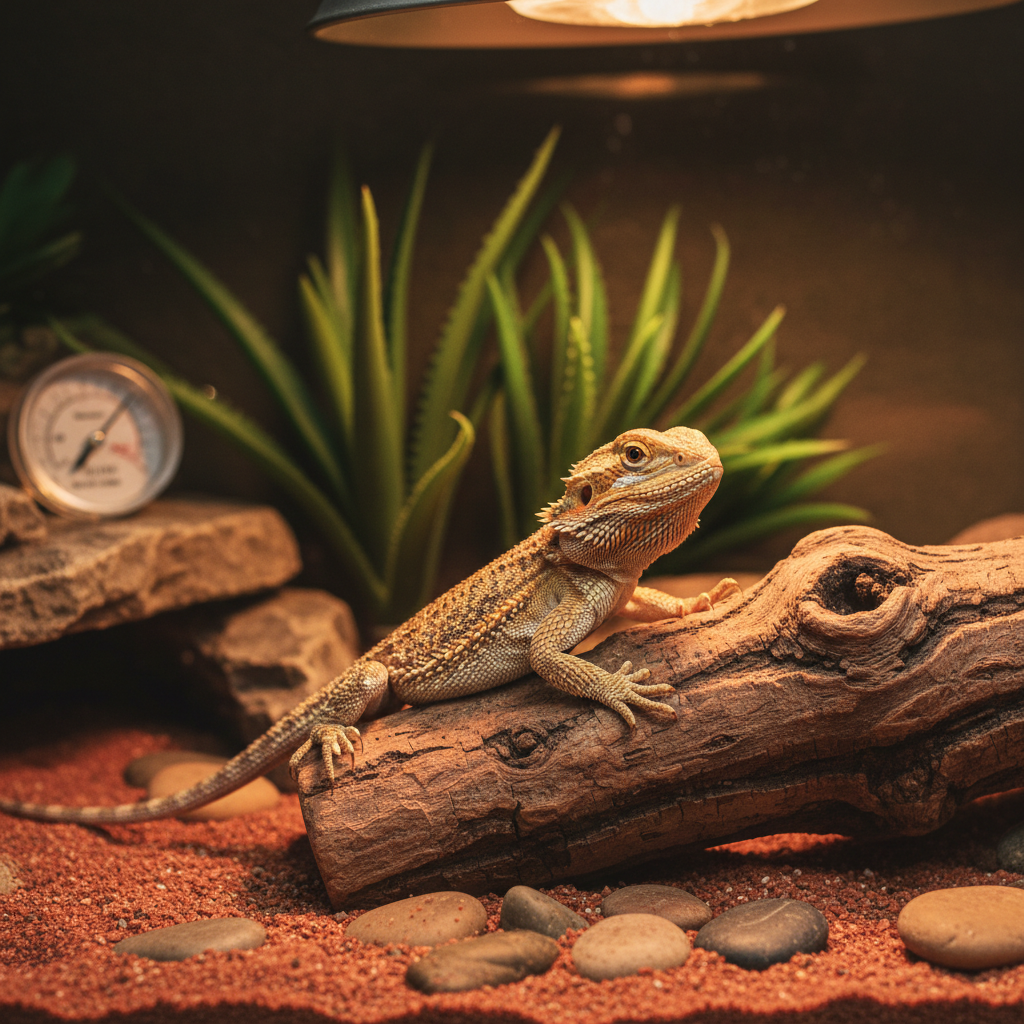
Your tank should have a temperature gradient, not one uniform temperature. Put the basking bulb and basking platform on one side of the tank. The opposite end should stay noticeably cooler and include a place to retreat.

This gradient is essential because bearded dragons control body temperature by moving around the enclosure. If the whole tank is hot, your baby cannot cool down. If the whole tank is too cool, digestion and activity suffer.

### 4. Build a Stable Basking Spot

The basking platform should be secure, easy to climb, and positioned at the correct distance from both the heat source and the UVB tube. Flat rocks, stacked slate, and sturdy branches work well. Avoid anything wobbly, steep, or tall enough to cause a dangerous fall.

Do not use hot rocks. They can create uneven heat and may burn reptiles.

A baby beardie should be able to sit comfortably under both the basking light and the UVB at the same time. That overlap matters because dragons naturally bask while absorbing UVB.

### 5. Install UVB the Right Way

UVB lighting is one of the most important parts of the setup. Without it, a baby bearded dragon cannot properly use calcium, which can lead to serious health issues over time.

For most beginners, a linear T5 HO UVB tube is the best choice because it spreads light across a wider area than a compact bulb. Position it so it covers roughly half to two-thirds of the enclosure, with the strongest exposure over the basking zone.

Distance depends on the bulb strength, fixture, and whether the light sits above mesh or inside the enclosure, so always follow manufacturer guidance. In many setups, the basking spot ends up about 10 to 14 inches below a strong T5 tube when there is no dense screen blocking the rays. If you want more detail, see our [UVB lighting guide for baby bearded dragons](/blog/baby-bearded-dragon-lighting-uvb).

### 6. Add Hides and Simple Decor

A baby bearded dragon should have at least one secure hiding area, and many do well with one hide on the warm side and another on the cool side. Hides help reduce stress, especially during the first week in a new home.

Decor should encourage natural movement without cluttering the floor space. Good choices include:

- Low branches
- Flat basking stones
- Cork bark pieces
- Hammocks used low and securely

Leave open space so your dragon can chase feeders, move between zones, and see food clearly.

### 7. Set Up Food and Water Areas

Place food dishes where they are easy to access and not directly under the basking bulb. Greens wilt fast under strong heat. A shallow water dish can be offered if you choose, but keep it small and clean so it does not raise humidity too much.

Never leave loose insects wandering the enclosure for long periods. Uneaten feeders can stress your dragon and make the tank dirty quickly.

### 8. Test Everything Before Bringing Your Dragon Home

Before your baby arrives, run the entire enclosure for at least 24 to 48 hours. Check temperatures in multiple spots, confirm the timer works, and make sure the basking area reaches the correct surface temperature.

This step is one of the biggest differences between a rushed setup and a successful one. By testing first, you can adjust bulb wattage, fixture height, or decor placement without stressing your dragon.

## Ideal Tank Conditions for a Baby Bearded Dragon

A big part of mastering **how to set up a bearded dragon tank** is keeping the environment consistent every day, not just making it look good on setup day.

### Temperature Targets

For baby bearded dragons, aim for these general ranges:

- Basking surface: **105 to 110 degrees Fahrenheit**
- Warm side ambient air: **88 to 95 degrees Fahrenheit**
- Cool side ambient air: **75 to 85 degrees Fahrenheit**
- Nighttime: **65 to 75 degrees Fahrenheit** is usually fine

Use a digital probe thermometer to measure ambient air and an infrared temperature gun or surface probe to check the basking surface. Stick-on dial thermometers are often inaccurate and should not be your main tool.

### Humidity and Ventilation

Bearded dragons do best in relatively dry conditions. A humidity range around **30 to 40 percent** is typically suitable. Short fluctuations are usually not a problem, but consistently damp conditions can cause stress and respiratory concerns.

Good ventilation, dry substrate, and a shallow water dish help keep humidity under control.

### Day and Night Lighting Schedule

Most baby bearded dragons do well with **12 to 14 hours of light per day**. Use a timer so the schedule stays consistent. At night, turn off bright lights and let the enclosure go dark. Avoid red, blue, or purple night bulbs, which can disrupt rest.

If your home gets too cold overnight, use a non-light-emitting heat source such as a ceramic heat emitter only if needed.

## Common Tank Setup Mistakes to Avoid

New owners often make the same handful of errors, and avoiding them can make the first few months much smoother.

### Using Weak or Incorrect UVB

A heat bulb alone is not enough. One of the most common problems in baby setups is weak UVB or poor bulb placement. Choose a quality linear UVB system and replace the bulb on schedule according to the manufacturer.

### Choosing Loose Substrate Too Soon

Many attractive reptile substrates are not ideal for young dragons. Solid substrate is easier to clean, easier to monitor, and safer for babies.

### Guessing at Temperatures

If you are not using digital thermometers, you are guessing. Surface temperature on the basking spot is especially important for babies because it affects digestion and appetite.

### Overcrowding the Enclosure

Too much decor can make the tank harder to clean and harder for a baby to navigate. Start simple. You can always add more once you understand your dragon's habits.

### Not Testing the Setup in Advance

Turning on the tank only after bringing the dragon home often leads to last-minute stress and temperature problems. Always test first.

If you want to avoid more first-time owner errors, check out our article on [common baby bearded dragon mistakes](/blog/common-baby-bearded-dragon-mistakes).

## Cleaning and Maintenance Routine

A clean tank helps prevent odor, bacteria buildup, and feeding issues.

### Daily Tasks

- Remove droppings and soiled substrate
- Wash food and water dishes
- Remove uneaten insects
- Check basking and cool-side temperatures
- Make sure lights turn on and off properly

### Weekly Tasks

- Wipe down surfaces that collect waste or food debris
- Clean decor as needed
- Replace paper towel substrate or deep-clean solid surfaces
- Inspect bulbs, cords, and fixtures for wear

### Monthly Tasks

- Do a more thorough enclosure cleaning
- Sanitize decor with a reptile-safe cleaner
- Recheck UVB bulb age and performance schedule
- Review whether your baby is outgrowing the layout

As your dragon grows, you may need to raise the basking structure, increase floor space, or simplify the decor again. Babies change fast in their first year.

## Final Thoughts

Once you understand **how to set up a bearded dragon tank**, the process becomes much less intimidating. Focus on the essentials first: enough space, safe substrate, a proper basking zone, strong UVB, accurate temperature monitoring, and a clean routine. A simple setup done correctly is exactly what a baby bearded dragon needs.

You do not need the most expensive enclosure on day one. You do need consistency. Get the temperatures right, keep the lighting strong, and give your baby dragon a calm, secure environment to grow in.

## Frequently Asked Questions

### What size tank does a baby bearded dragon need?

A 40-gallon breeder enclosure is a solid minimum starting size for a baby bearded dragon. It gives you enough room to create a proper basking area and cool side. Plan to upgrade to a 4x2x2 foot enclosure as your dragon grows.

### Should I use sand for a baby bearded dragon?

For most babies, solid substrate is the better choice. Paper towels, tile, and non-adhesive shelf liner are easier to clean and safer during feeding. Loose substrate is usually best avoided in very young dragons.

### How hot should the basking spot be for a baby?

The basking **surface** should usually be around 105 to 110 degrees Fahrenheit for a baby bearded dragon. Measure the actual surface, not just the air nearby, because that is what your dragon is sitting on.

### Do baby bearded dragons need a water bowl?

A shallow water dish can be offered, but it should be kept clean and small enough that it does not raise humidity too much. Some babies ignore standing water, so hydration also comes from food and normal care routines.

### Can I use a red or blue night bulb?

No. Colored night bulbs can disturb your dragon's sleep. If nighttime heat is necessary, use a non-light-emitting heat source instead.

### How long should I leave the lights on each day?

A schedule of 12 to 14 hours of light each day works well for most baby bearded dragons. Using a timer helps keep the routine stable and reduces stress.

### When should I upgrade to a bigger enclosure?

Most bearded dragons need an adult-sized enclosure before they are fully grown, often by 8 to 12 months of age. Upgrade sooner if your dragon seems cramped, outgrows the basking layout, or you cannot maintain a good heat gradient anymore.
⭐
🏥 Medical Disclaimer: This article is for educational purposes only and is not a substitute for professional veterinary advice. Always consult a qualified reptile veterinarian for health concerns about your bearded dragon.
Related Articles
Setup10 min read
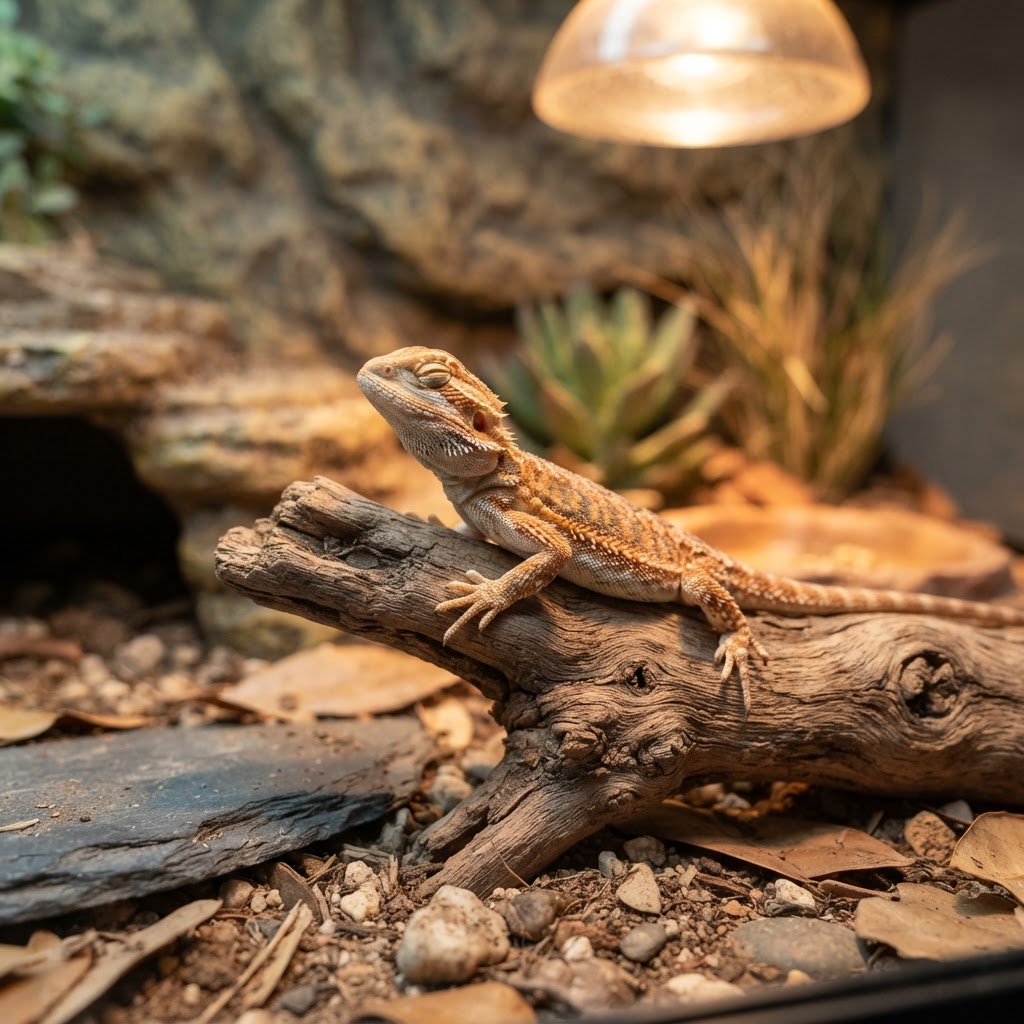
Basking Temperature For Baby Bearded Dragons: Guidelines
Getting your baby bearded dragon’s basking area right is one of the most important parts of setup. This guide explains ideal temperatures, how to measure them, and how to fix common heating mistakes.
Read Guide
Setup11 min read
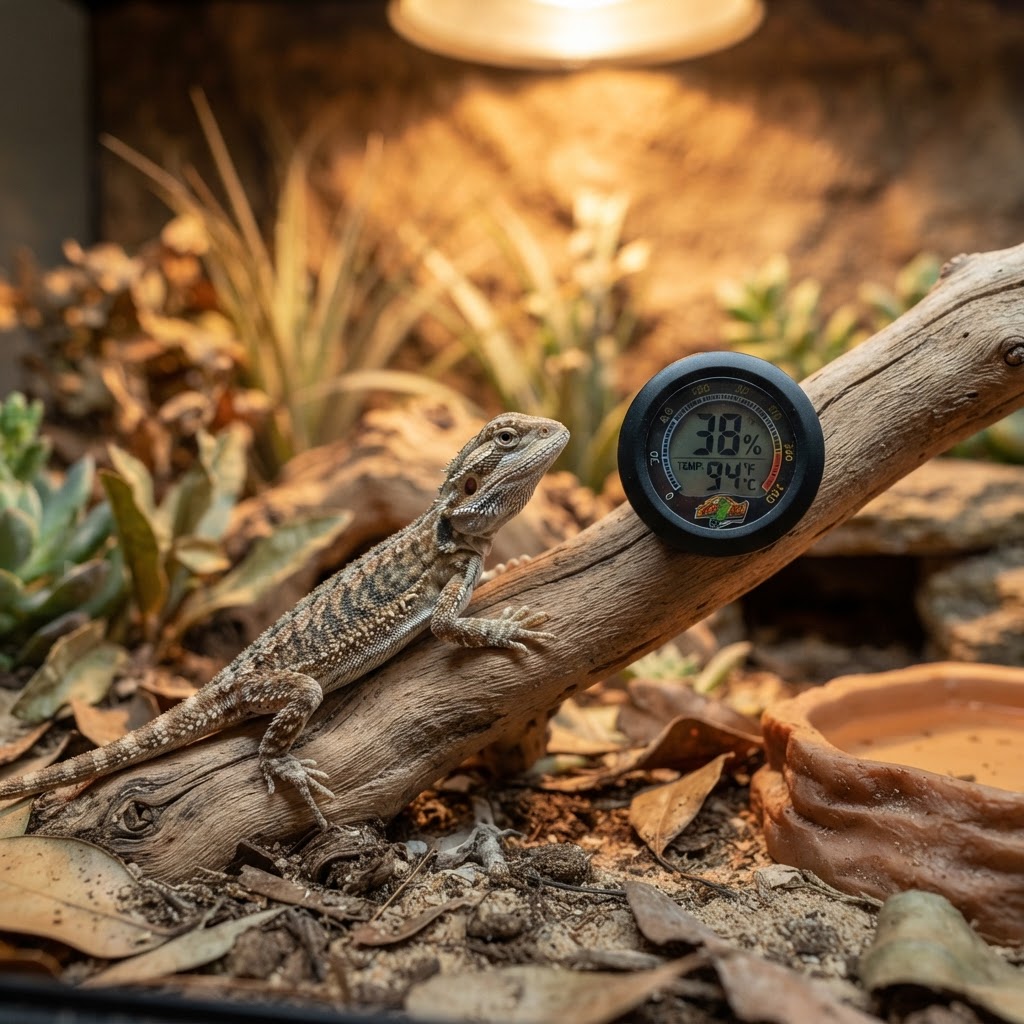
How To Check Baby Bearded Dragon Humidity Levels Safely
Not sure if your baby bearded dragon's tank is too dry or too damp? This guide shows you how to measure humidity accurately and keep the enclosure in a healthy range.
Read Guide
Setup12 min read
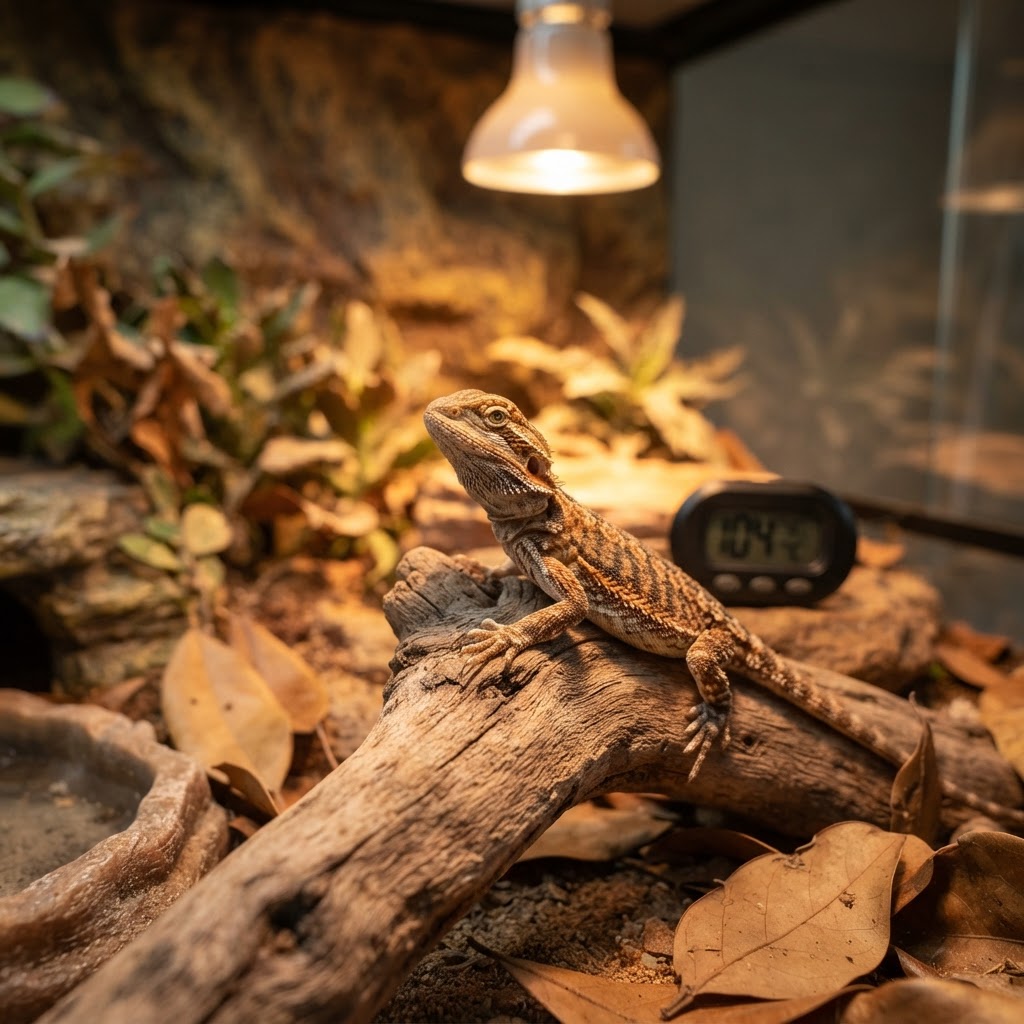
Best Basking Lights for Baby Bearded Dragons Reviewed
Choosing the right basking bulb helps your baby bearded dragon digest food, grow properly, and stay active. This guide reviews top options and shows you how to set them up safely.
Read Guide