Introduction
Watching a baby bearded dragon shed for the first time can be a little alarming. One day your tiny beardie looks bright and active, and the next its skin seems dull, pale, flaky, or patchy. Some babies become a bit grumpy, eat less for a day or two, or rub against branches and rocks more often. That is usually completely normal.
Because babies grow so quickly, they shed much more often than adults. In fact, regular shedding is often a sign that your dragon is developing as expected. If you've been searching for how to care for shedding baby bearded dragons, the good news is that most sheds do not require a lot of intervention. What they do need is the right environment, gentle support, and a keeper who knows what not to do.
In this guide, you'll learn how shedding works in baby bearded dragons from 0 to 12 months old, what normal shedding looks like, how to keep your baby comfortable, and when shedding may point to dehydration or illness instead of normal growth. If you are still new to beardie basics, our complete baby bearded dragon care guide is a helpful companion read.
BabyBeardedDragon.net is a participant in affiliate programs including Amazon Associates. We may earn a commission on qualifying purchases at no extra cost to you.
Key Takeaways
- Baby bearded dragons shed often because they grow fast, especially in the first several months.
- Normal pre-shed signs include dull or gray skin, rubbing on surfaces, mild irritability, and short-term appetite changes.
- The best shedding support is proper heat, strong UVB, hydration, low stress, and safe surfaces to rub against.
- Never pull, peel, or pick at loose skin, even if it looks ready to come off.
- A humid hide can help more than raising the humidity in the entire tank.
- Stuck shed around toes, tail tips, eyes, or limbs should be monitored closely.
- If your baby is weak, dehydrated, not eating for several days, or shedding with other symptoms, contact a reptile vet.
Why Baby Bearded Dragons Shed So Often
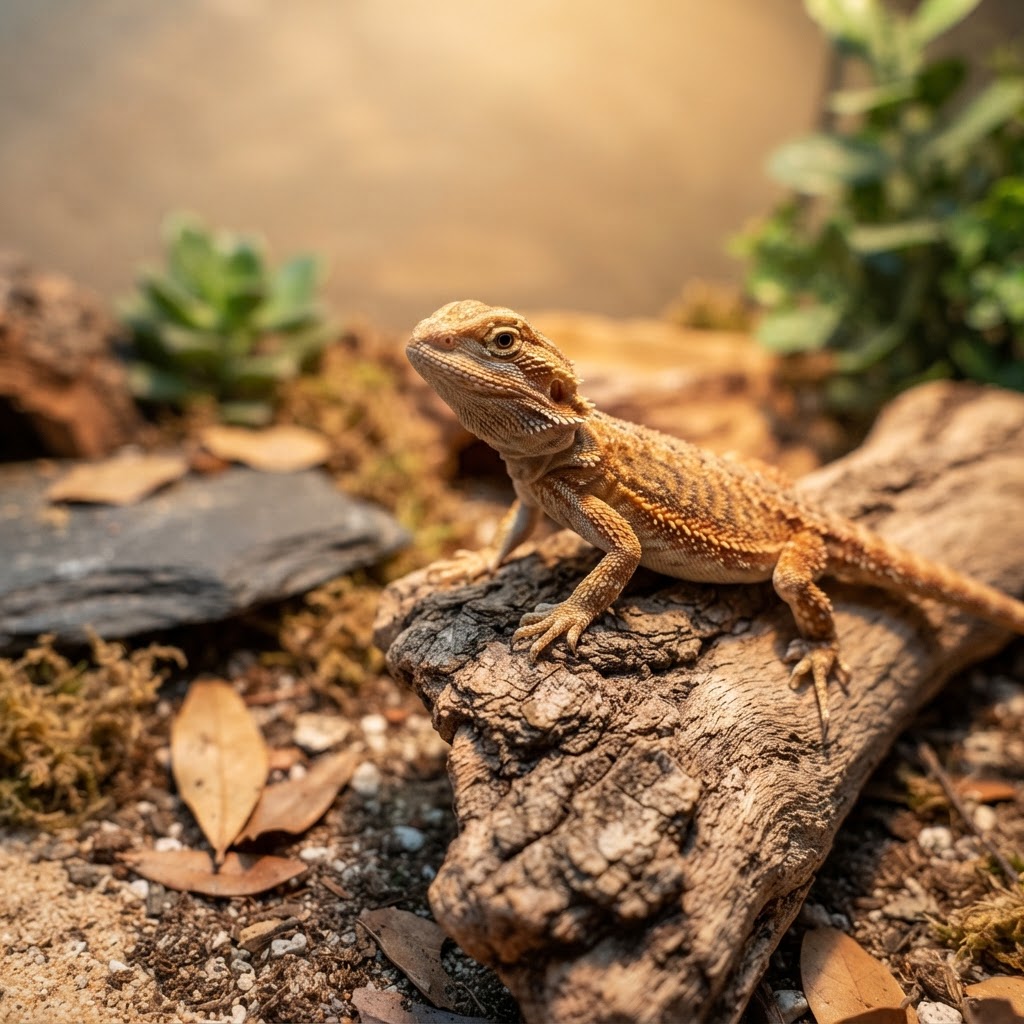
Baby beardies are in a rapid growth stage. Unlike adults, who may shed only a few times a year, babies can shed every few weeks or even more frequently during growth spurts. They do not always shed their entire body at once, either. One week it may be the tail, the next the legs, and later the head or torso.
This piecemeal shedding is normal. It does not mean something is wrong if the body looks uneven for a few days. Young dragons often seem to cycle through pale patches repeatedly as they gain size.
If you are tracking growth, it helps to compare shedding frequency with size and weight changes. A healthy baby that eats well, basks properly, and sheds regularly is often developing on schedule. Our article on baby bearded dragon growth rate can help you understand what to expect month by month.
What Normal Shed Looks Like
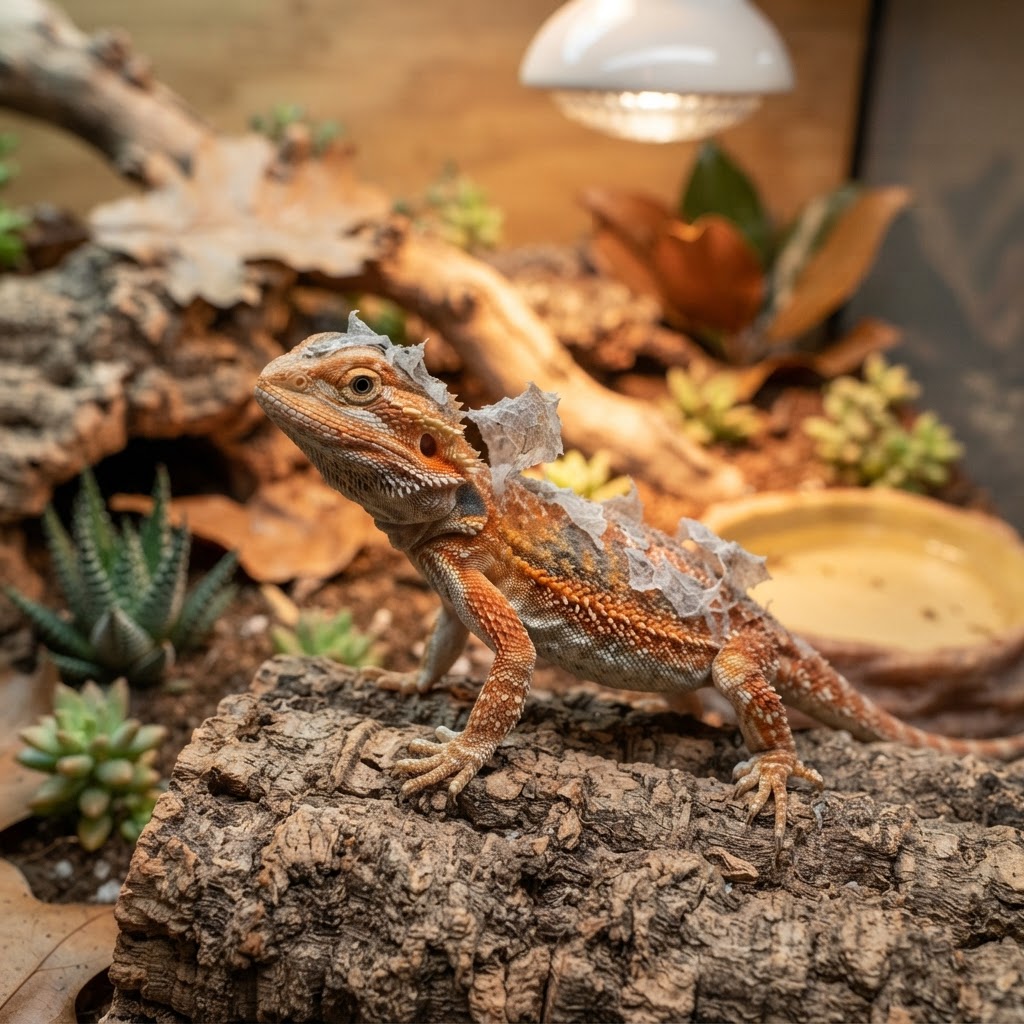
A normal shed usually starts with the skin turning lighter, dusty, gray, or whitish. The skin may look tight or papery before it loosens. After that, sections begin to lift and peel away on their own.
Normal shedding may include:
- Dull or faded color
- More rubbing against decor
- Small appetite dip
- Mild restlessness or clinginess to the basking spot
- Loose flakes falling off over several days
A healthy shed should come off without force. Your job is to support the process, not speed it up.
Signs Your Baby Beardie Is About to Shed
Most babies show a few hints before the skin actually starts to come off. Learning these signs helps you avoid unnecessary worry.
Common pre-shed clues include:
- Skin becoming pale, chalky, or gray in certain areas
- A slightly puffy or tight look to the skin
- Increased scratching or rubbing on branches, rocks, or hides
- Spending more time basking
- Lower tolerance for handling
- Temporary appetite changes
Some babies remain active and hungry through a shed, while others act a little cranky. A short behavioral shift is common. However, if your dragon also seems weak, keeps its eyes closed, or stops eating for an extended period, shedding may not be the only issue.
How to Care for Shedding Baby Bearded Dragons
The simplest answer to how to care for shedding baby bearded dragons is this: keep husbandry excellent, support hydration, reduce stress, and let the shed come off naturally. Here is what that looks like in daily care.
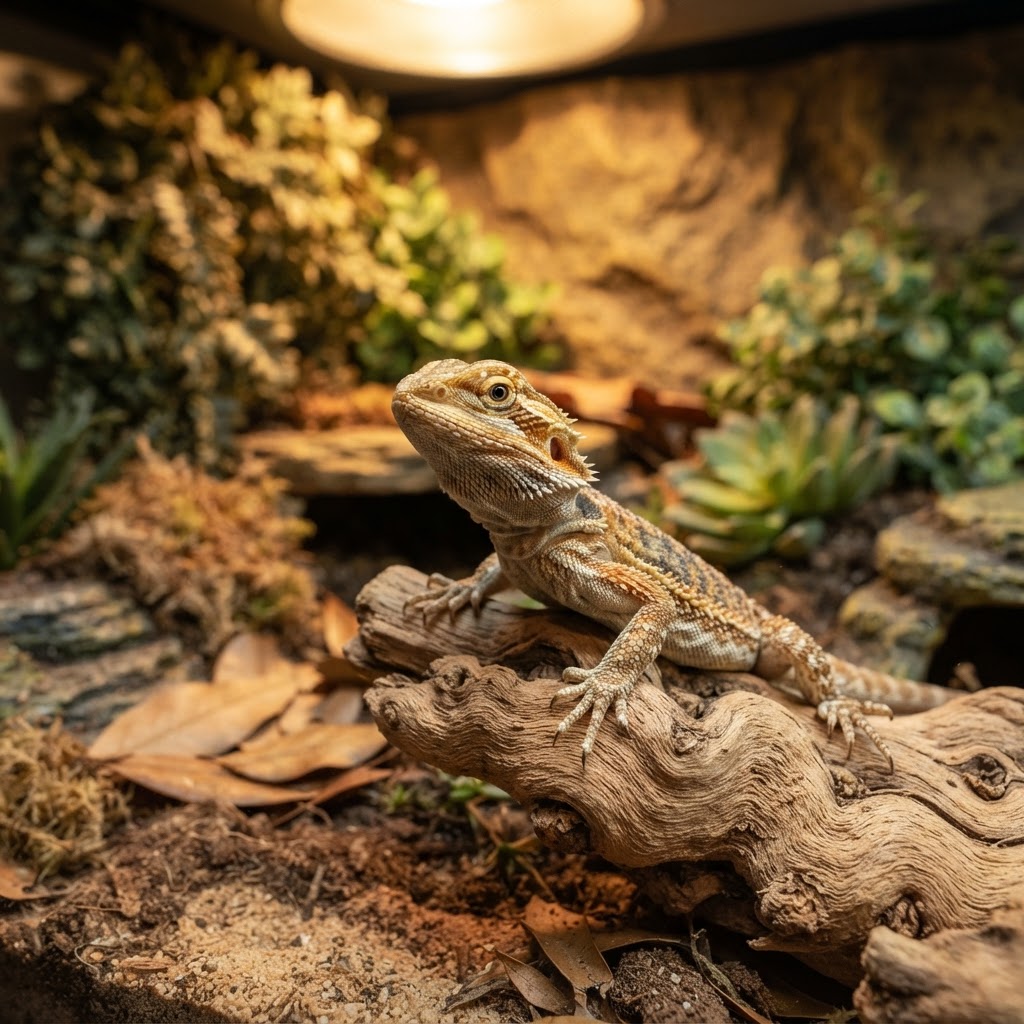
Keep Heat and UVB Consistent
Good sheds start with good husbandry. A baby beardie with poor temperatures or weak UVB often struggles more during sheds because the body is already under stress.
Make sure your baby has:
- A proper basking area with safe, species-appropriate temperatures
- A cooler side for thermoregulation
- A quality UVB setup positioned correctly
- A regular day and night schedule
Do not make major enclosure changes right in the middle of a shed unless something is unsafe. Stability matters. If you need to review your lighting, our baby bearded dragon UVB and lighting guide can help you fine-tune the setup.
Support Hydration Safely
Hydration plays a big role in healthy skin. A mildly dehydrated baby may have more difficulty shedding cleanly, especially on the toes and tail tip.
Offer hydration by:
- Providing fresh water daily
- Feeding moisture-rich greens that are appropriate for babies
- Offering well-hydrated feeder insects as part of a balanced diet
- Watching for early dehydration signs such as wrinkled skin, sunken eyes, or sticky saliva
If you suspect dehydration, read how to spot dehydration in baby bearded dragons for a closer look at warning signs.
A brief, supervised lukewarm soak can help some babies, but it should not be your first or only strategy. Many baby beardies find baths stressful, and frequent soaking can do more harm than good if it chills them out or raises stress. Think of baths as occasional support, not routine treatment for every shed.
Provide Safe Surfaces for Rubbing
Your baby instinctively wants to rub off loose skin. That means the enclosure should include safe textures such as:
- Smooth branches
- Cork bark
- Secure rocks with no sharp edges
- Textured hides
These surfaces give your dragon a natural way to work off shed without your hands getting involved. Avoid anything jagged that could tear skin or injure toes.
Reduce Handling for a Few Days
Shedding skin can feel tight and uncomfortable, especially around the face, legs, and tail. During this time, some babies become more defensive or simply want to be left alone.
Handle less if your dragon seems irritated. Short, calm check-ins are fine, but do not force interaction just because the skin looks messy. If your baby normally enjoys time with you, it will likely return to normal once the shed is finished. Overhandling during a shed can increase stress and make rubbing behavior more frantic.
Monitor Appetite Without Panicking
A baby that skips a meal or eats a little less during a shed is not unusual. What matters is the pattern.
Usually normal:
- Mild appetite drop for 1 to 3 days
- Picking at food instead of eating eagerly
- Choosing fewer insects than usual
More concerning:
- Refusing food for several days in a row
- Significant weight loss
- Lethargy plus poor appetite
- Trouble moving or basking
Keep offering food on schedule, but do not force-feed simply because shedding has started. If poor appetite continues, there may be another cause besides shed discomfort.
What Not to Do During Shedding
Good intentions can accidentally create problems. The biggest mistake beginners make is trying to "help" too much.
Do Not Peel the Skin Off
Even if a flap looks loose, resist the urge to pull it. Skin that is not ready can tear, leaving raw tissue underneath and increasing the risk of infection. Stubborn patches are especially risky around toes, tail tips, and eyelids.
Do Not Over-Bathe
Daily baths are not necessary for most shedding babies. Too much soaking can be stressful and may not solve the underlying issue if husbandry is off. Use baths sparingly and always dry and warm your baby afterward.
Do Not Raise Tank Humidity Too High
Bearded dragons are not tropical reptiles. A constantly damp enclosure can contribute to health issues. Instead of misting the whole tank heavily, use a localized humid hide if your baby seems to benefit from extra moisture.
Do Not Use Oils, Creams, or Human Skin Products
Lotions, oils, and skin softeners are not safe reptile shedding tools. Keep care simple and species-appropriate.
Setting Up the Enclosure for Easier Sheds
A well-designed enclosure makes every shed easier. If your setup is too bare, too damp, or too slippery, your baby has fewer ways to shed naturally.
Use a Humid Hide Instead of a Wet Tank
A humid hide is one of the safest ways to offer extra moisture during stubborn sheds. It gives your baby a choice rather than changing the climate of the whole habitat.
A simple humid hide should be:
- Warm, but not directly under intense basking heat
- Large enough for your baby to enter fully
- Lightly humid inside, not soaked
- Checked often so it stays clean
Keep the Layout Functional
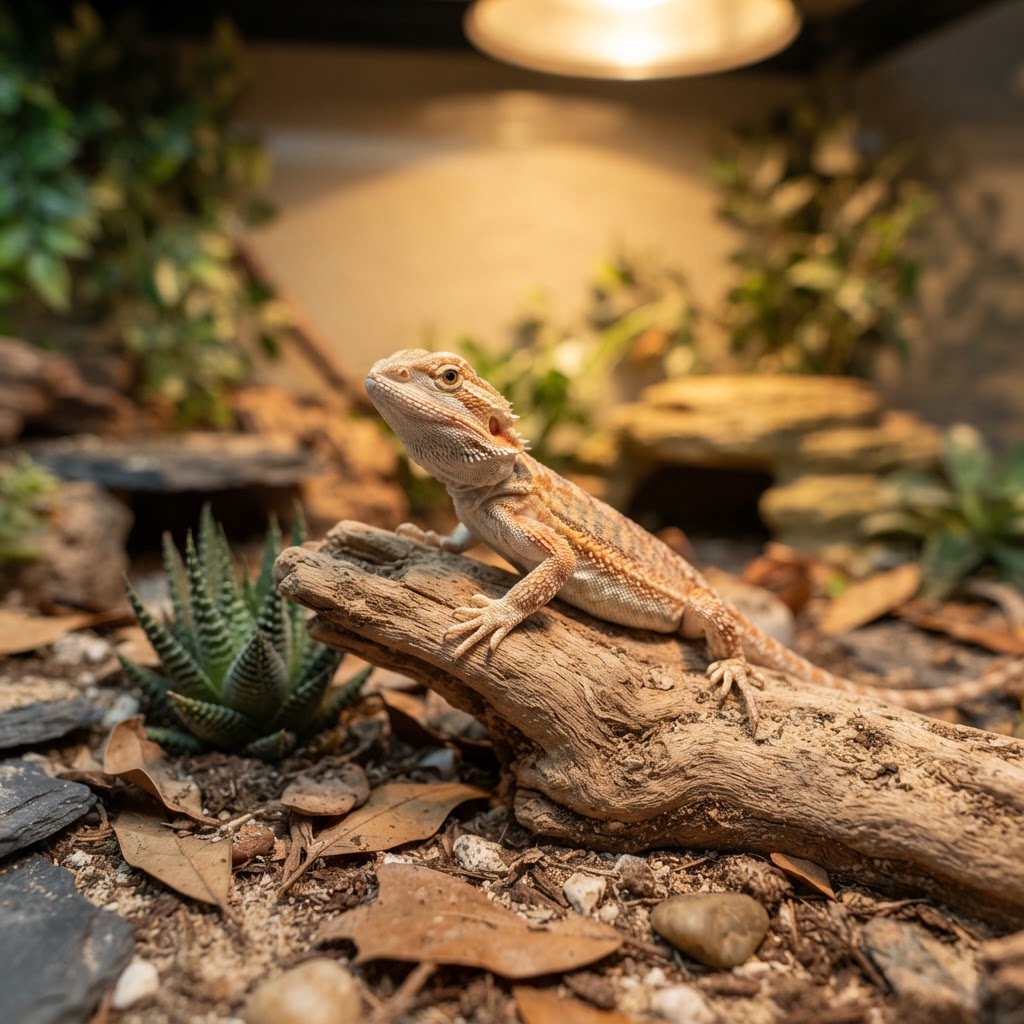
Your dragon should be able to move easily between basking, cooling, hiding, and rubbing areas. Include at least one climbable object and one secure hide. If your setup needs work, review your baby bearded dragon tank setup to make sure the basics are solid.
Choose Safe, Easy-to-Clean Substrate
During shedding, clean footing matters. Loose or dusty substrate can stick to damp skin or irritate sensitive areas. For babies, a clean, simple substrate is usually the easiest option while you monitor health and droppings closely.
When Shedding May Be a Problem
Most sheds are routine, but sometimes they overlap with husbandry issues or illness. This is where careful observation matters.
Stuck Shed
Stuck shed is skin that remains attached well past the rest of the shedding cycle, especially in thin rings or tight bands. It is most concerning on:
- Toes
- Tail tip
- Feet
- Around the eyes
- Limbs
Tight retained skin can reduce circulation over time. If a toe or tail tip looks dark, swollen, pinched, or damaged, get veterinary advice promptly.
Dehydration
A dehydrated baby may have trouble shedding and may also seem weak, wrinkled, or less alert. Shedding alone does not usually cause serious dehydration, but the two often show up together when daily care needs improvement.
Illness or Stress
If your baby is shedding and also showing multiple symptoms, think beyond the skin. Watch for:
- Eyes staying closed
- Wheezing or mucus
- Black beard for long periods
- Ongoing lethargy
- Persistent refusal to eat
- Diarrhea or very abnormal droppings
Those are signs you should review your setup and consider veterinary help. Our guide to signs of illness in baby bearded dragons can help you tell the difference between a normal shed and a true health issue.
Feeding and Hydration During a Shed
A baby still needs strong nutrition during shedding because growth does not stop. Offer the normal balance of properly sized feeder insects, fresh greens, and supplements recommended for your dragon's age.
Helpful feeding tips during a shed include:
- Keep feeders appropriately sized
- Remove uneaten insects after meals
- Offer fresh greens daily
- Stick to your regular calcium and vitamin schedule
- Feed after the dragon has warmed up under the basking light
If your baby is slightly less interested in food, try offering meals at the same time each day and keep the environment calm. Do not make sudden diet changes unless your vet suggests it.
Final Thoughts
Once you understand how to care for shedding baby bearded dragons, each shed becomes much less stressful for both you and your pet. In most cases, shedding is simply part of healthy baby growth. Focus on proper heat, UVB, hydration, safe enclosure furniture, and gentle observation.
If the skin looks odd but your baby is active, alert, and otherwise healthy, patience is often the best tool you have. Let the process happen naturally, intervene lightly, and keep an eye out for true red flags like stuck shed, dehydration, or signs of illness.
Frequently Asked Questions
How often do baby bearded dragons shed?
Most babies shed far more often than adults because they grow quickly. Some may shed every couple of weeks during rapid growth periods, while others shed in small body sections on a rolling basis. Frequent shedding in the first year is usually normal.
Should I help peel my baby beardie's shed off?
No. Never pull shed off by hand unless a reptile veterinarian has shown you exactly what to do. Skin that looks loose may still be attached underneath, and peeling can tear healthy tissue or damage delicate toes and tail tips.
Are baths necessary for shedding baby bearded dragons?
Not always. Some babies shed perfectly well without regular baths. A short, supervised lukewarm soak can sometimes help with hydration or a stubborn patch, but proper husbandry is more important than frequent soaking.
Why is my baby bearded dragon not eating while shedding?
A mild appetite dip can happen during a shed because the skin feels tight and uncomfortable. If your baby still basks, stays alert, and resumes eating within a day or two, it is usually not serious. If food refusal continues, look for other causes.
What humidity is best during shedding?
Bearded dragons still need a relatively dry overall environment. Instead of raising humidity across the whole tank, use a humid hide to provide optional moisture. That gives your baby support during a shed without making the enclosure too damp.
When should I worry about stuck shed?
Worry when shed remains wrapped tightly around toes, the tail tip, or limbs, or when the area looks swollen, discolored, or injured. These spots can lose circulation if retained skin stays on too long. Contact a reptile vet if you are unsure.
What is the best way to learn how to care for shedding baby bearded dragons if I am a first-time owner?
Start with the basics: stable heat, quality UVB, good hydration, low stress, and careful observation. Learning how to care for shedding baby bearded dragons is mostly about improving everyday husbandry rather than trying to remove the shed yourself. The more consistent your care is, the easier future sheds usually become.